





The First Alert: Pre-emptive Action
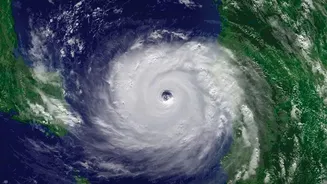
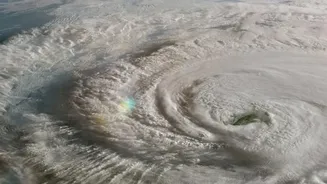
The moment the India Meteorological Department (IMD) issues a cyclone warning, the Indian Coast Guard activates its Standard Operating Procedures (SOPs). The primary goal is pre-emption: preventing loss of life and property at sea. Coast Guard Remote
Operating Stations begin broadcasting continuous weather warnings in local languages, urging all fishermen to return to the nearest harbour immediately. Simultaneously, ICG ships and aircraft already at sea are directed to shepherd fishing boats and other vessels to safety, a process that has saved thousands of lives in past cyclones. Merchant vessels in the storm's path are also alerted and advised to divert their course to safer waters.
Eyes in the Sky, Ships on Standby
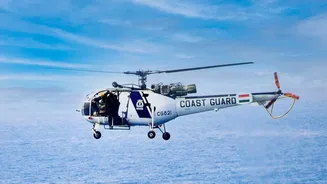
A key part of the ICG's strategy is the strategic positioning of its assets. Ships, Dornier aircraft, and helicopters are mobilized and placed on high alert along the threatened coastline. These assets are not just for rescue but also for surveillance, providing a clear picture of maritime activity. Dornier aircraft conduct extensive patrols, scanning the seas for any vessels that may not have received the warnings. Disaster Relief Teams (DRTs) are assembled and equipped with inflatable boats, life jackets, and other essential rescue gear, ready to be deployed to the worst-affected areas at a moment's notice. These teams are trained first responders, prepared for a range of emergency scenarios.
A Coordinated Effort
The Coast Guard does not work in isolation. Seamless coordination with multiple agencies is crucial for an effective response. The ICG maintains constant liaison with state and district administrations, the National Disaster Response Force (NDRF), and other armed forces like the Navy and Air Force. In high-level meetings of the National Crisis Management Committee (NCMC), all agencies align their efforts to ensure a unified approach. The NDRF deploys its own teams to vulnerable land areas, while the ICG focuses on the maritime and coastal domain. This collaborative framework ensures that resources are used efficiently and that help can be summoned from the Army, Navy, or Air Force if the situation demands it.
During and After the Storm
As the cyclone makes landfall, the nature of the mission shifts from prevention to active search and rescue. Coast Guard ships, designed to handle rough seas, are often the first to venture out to locate stranded fishermen or damaged boats. Helicopters are used for both searching and, in critical situations, winching survivors from the water or isolated areas. After the cyclone passes, the work continues with post-storm assessments. Aircraft fly over the coastline to survey the extent of the damage, while ships and DRTs move into affected areas to assist with relief operations. This can include evacuating stranded citizens from inundated areas, providing first aid, and distributing essential supplies like food and drinking water.