




What is Wrist Rolling?
Wrist rolling is a targeted exercise designed to strengthen the muscles in your forearms and improve the flexibility of your wrist joints. It involves the basic movements of wrist flexion (bending your wrist forward) and extension (bending it backward).
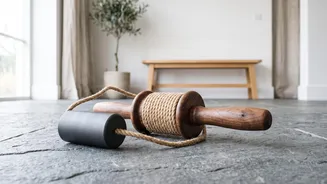
This can be done simply by using your own bodyweight or with a specialised tool called a wrist roller, which consists of a bar with a rope and a weight attached. The primary goal is to work the flexor and extensor muscles that control hand and wrist movements, which are crucial for everything from gripping a pen to lifting heavy objects. Regular practice can lead to significant improvements in grip strength and overall wrist stability.
The Golden Rule: Comfortable Range of Motion
The most important instruction in this guide is to always stay within a comfortable range of motion. Pain is a signal to stop, not to push harder. When performing any wrist exercise, the goal is a gentle stretch or the feeling of muscle engagement, not sharp pain. Forcing your wrist into an extreme angle can cause strain or injury, defeating the purpose of the exercise. To find your range, move your wrist slowly through each motion—flexion, extension, and side-to-side movements—and pay close attention to where you feel tension. The point just before discomfort is the end of your current range. Working consistently within this safe zone will gradually and safely increase your flexibility and strength over time.
How to Perform a Basic Wrist Roll
You don't need any special equipment to start. This simple exercise can be done anywhere, even at your desk. Extend one arm straight out in front of you, parallel to the floor. Make a loose fist. Slowly bend your wrist downward (flexion), hold for a moment, and then slowly bend it upward (extension), holding again. The key is to perform the movement in a slow, controlled manner. Another effective version is to make gentle circles with your fists, first in one direction and then reversing it. Aim for 10-15 repetitions of each movement. Remember to keep your forearm stable and isolate the movement to your wrist joint.
Common Mistakes to Avoid
To get the most out of wrist rolling and prevent injury, be mindful of these common errors. First, avoid moving too quickly. Jerky or rapid motions can strain the delicate tendons and ligaments in your wrist. Slow and controlled is always safer and more effective. Second, don't ignore pain. If you feel a sharp or pinching sensation, ease up or stop immediately. Pushing through pain can lead to conditions like tendonitis. Finally, if you are using a weighted wrist roller, a very common mistake is starting with too much weight. This compromises form and puts excessive stress on the joints. Begin with a very light weight or no weight at all to master the form first.
Using a Weighted Wrist Roller
For those looking to build more significant forearm strength and endurance, a wrist roller is an excellent tool. This device involves rolling a weight up and down by rotating a handle. To use it, stand with your arms extended straight out at shoulder height. Roll the weight up by rotating your wrists, then slowly and with control, reverse the motion to lower the weight back down. This action targets both the flexor and extensor muscles under continuous tension. As with the basic version, keep your arms and torso stable; the work should come entirely from your wrists. Always start with a light weight to ensure you can complete the full range of motion without your shoulders fatiguing before your forearms.