





Understanding the Toll of Sitting
The human body is designed for movement, but many professional roles demand long periods of stillness. When you sit for hours, several things happen to your joints and muscles. Your hip flexors, the muscles at the front of your hips, can shorten and tighten,
which pulls on your lower back and can lead to pain. Similarly, the large gluteal muscles can become inactive, a phenomenon sometimes called "glute inhibition," forcing your lower back to work harder to support you. This prolonged pressure also affects the spine, compressing the discs and potentially leading to premature wear and tear. Over time, this combination of muscle weakness, tightness, and spinal pressure contributes to the chronic aches and stiffness many desk workers experience.
Movement Is Your Best Medicine
The most effective way to counteract the negative effects of sitting is to do less of it. While your job may require you to be at a desk, you can integrate more movement into your day. The simplest rule is to stand up and move around every 30 to 60 minutes. Even a brief walk to get water, talk to a colleague, or simply stretch your legs can make a significant difference. Research shows that even light-intensity physical activity can measurably improve health outcomes for sedentary individuals. Consider setting a timer to remind yourself to take these micro-breaks. When you take a phone call, try standing or pacing. Small, consistent efforts to break up long bouts of sitting are more effective than one intense gym session at the end of the day.
Simple Stretches You Can Do at Your Desk
You don't need a yoga mat or a gym to release tension in your joints. Several effective stretches can be done right in your office chair. For your back, try a seated spinal twist. Sit tall and twist your torso to one side, using the armrest to gently deepen the stretch for 20-30 seconds. To combat tight hips, perform a seated figure-four stretch by crossing one ankle over the opposite knee and gently leaning forward until you feel a stretch in your hip. For neck relief, slowly tilt your head, bringing your ear toward your shoulder, holding for 15-20 seconds on each side. Finally, to activate your back and improve posture, sit upright and squeeze your shoulder blades together, holding for 5 seconds. Performing these stretches a few times a day can prevent stiffness from setting in.
Ergonomics: Optimise Your Workspace
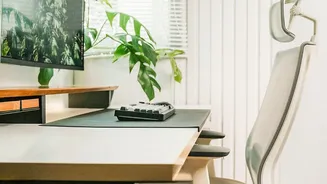
An improperly arranged workspace can worsen the strain on your body. Optimising your setup for better ergonomics is a crucial step in protecting your joints. Start with your chair; it should support the natural curve of your spine. Your feet should rest flat on the floor with your knees at roughly a 90-degree angle. If your feet don't reach, use a footrest. Your monitor should be at eye level to prevent you from hunching forward, which strains your neck. Position your keyboard and mouse close enough that your elbows can remain comfortably by your side, bent at about 90 degrees. These adjustments help maintain a more neutral posture, reducing the continuous stress on your spine, neck, and shoulders throughout the workday.
Beyond the Desk: Habits for Healthy Joints
What you do outside of work hours also plays a significant role in your joint health. Staying hydrated is essential, as it helps maintain the fluid in your joints that provides cushioning and reduces friction. Incorporating weight-bearing exercises like walking, jogging, or light resistance training into your routine helps stimulate bone formation and strengthens the muscles that support your joints. A balanced diet rich in anti-inflammatory foods can also help manage joint discomfort. Activities that improve flexibility and core strength, such as yoga or pilates, are particularly beneficial for counteracting the effects of a sedentary job. By building a foundation of strength and mobility, you make your body more resilient to the stresses of sitting.