


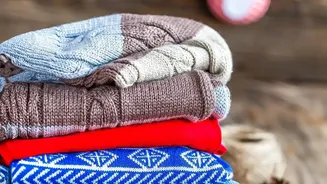
Woollens are a winter staple, but the fear of shrinking or the discomfort of a scratchy knit can be daunting. This guide demystifies wool care, offering simple, effective tips to keep your favourite sweaters soft, clean, and perfectly shaped.
Preparation is Key
Before you
even think about water, take a moment to prepare your garment. First, always check the care label. Many modern woollens are treated to be machine washable, but others strictly require hand-washing or dry cleaning. If you're dealing with a small stain, try spot-cleaning first. Dampen the area and gently dab with a soft cloth and a tiny amount of wool-safe detergent. Avoid vigorous rubbing, which can damage the fibres. It's also a good idea to turn sweaters inside out to minimise pilling, which occurs when fibres rub against each other. Wool has natural anti-bacterial properties, so it doesn't need to be washed after every wear; often, simply airing it out is enough to freshen it up.
Hand-Washing: The Safest Method
Hand-washing is the gentlest and most reliable way to clean wool. Fill a basin with lukewarm water (around 30°C) and add a small amount of a pH-neutral, wool-specific detergent. Avoid standard detergents, as their enzymes can break down wool fibres. Submerge the garment and let it soak for about 10 minutes. Gently squeeze the suds through the fabric, but do not rub, twist, or wring it, as this can cause felting and stretching. Drain the soapy water and rinse thoroughly with clean, lukewarm water. A final rinse in cool water can also be beneficial. To remove excess water, gently squeeze it out, then lay the garment flat on a clean, dry towel. Roll the towel and sweater together like a Swiss roll and press firmly to absorb more moisture.
The Secret to Banishing Scratchiness
If your woollens feel more prickly than plush, there are a few effective tricks to soften them. One popular method involves using hair conditioner. After washing, soak the garment for about 30 minutes in a basin of lukewarm water mixed with a generous scoop of conditioner. The conditioner helps relax and smooth the wool fibres, much like it does for hair. Another method is to use distilled white vinegar. Adding about half a cup of vinegar to the final rinse water can help dissolve any lingering soap residue that may be stiffening the fibres. For a less conventional but surprisingly effective trick, place your completely dry, clean sweater in a sealed plastic bag and leave it in the freezer overnight. The cold temperature helps lock down the short, fuzzy fibres that cause itchiness.
Machine-Washing With Caution
If your garment's care label permits machine washing, you can proceed, but with care. Always use the 'wool' or 'delicate' cycle, which uses cold water and a low spin speed to minimise agitation. A speed of no more than 600 rotations per minute is ideal. To protect the garment further, place it inside a mesh laundry bag. This reduces friction against other items and the machine's drum. Use a detergent specifically formulated for wool or delicates. Brands like Eucalan, Woolite, and others are designed to be gentle on natural fibres and often contain lanolin to help condition the wool.
Drying Without Disasters
How you dry your woollens is just as important as how you wash them. Heat and gravity are the main enemies. Never hang a wet knitwear garment, as the weight of the water will stretch it out of shape. Instead, after gently squeezing out excess water in a towel, lay the item flat on a fresh, dry towel or a mesh drying rack. Carefully reshape the garment to its original dimensions, straightening the seams and sleeves. Allow it to air dry naturally, away from direct sunlight or heat sources like radiators, which can cause damage and discolouration. Unless the care label specifically states that tumble drying is safe, you should always avoid the dryer.