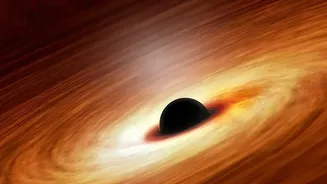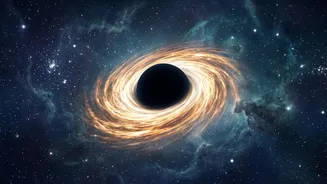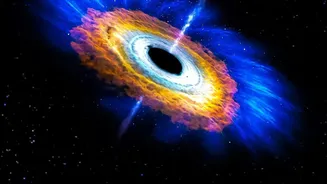


Have you ever looked at the night sky and wondered what secrets it holds? Our galaxy is teeming with black holes, yet we’ve found only a tiny fraction of them. Now, you can help change that by becoming a black hole hunter from your own home.
The Hunt for the Invisible
Astronomers
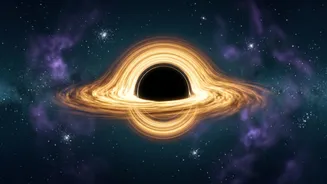
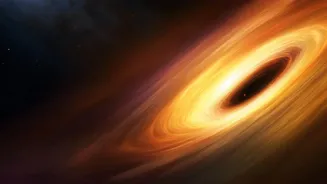
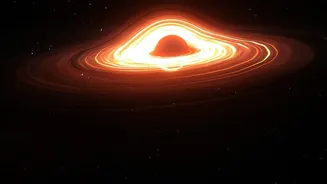
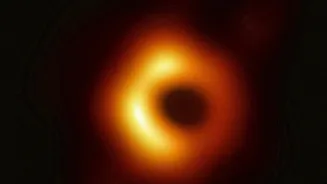
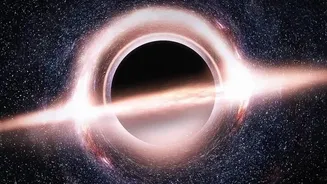
estimate there could be as many as 100 million stellar-mass black holes in our Milky Way galaxy alone. Yet, despite this staggering number, only about 70 have been located and confirmed. The reason for this discrepancy is simple: black holes are, by their very nature, invisible. Their gravitational pull is so immense that nothing, not even light, can escape, making them impossible to see directly. Traditionally, scientists have found black holes by observing the material they are 'feeding' on. As a black hole pulls in gas and dust from a nearby star, the material heats up and emits powerful X-rays, which our telescopes can detect. But what about the millions of black holes that are not actively feeding? These quiet, isolated objects drift through the galaxy unseen, and finding them requires a completely different and clever approach.
Using Gravity as a Magnifying Glass
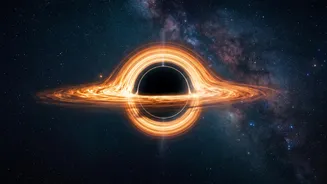
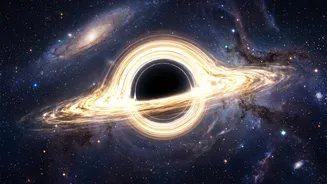
The Black Hole Hunters project, a citizen science initiative hosted on the Zooniverse platform, uses a phenomenon predicted by Albert Einstein called gravitational lensing. A massive object, like a black hole, warps the fabric of spacetime around it. If one of these invisible black holes passes directly between us and a distant star, its gravity acts like a cosmic magnifying glass. It bends and focuses the light from the star, causing it to appear briefly and suddenly brighter. This project specifically looks for an effect called 'self-lensing', which occurs in binary systems where a star and a black hole are orbiting each other. Each time the black hole passes in front of its companion star from our point of view, it causes a predictable spike in the star's brightness. Finding these repeating flashes is the key to uncovering this hidden population of black holes.
Your Mission as a Black Hole Hunter
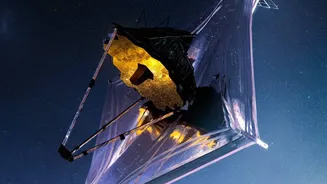
This is where you come in. The project uses vast amounts of data collected by telescopes like NASA's Transiting Exoplanet Survey Satellite (TESS). While automated computer algorithms can perform a first pass, they often struggle to distinguish a true lensing event from other cosmic phenomena like stellar flares or the natural pulsations of a star. The human eye, however, is exceptionally good at pattern recognition. Volunteers are shown graphs, known as light curves, which plot a star's brightness over time. Your task is to look for the characteristic shape of a gravitational lensing event: a short, sharp peak in brightness against the normal, steady line of the star's light. No prior expertise in astronomy is needed. The project provides training examples to show you exactly what to look for, making it accessible to anyone with a computer and an interest in space.
The Power of People-Powered Research
Citizen science projects like Black Hole Hunters are becoming increasingly crucial in modern astronomy. The sheer volume of data produced by today's telescopes is too much for small teams of professional scientists to analyse alone. By crowdsourcing the analysis, researchers can sift through millions of stars far more efficiently. According to project co-lead Dr. Adam McMaster, finding these black holes is a huge task that simply couldn't be done without public involvement. Every star you classify helps astronomers narrow down their search and identify the most promising candidates for followup observations with more powerful telescopes. Since its launch, thousands of volunteers have already made millions of classifications, demonstrating the incredible power of collaborative discovery. You might even be the person who flags the first confirmed selflensing black hole system.