

The Unexpected Survivors
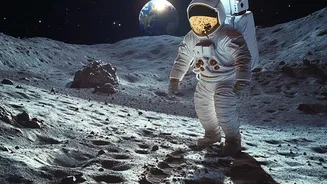
Humans are never truly alone; we carry trillions of microorganisms with us everywhere we go. An average person has about one million bacteria on every small patch of skin. Inevitably, some of these tiny travelers will be shed by astronauts, even through
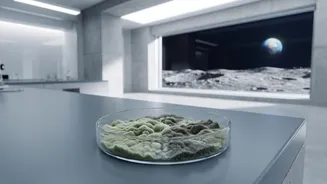
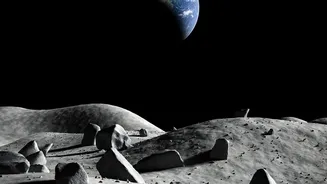
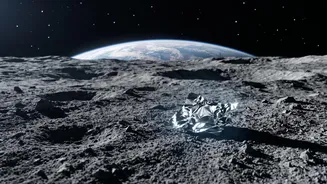
protective spacesuits, or escape from habitats and equipment. A recent NASA-led study published in August 2026 has raised new concerns, suggesting some of these microbes could temporarily survive the harsh lunar environment, particularly in the permanently shadowed regions (PSRs) near the Moon's South Pole. These areas, which are prime targets for future Artemis missions due to the presence of water ice, are shielded from the Sun's intense ultraviolet radiation and extreme temperatures, creating unique microclimates.
How Shade Becomes a Shield
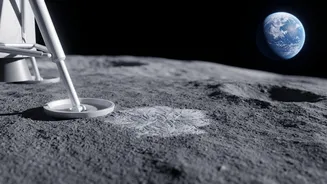
The Moon's surface is generally inhospitable, blasted by unfiltered solar radiation and subject to wild temperature swings from 127°C in sunlight down to -173°C in darkness. However, the slight axial tilt of the Moon means that the sun never rises high in the sky at the poles. This creates craters and depressions where sunlight has never reached. These PSRs act as cold traps, offering protection from radiation. The NASA study modeled how five common types of microbes associated with spacecraft would fare in these conditions and found that some, especially hardy fungal species like Aspergillus niger, could survive for days or even longer in these shaded niches. Some of these protected zones could be as small as an astronaut's bootprint, which is enough to create a tiny, habitable refuge.
The Contamination Conundrum
The primary concern is not that Earth microbes will start colonising the Moon. Scientists are careful to distinguish between survival and thriving; there is no evidence that these organisms could grow or reproduce in the lunar environment, which lacks liquid water and other necessities. The real problem is scientific confusion. One of the key goals of returning to the Moon is to study its pristine chemistry, including organic molecules and volatiles like water ice, to understand its history and formation. Even dormant or dead microbes brought from Earth contain proteins and other chemical signatures that could show up in samples. This contamination could make it incredibly difficult for scientists to distinguish between what is truly native to the Moon and what was brought there by humans. This muddies the waters for one of the most fundamental questions: could life, or its chemical precursors, have ever existed on the Moon?
Strengthening Planetary Protection
This challenge highlights the critical importance of 'planetary protection'—the practice of preventing biological contamination between Earth and other celestial bodies. For decades, the Moon was considered low-risk, but the focus on PSRs has changed that. The Committee on Space Research (COSPAR), which sets international guidelines, has already updated its policy to give special status to missions targeting these scientifically valuable polar regions. The recent findings will likely inform stricter decontamination protocols for the Artemis missions. It’s not just about cleaning spacecraft more thoroughly, but also about carefully documenting what microbes we might be carrying. By creating a baseline of our own biological baggage, future scientists can better subtract our contamination from their lunar discoveries. This is crucial not only for the Moon but also as a practice run for the even more stringent requirements that will be needed for future missions to Mars, where the potential for finding past or present life is considered much higher.