





Why Move a Tiger at All?
Tiger translocation isn't undertaken lightly. The primary goals are to establish new populations in areas where tigers have become locally extinct, like the successful reintroductions in Sariska and Panna Tiger Reserves, or to bolster dwindling populations in other
reserves. This process, known as reinforcement, enhances long-term genetic viability. Another reason is to manage rising tiger densities in certain reserves, which can lead to increased territorial disputes among the animals. It is a critical tool for conservation, but according to the National Tiger Conservation Authority (NTCA), it is not a simple solution for overpopulation or a substitute for maintaining natural wildlife corridors.
Choosing the Perfect Candidate
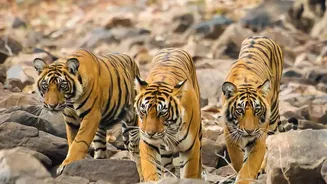
Not every tiger is a suitable candidate for relocation. A multi-disciplinary team, including representatives from the Wildlife Institute of India (WII) and state forest departments, oversees the selection. They look for specific traits: ideal candidates are typically young sub-adults, around two to three years old. At this age, they are independent but have not yet established a firm territory, meaning their removal is less likely to disrupt the social structure of their home reserve. Experts monitor potential candidates to assess their health, behaviour, and social status, and preference is given to wild-born tigers to ensure they have the necessary survival skills.
The High-Stakes Capture and Transport
Once a tiger is selected, the capture operation begins. This is a meticulously planned process involving veterinarians and biologists. The tiger is located and darted with a precise dose of tranquiliser. Once sedated, the team works quickly. The animal is given a thorough health check, and a satellite radio collar is fitted around its neck. For the journey, the tiger is placed in a specially designed transport crate. These crates are strong, well-ventilated, and often solid-sided to reduce visual stress on the animal. The design ensures there are no parts the tiger can bite or claw, minimising the risk of injury during what can be a long and stressful journey by road or even air.
Acclimatising to a New Home
Upon arrival at the new reserve, the tiger isn't immediately released into the vast wilderness. Most reintroductions use a 'soft release' method. The tiger is first moved into a large, fenced-in enclosure, often several hectares in size, within the new habitat. This enclosure contains natural vegetation and a prey base, like deer, allowing the tiger to acclimatise to the new environment, sounds, and scents without immediate danger. It's a gradual introduction to its new home, helping reduce stress and increasing the chances of the tiger establishing itself in the area once the enclosure gates are opened.
The Long Watch: Intensive Monitoring
The work is far from over once the tiger walks free. The post-release phase is critical to the project's success. The satellite radio collar is the most important tool, providing regular updates on the tiger’s location and movements. This data helps teams track the animal's territory establishment and hunting patterns. In addition to satellite tracking, field teams monitor the tiger through a combination of methods: analysing scat to understand its diet and territory markings, using networks of camera traps to get visual confirmation of its health, and traditional pugmark tracking. This constant vigilance ensures that any issues, such as conflict with resident predators or movement towards human settlements, can be addressed quickly.