







From Coding Marathons to Cosmic Challenges
Traditionally, hackathons are sprint-like events where programmers, designers, and project managers collaborate intensively over a weekend to create software or hardware projects from scratch. The atmosphere is electric, driven by creative problem-solving
under tight deadlines. But the scope of these events is expanding far beyond typical app development. A new breed of hackathon is emerging, one that sets its sights on the stars. Global space agencies and private companies are now harnessing this model to tackle some of the biggest challenges in space exploration and Earth observation. These events invite participants from diverse backgrounds—not just coders, but scientists, artists, and entrepreneurs—to innovate on everything from satellite data analysis to astronaut well-being.
NASA and ESA Lead the Charge
Leading the movement are giants like NASA and the European Space Agency (ESA). NASA's International Space Apps Challenge is the largest global hackathon, engaging tens of thousands of participants annually across more than 150 countries. Teams work with NASA's vast repository of open data to devise solutions for challenges that span technology, science, and even art. Similarly, the ESA hosts numerous hackathons and 'Acceleration Days' focused on specific themes like space weather, Earth observation, and using space assets for crisis preparedness. These events aren't just for public relations; they are a strategic tool for crowdsourcing innovation. By opening up their challenges to the public, these agencies tap into a global pool of talent and creativity that exists outside their own institutional walls.
Solving Earth's Problems from Orbit
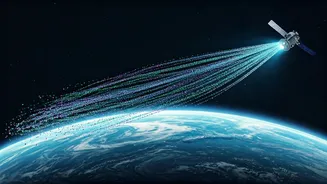
Many of these space hackathons focus on leveraging space technology to solve pressing problems right here on Earth. Participants are challenged to use satellite imagery and data to monitor climate change, improve agricultural yields, respond to natural disasters, and manage public health crises. For instance, a recent ESA-backed hackathon focused on global health produced concepts for AI-powered skin health diagnostics and a platform for disease surveillance. Another challenge tasked participants with using satellite data to identify agricultural over-fertilization. A winning project from a NASA Space Apps Challenge developed a platform to aid reforestation efforts in Peru by combining satellite data with AI to identify optimal planting areas. These examples show how abstract space data can be transformed into tangible, impactful solutions with local relevance.
A Launchpad for New Ventures
Beyond generating clever ideas, space hackathons are becoming a genuine incubator for the commercial space economy. They serve as a low-risk environment for aspiring entrepreneurs to test concepts and form teams. Some challenges are explicitly designed to help participants develop not just a technical prototype, but a viable business model that could grow into a startup. While not every weekend project becomes a unicorn, the skills, connections, and exposure gained are invaluable. Organizers often partner with venture capitalists and accelerator programs to provide a pathway for promising teams to take their ideas to the next level. Events like the AngelHack HACKcelerator have helped startups born from hackathons, such as one using satellite imagery to detect crop disease, get off the ground. This creates a powerful pipeline, turning contest-driven innovation into real-world commercial enterprise.
Why It's a Win-Win for the Space Industry
For space agencies, the benefits of this open innovation model are manifold. It provides a cost-effective way to generate novel solutions to complex problems and process enormous amounts of data that would overwhelm internal teams. A famous example involved NASA crowdsourcing a design for a foldable radiation shield; the winning concept came from a performing artist inspired by origami, a perspective unlikely to be found within a typical aerospace engineering team. These events also function as a powerful talent-scouting tool, connecting agencies with the next generation of engineers, scientists, and entrepreneurs. Ultimately, by democratizing access to space data and challenges, agencies foster a more engaged public and build a broader, more resilient ecosystem to support humanity's future in space and on Earth.