






Understanding Your Loan's Interest Rate
At its core, an education loan's interest rate is the cost of borrowing money. This rate determines how much extra you pay back on top of the principal amount. In India, these loans primarily come with two types of interest rates: fixed and floating.
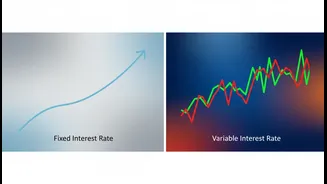
A fixed interest rate remains the same throughout the entire loan tenure, offering predictable monthly payments (EMIs). In contrast, a floating interest rate changes over time based on market conditions. While fixed rates provide stability, they are often initially higher than floating rates. Most education loans offered by Indian banks today have floating rates.
The Engine of Change: Repo Rate and Benchmarks
So, what makes a floating rate float? The key driver is the repo rate, set by the Reserve Bank of India (RBI). The repo rate is the interest rate at which the RBI lends money to commercial banks. When the RBI changes the repo rate to manage the economy, it directly impacts the borrowing costs for banks. These banks, in turn, adjust the interest rates on their loans. Since 2019, new floating rate loans, including for education, are linked to an External Benchmark Lending Rate (EBLR), which is most commonly the RBI's repo rate. This ensures that any changes in the repo rate are passed on to borrowers more quickly and transparently. Older loans might be linked to an internal benchmark called the Marginal Cost of Funds-based Lending Rate (MCLR), which adjusts more slowly to RBI changes.
How Rate Swings Affect Your Wallet
Even a small change in the interest rate can have a big impact on your long-term repayment. For example, on a ₹20 lakh loan for 10 years, a 0.25% increase in the interest rate from 10% to 10.25% can increase your monthly EMI by a few hundred rupees. While that might not sound like much, it adds up to a significant amount over the entire 10- or 15-year repayment period. Conversely, when the repo rate falls, your interest rate decreases, which could lead to lower EMIs or a shorter loan tenure if you keep paying the same EMI. This direct link means borrowers with EBLR-linked loans feel the effect of RBI's policy decisions almost immediately, usually within three months.
Fixed vs. Floating: The Big Decision
Choosing between a fixed and floating rate depends on your risk appetite and view of future interest rate trends. If you value predictability and want your EMI to remain constant, a fixed rate might be suitable, even if it's slightly higher initially. This is a safe bet if you believe rates are likely to rise significantly in the future. However, if you are comfortable with some level of unpredictability and believe rates might fall or stay stable, a floating rate could save you money over the long run. Given that most education loans have long tenures of up to 15 years, borrowers are likely to experience both rising and falling rate cycles. Currently, most lenders in India offer floating rate education loans as the default option.
Strategies to Manage Fluctuating Costs
You are not powerless against interest rate changes. Several strategies can help you manage your loan effectively. Firstly, consider making prepayments. Paying more than your scheduled EMI, especially when you have extra cash, can significantly reduce your principal amount and, consequently, the total interest paid. Secondly, if you have a high-interest loan, you could explore refinancing. This involves taking a new loan from a different lender at a lower interest rate to pay off your existing one. This is especially useful if your credit profile has improved since you first took the loan. Finally, some banks offer a 0.5% interest concession for female students, and paying simple interest during the moratorium period can also lead to a rate reduction with some lenders. Always read your loan agreement carefully and stay informed about market trends.