






Start with a Seasonal Sort-Out
Before the rains set in, perform a strategic declutter. This isn't just about tidying up; it's a pre-emptive strike against moisture. Pack away clothes you won't wear during the monsoon. This includes heavy silks, velvets, thickly embroidered ethnic wear,
and even leather, as these materials are prone to moisture damage and mildew. Store them in breathable cotton bags or, for better protection, vacuum-sealed packs which save space and keep humidity out. This frees up crucial real estate in your wardrobe, allowing the clothes you do use to have more breathing room.
Choose Your Fabrics Wisely
Monsoon fashion is all about fabric choice. The best materials are those that are lightweight, breathable, and dry quickly. Fine cotton is a reliable favourite; it's soft, allows skin to breathe, and handles humidity well. Linen is another excellent option, prized for its ability to dry faster than almost any other natural fabric. Other smart choices include cotton-linen blends, rayon, and chambray. On the other hand, it's best to avoid heavy fabrics like denim and synthetics like polyester, which trap moisture and body heat, creating a sticky, uncomfortable feeling in high humidity.
Maximise Air Circulation
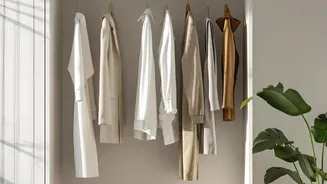
The number one enemy during the monsoon is stagnant, humid air. Your wardrobe needs to breathe. The simplest rule is to not over-stuff your closet. Leave small but deliberate gaps between hangers to allow air to circulate freely around each garment. This small step significantly reduces the chances of that familiar musty smell developing. If your wardrobe is in a particularly damp part of the house, consider keeping the doors ajar for a little while on less humid days or using a small, low-wattage incandescent bulb inside to generate gentle warmth and combat dampness.
Declare War on Dampness
To keep your wardrobe a dry sanctuary, employ desiccants to absorb excess moisture from the air. Silica gel packets are a cheap and highly effective tool; place a few on each shelf and inside shoe boxes and handbag storage. For a more natural and traditional Indian approach, use dried neem leaves, which are known to keep microbes at bay. Camphor balls are another age-old solution that works as a pest repellent and absorbs moisture while leaving a fresh scent. You can also place chalk sticks or a small bag of salt in the corners of your closet to help soak up humidity.
Perfect Your Drying Technique
How you dry your clothes is just as important as how you store them. Never, ever put even slightly damp clothes back into the wardrobe. Since sunlight is scarce, indoor drying becomes essential. Use your washing machine's spin cycle an extra time to remove as much water as possible. Hang clothes on an indoor rack in a well-ventilated room, ideally with a fan running to aid circulation. Ensure there's space between items so they aren't touching. For a modern solution, a heated clothes rail can be a game-changer, drying clothes quickly and preventing the damp window where mould thrives.
Keep Things Smelling Fresh
Despite your best efforts, odours can sometimes creep in. Combat this by placing natural fragrances in your wardrobe. Small muslin bags filled with potpourri, ground coffee, or cotton balls dabbed with essential oils like lavender or tea tree can work wonders. If a musty smell has already set in on some clothes, rewashing them with a half-cup of white vinegar or baking soda in the rinse cycle can effectively neutralise the odour. And whenever the sun makes a welcome appearance, take the opportunity to air out your clothes and even the wardrobe itself—sunlight is a natural disinfectant.
Don't Forget Accessories
The dampness of the monsoon affects more than just your clothes. Leather shoes and handbags are particularly vulnerable to mould. Before storing them, clean them and stuff them with tissue paper or newspaper to absorb internal moisture. Wrap them in breathable cloth bags, never plastic, as plastic traps condensation and can ruin leather. Placing silica gel packets inside shoes and bags before storing them provides an extra layer of protection against moisture and odours. A quick blast with a hairdryer on a low setting can help dry out shoes that have gotten wet.