




The Urban Stargazing Myth
The common belief is that city lights have stolen the stars from us. While it's true that the orange haze of urban sky-glow washes out faint, distant galaxies and nebulae, it doesn't black out the entire show. The brightest objects in our celestial neighbourhood,
particularly the planets in our own solar system, are more than capable of shining through the glare. Planets like Jupiter, Mars, Venus, and of course, Saturn, are bright enough to be seen with the naked eye even from bustling metropolitan areas. The challenge isn't that they are invisible, but that to an untrained eye, they look just like any other bright star. This is where modern technology provides a brilliant solution.
Your Phone is Now a Pocket Planetarium
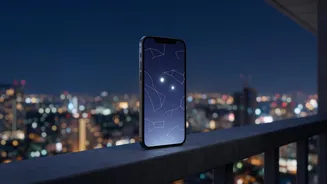
A new generation of stargazing apps uses your phone’s built-in sensors—the GPS, compass, and internal clock—to know exactly where you are and which way you're pointing it. When you hold your phone up to the sky, these apps use augmented reality (AR) to overlay a map of the cosmos onto your camera’s view. Suddenly, anonymous points of light are given names, constellations are traced with helpful lines, and planets are clearly labelled. This transforms stargazing from a test of memory into an interactive journey of discovery. Apps like Star Walk 2, SkyView, and Stellarium Mobile are designed for beginners and turn a confusing starfield into a navigable map.
A Step-by-Step Guide to Finding Saturn
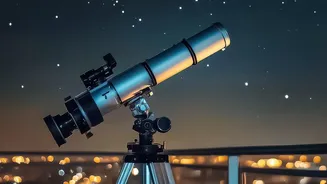
Ready to find the ringed planet? First, download a user-friendly app; Star Walk 2 is often cited as great for beginners, while SkyView and Stellarium are also excellent choices. Once installed, give it a moment to calibrate using your location. Most apps have a search function. Simply type in “Saturn.” An arrow will likely appear on your screen, directing you to move your phone until the planet is centred. As you physically move, the AR view will show you precisely where Saturn is located in the real sky above you. To the naked eye, Saturn will appear as a bright, yellowish, and steady point of light—unlike stars, planets generally don't twinkle. It's crucial to manage expectations: you won't see the famous rings with just your phone or naked eye. That requires at least a small telescope. The app’s job is to act as your celestial tour guide, confidently pointing and saying, “There it is.”
Making the Most of Your Balcony Observatory
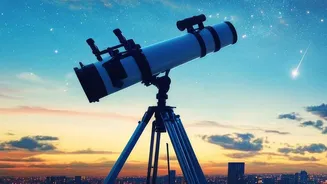
A few simple tricks can significantly improve your urban stargazing experience. First, kill the lights on your own balcony and, if possible, any interior lights visible from where you are standing. Give your eyes at least ten minutes to adapt to the darkness; this will help you see fainter objects. While your phone is a great guide, it's also a source of light. Most stargazing apps have a 'red light mode' which preserves your night vision. Finally, if you get bitten by the astronomy bug, a simple pair of binoculars is a fantastic next step. They aren't powerful enough to resolve Saturn's rings in detail, but they will make the planet appear more like a distinct disc rather than a point of light and can reveal the four largest moons of Jupiter.
Beyond Saturn: What Else Is Up There?
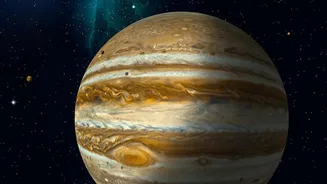
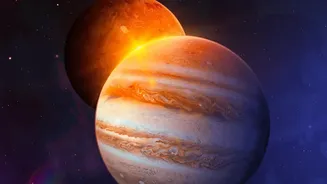
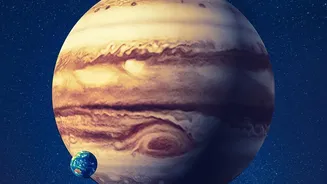
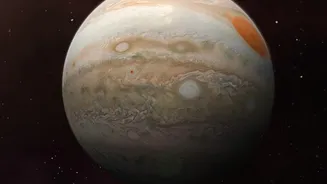
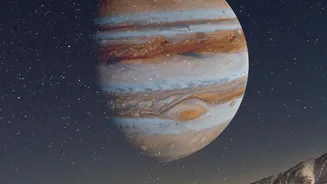
Once you’ve successfully located Saturn, the sky is your oyster. Use your app to hunt for other bright planets. Jupiter is often the brightest object in the sky after the Moon and Venus. Mars is identifiable by its distinct reddish hue. You can also track man-made objects. Many apps can send you alerts for when the International Space Station (ISS) is due to pass overhead. Watching the ISS glide silently and swiftly across the sky is a uniquely rewarding experience. On a clear night, you can also identify the brightest stars and constellations like Orion or track the phases of the Moon.