





The Allure of a Simple Answer
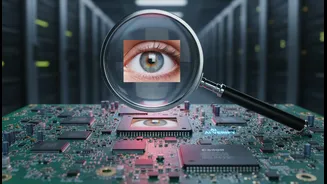
As artificial intelligence tools for creating images become more powerful and accessible, a parallel industry has emerged to police them. These AI image detectors promise to answer a simple question: was this image made by a human or a machine? The goal
is noble—to combat misinformation, deepfakes, and plagiarism. These tools work by analyzing images for subtle statistical clues that often escape the human eye, such as unnatural pixel patterns, specific types of digital noise, or artifacts unique to certain AI models. In theory, they act as a digital referee, throwing a flag on content that isn't what it appears to be.
The Problem with 'Real' vs. 'Fake'
The core issue, however, isn't the technology of detection but the question it tries to answer. The world of digital creation is not a simple binary of '100% Human' versus '100% AI'. What label should apply to a photograph taken by a person, but edited with an AI-powered tool to remove an object or expand the background? What about a digital artist who uses generative AI as a sophisticated brush, combining multiple outputs with their own manual work? Current detection models often struggle with this hybrid reality. They are trained on clear-cut examples, but much of today's content lives in a messy middle ground. This leads to a frustrating paradox where heavily edited, but genuinely captured, photos can be flagged as AI-generated.
The High Cost of False Positives
When a detector gets it wrong, the consequences can be serious. A student using advanced photo-editing techniques for a project could be unfairly accused of cheating. A photographer whose work has a very clean, almost surreal quality might see their images flagged and de-prioritized on creative platforms. Studies and extensive testing have shown that even the best detectors have significant false positive rates, sometimes flagging over 20% of legitimate academic text as AI-generated in similar tests for writing. Even OpenAI shut down its own text-detection tool due to low accuracy. This unreliability creates a culture of suspicion, where the tool intended to build trust ends up eroding it by making creators afraid to use new tools and viewers suspicious of anything that looks too polished.
Moving Beyond Detection to Provenance
Recognizing the limitations of a detection-based arms race, where generators constantly evolve to evade detectors, a more robust solution is gaining traction: content provenance. Led by a coalition of major tech and media companies like Adobe, Microsoft, and the BBC, the Content Authenticity Initiative (CAI) is championing a standard called C2PA, or Content Credentials. The idea is simple but powerful: instead of trying to sniff out fakes after they're made, let's create a verifiable history for digital content from the moment of its creation. Think of it as a secure, tamper-evident digital birth certificate that travels with the file, showing who created it, what tools were used for editing, and when those changes were made.
How Provenance Changes the Game
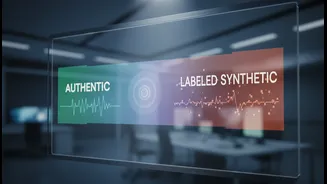
This shift from detection to provenance doesn't offer a simple 'real' or 'fake' verdict. Instead, it provides transparency. A viewer can look at an image's Content Credentials and see it was captured on a specific camera, then had its background expanded using a generative AI tool in Photoshop. This is a far more useful and honest signal than a binary label. Similarly, Google's SynthID technology embeds an invisible watermark into AI-generated content from its tools, not as a universal detector, but as a way to verify its own creations. While not foolproof—the watermark can be degraded or may not be present in content from other companies—it represents the same philosophical shift. The goal is no longer to catch fakes, but to prove authenticity.