
The Ghost of a Star
To understand why this discovery is so remarkable, we first need to appreciate what a white dwarf is. It represents the final evolutionary stage for the vast majority of stars in our galaxy, including our own Sun. When a star of this size runs out of its
hydrogen fuel after billions of years, it begins to die. Its core collapses while its outer layers swell dramatically, transforming it into a 'red giant'. This process is incredibly destructive, and any planets in the inner solar system are typically engulfed and vaporised. After the red giant sheds its outer atmosphere, all that remains is the super-dense, Earth-sized stellar core known as a white dwarf. It no longer generates heat through fusion, but glows faintly from leftover thermal energy, slowly cooling over trillions of years.
A Survivor Against All Odds?
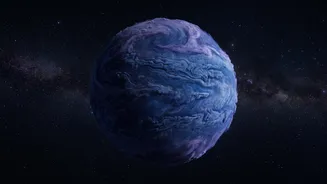
Finding a planet orbiting a white dwarf, especially in a close orbit, presents a major cosmic puzzle. The red giant phase is so expansive that a star like our Sun would swell to engulf Mercury, Venus, and almost certainly Earth. Any planet that close should have been destroyed. This is why the recent focus on a gas giant planet found orbiting a white dwarf some 6,500 light-years away is so compelling. The planet and its dead star are locked in an astonishingly tight 1.4-day orbit, meaning they are incredibly close to one another. This proximity puts the planet deep within the zone where it should have been annihilated when its star was a red giant, forcing scientists to ask an important question: if it wasn't destroyed, how did it get there?
Rising From the Ashes
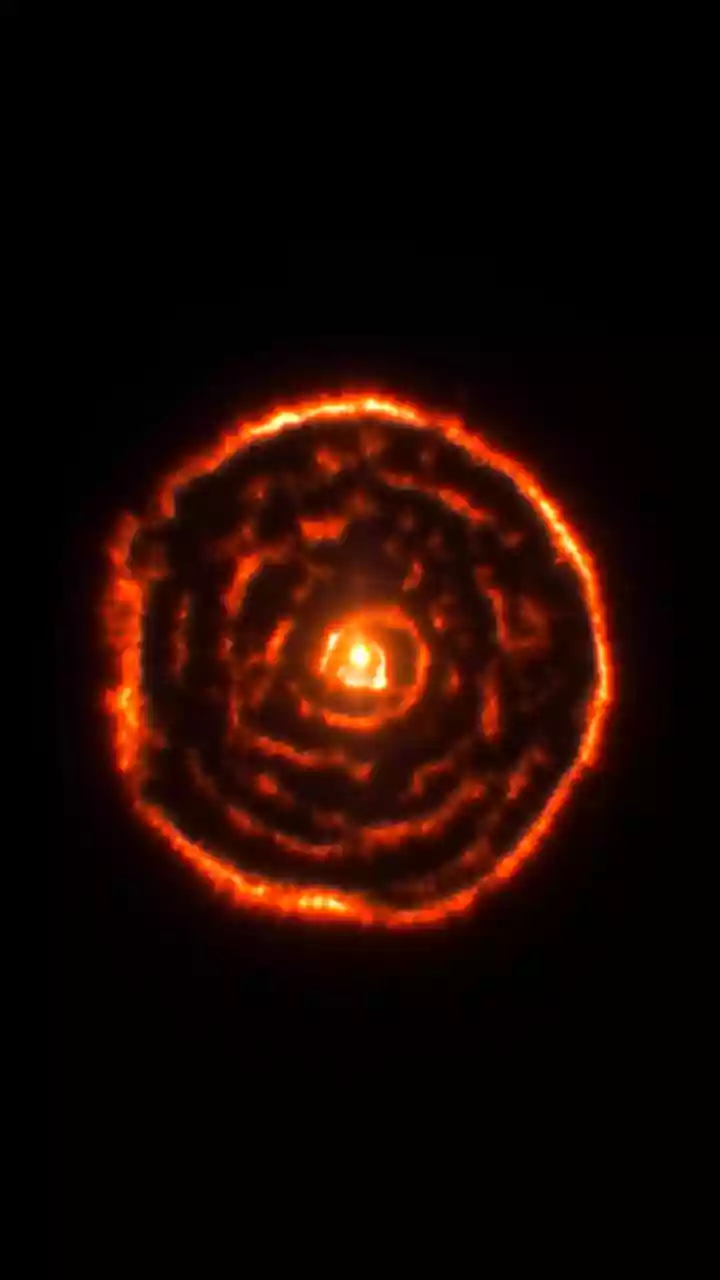
There are two leading explanations for this planet's improbable existence. The first is that it was a survivor. Perhaps it was once in a much wider, safer orbit and was knocked inward toward the white dwarf over billions of years through complex gravitational interactions. The second, more extraordinary theory is that this is a 'second-generation' planet. This idea posits that the planet is not a survivor at all, but an entirely new world formed after the star's death. In this scenario, the white dwarf would have been surrounded by a disk of gas and dust—the pulverised remains of asteroids, comets, and perhaps even planets from the original system. Over millions of years, this cosmic debris could have coalesced to form a new planet, a true phoenix born from the ashes of its predecessor system.
Evidence for a New World
The concept of planets forming from stellar remnants isn't entirely unprecedented. The very first exoplanets ever confirmed were found in the 1990s orbiting a pulsar, the corpse of a much more massive star. However, finding a potential second-generation world around a white dwarf is particularly significant because it's the fate awaiting around 97% of all stars. Observations of the system in question have provided intriguing clues. Using the European Southern Observatory's Very Large Telescope, astronomers detected the faint signature of the planet and star orbiting each other. Crucially, the planet appears to be surprisingly cool. If it were an old, surviving planet being heated by the white dwarf, it should glow in infrared light, but this signal is missing. While not definitive proof, this could support the idea that it formed much more recently from a cool debris disk, long after the star had died.
A Glimpse Into Our Solar System's Future
This research is more than just a distant astronomical curiosity; it offers a fascinating, albeit speculative, look into the far future of our own solar system. In approximately five billion years, our Sun will exhaust its fuel and begin its transformation into a red giant, likely destroying the inner planets. Eventually, it too will settle into a long, quiet retirement as a white dwarf. The idea that new planets could form from the shattered remnants of our current solar system introduces a profound cycle of cosmic destruction and creation. It suggests that even after a star dies and its original worlds are lost, the ingredients for new ones can remain. This discovery fuels the idea that planetary systems are not static but are dynamic places of continuous change, where endings can pave the way for new beginnings.