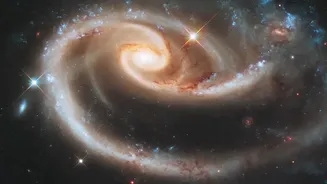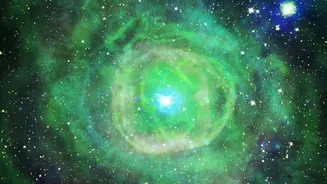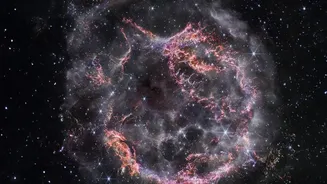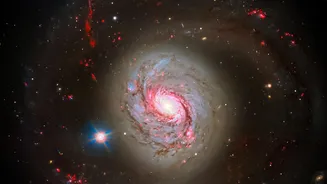



A New Generation of Cosmic Eyes
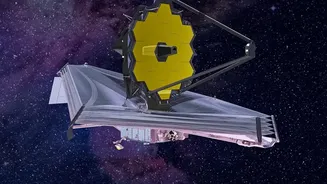
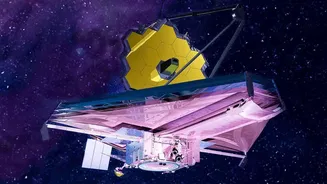
At the forefront of this revolution is the James Webb Space Telescope (JWST), an infrared observatory that has been delivering breathtaking and scientifically profound images since it began operations. Working alongside the legendary Hubble Space Telescope,
which continues to provide crucial data, these instruments act as our time machines. Webb’s ability to peer through cosmic dust and detect faint, ancient light allows us to see the universe as it was billions of years ago. This one-two punch of old and new technology is providing a more complete picture of the cosmos than ever before, revealing details that were once purely theoretical or entirely unimagined.
Finding a Black Hole That Shouldn't Exist
One of the most recent and startling discoveries came from combining new Webb data with over two decades of Hubble's archival observations. Astronomers have finally located the first stellar-mass black hole in Omega Centauri, the largest globular cluster in our Milky Way galaxy. For years, scientists were puzzled because models predicted this massive star cluster should contain thousands of black holes, yet none had been found. This new discovery, made possible by precisely measuring the tiny wobble of a star orbiting an invisible companion, not only confirms the first of this 'missing' population but also presents a new puzzle. The star and black hole have the longest orbital period ever discovered for such a pair, suggesting the black hole captured its companion rather than forming with it.
A Giant Planet Hiding in Plain Sight
Even in some of the most studied systems in our galactic neighbourhood, surprises are lurking. The star Beta Pictoris was already known to host two massive planets. However, recent analysis from the JWST revealed a third giant planet, named Beta Pictoris d, that had been hiding in the glare of the system's bright dust disk. What makes this discovery particularly exciting is how it was found. Instead of being spotted as a point of light, the planet was revealed by the chemical signature of its atmosphere—specifically carbon monoxide, water vapor, and methane—which Webb was able to detect. This powerful new technique could allow astronomers to find many more hidden worlds that are otherwise impossible to image directly.
The Fading Light of Our Cosmic Neighbour
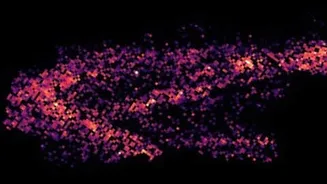
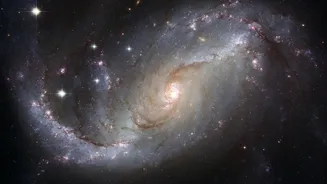
While Webb looks deep into the past, Hubble continues to keep a close watch on our cosmic neighbours, including the Andromeda galaxy. A recent study using a massive trove of Hubble data found that star formation in Andromeda has been steadily declining for the last 500 million years, with a sharp drop-off in just the last 40 million. By meticulously measuring about 200 million individual stars, which act as a 'fossil record,' astronomers have been able to map the galaxy's history of star birth. Since Andromeda is considered a sibling to our own Milky Way, understanding its evolution and why it seems to be winding down could provide clues to the eventual fate of our own galaxy billions of years from now.