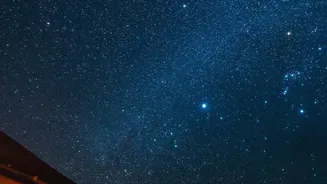








Essential Viewing Equipment
While the most important tool is your own eyes, a little help can reveal breathtaking details. Let your eyes adapt to the darkness for at least 20-30 minutes to see the sky in its full glory. For a closer look, a good pair of binoculars (like 7x50 or 10x50)
is an excellent starting point, perfect for scanning the Moon's craters or spotting Jupiter's moons. You don't need an expensive telescope to begin; in fact, the vastness of the Milky Way is often best appreciated with a wide field of view. However, if you have access to a telescope, it can transform faint smudges into detailed star clusters and nebulae.
Guidance and Illumination
To navigate the celestial sphere, a star chart or a planisphere is invaluable. Alternatively, download a stargazing app like Stellarium or SkySafari on your phone before you leave, as remote spots may lack connectivity. A critical but often overlooked item is a red-light torch or headlamp. White light from a standard torch or phone screen will instantly ruin your night vision, which takes a long time to recover. A red light allows you to see your surroundings and read your charts without compromising your view of the faint stars.
Dressing for the Night
Even in regions that are warm during the day, night temperatures can drop significantly, especially at higher altitudes or in open deserts like the Rann of Kutch. Dressing in layers is the best strategy. Start with a comfortable base layer, add a fleece or sweater, and top it with a windproof jacket. A warm hat, gloves, and thick socks are also essential, as you'll be sitting or standing still for long periods, which makes you feel the cold more acutely.
Creating a Comfortable Base
Comfort is key to enjoying a multi-hour stargazing session. Pack a foldable camping chair, a thick blanket, or a sleeping bag to lie on. A water-resistant blanket or tarp is a great idea to protect you from damp ground. To keep your energy and spirits up, bring a flask of hot tea, coffee, or hot chocolate, along with some easy-to-eat snacks. Staying warm and comfortable allows you to focus on the cosmic spectacle above without distraction.
Safety and Practicalities
Choose your stargazing spot in advance and ensure it's a safe, open area far from city lights. Let someone know your location and planned return time. In many parts of India, insects are active at night, so a good insect repellent is a must. Also, pack a basic first-aid kit for any minor scrapes or issues. A fully charged phone and a portable power bank are crucial, not just for running apps but for any emergencies. Finally, remember to pack out everything you bring in, leaving your dark-sky spot as pristine as you found it.