






A Tale of Two Monsoons
The story of the 2026 southwest monsoon is one of sharp contrasts. After a weak start in June, a vigorous July helped narrow the country's overall rainfall deficit. However, the distribution has been far from uniform. As of mid-August, a low-pressure
area over the Bay of Bengal is causing extremely heavy rainfall in states like Odisha and West Bengal, while other parts of the country continue to experience drier conditions. The India Meteorological Department (IMD) has forecast below-normal rainfall for August and September, driven by strengthening El Niño conditions in the Pacific Ocean. This pattern of intense rain in some areas and prolonged dry spells in others is the very definition of an uneven monsoon, and it poses a greater threat to agriculture than a simple nationwide deficit.
Which Crops Are on the Line?
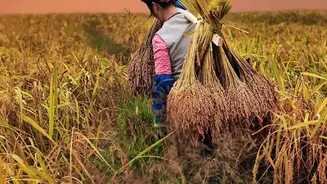
The Kharif season, which depends heavily on monsoon rains, is now at a critical juncture. Farmers plant crops like rice (paddy), maize, soybean, cotton, and pulses during this period. As of August 14, official data shows that total sowing area for these crops is about 2% lower than last year. The most significant concerns are around rice, where acreage is down by 3.7%, and pulses like tur (arhar), which has seen a 4% dip. Other important crops like maize and cotton are also lagging. With the sowing window now virtually closed, the final harvest size will depend almost entirely on crop yields over the next few weeks. This is the crucial growth stage where adequate and evenly distributed moisture becomes non-negotiable for a healthy output.
The Regional Divide
The national averages hide stark regional disparities. While states in eastern India like Odisha, Jharkhand, and West Bengal are bracing for very heavy rains and potential flooding, other key agricultural belts are thirsty for more. According to one report, 345 of the country's 741 districts had recorded a rainfall deficit of at least 20% by early August. This geographic imbalance creates localised crises. Farmers in some regions face the risk of waterlogged fields, which can damage standing crops, while those in rain-fed areas worry about declining soil moisture that could stunt plant growth. This patchiness complicates any national-level response and means that while some farmers may have a bumper harvest, others could face significant losses.
Are Reservoirs Our Saving Grace?
Reservoirs are India's buffer against a poor monsoon, storing water for irrigation and drinking. This year, the picture is concerning. Despite some recent improvements from July's rainfall, water levels in many of India's major reservoirs remain significantly below last year's levels and the ten-year average. Data from early August showed that storage in the southern and northern regions was particularly low, down 32 and 24 percentage points respectively compared to the previous year. While the western region has fared better, the overall low storage raises red flags. Depleted reservoirs limit the ability to support crops through irrigation if the rest of the monsoon season proves to be weak, and it also has implications for the upcoming Rabi (winter) sowing season.
The Ripple Effect on the Economy
The performance of the Kharif harvest has a direct impact on India's economy. Agriculture contributes significantly to the nation's GDP and employs nearly 40% of the workforce. A shortfall in the production of key staples like rice and pulses could quickly translate into higher food prices for consumers. Economists are watching closely, as a spike in food inflation could put pressure on household budgets and complicate the Reserve Bank of India's efforts to manage overall inflation. Lower crop output also means reduced income for millions of farmers, which can dampen rural demand for goods and services, creating a ripple effect across the entire economy.