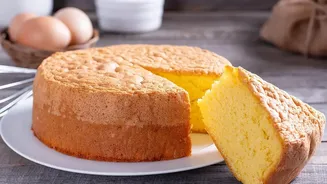

The dream of a perfect sponge cake—impossibly light, soft, and airy—can feel out of reach without eggs. But it doesn't have to be. With a few key techniques and the right ingredients, a beautifully fluffy egg-free sponge is entirely achievable.
Understanding the Role of Eggs
Before
removing eggs, it's crucial to understand the multiple jobs they perform in a traditional sponge cake. Eggs are the ultimate multi-tasker in baking. When beaten, they trap air, which expands in the oven to create lift and a light, airy texture. The proteins in eggs coagulate with heat, providing the cake's very structure and framework, preventing it from crumbling. Egg yolks add fat, which contributes to a tender, moist crumb and a rich flavour, while the water content in both yolks and whites adds necessary moisture. In essence, eggs provide leavening, binding, structure, and moisture all at once. Our goal in egg-free baking is to replicate each of these functions using other ingredients.
Choosing the Right Egg Substitute
Several ingredients can mimic the properties of eggs, but some are better suited for the delicate nature of a sponge cake. Yogurt or buttermilk are excellent choices, as they provide moisture, richness, and acidity. The acid in yogurt reacts with baking soda to help leaven the cake. Another powerful option is aquafaba—the liquid from a can of chickpeas. When whipped, aquafaba can trap air much like egg whites, making it ideal for creating a light, fluffy texture in cakes and meringues. A simple combination of oil, water, and baking powder can also be effective, with the oil adding moisture and the baking powder providing lift. For a classic sponge, avoid dense substitutes like mashed banana or pumpkin puree, as their strong flavours and heavy textures can weigh down the crumb.
Harnessing the Power of Leaveners
Without the natural leavening from beaten eggs, chemical leaveners become even more important. Most egg-free sponge recipes rely on a combination of baking powder and baking soda. The real magic happens when baking soda, a base, is combined with an acid. This creates a chemical reaction that releases carbon dioxide gas, producing bubbles that make the cake rise and give it a light crumb. This is why many recipes call for an acidic ingredient like yogurt, lemon juice, or vinegar. For the best lift, allow yogurt to sit with the baking soda for a few minutes until it becomes frothy before mixing it into the batter. If using vinegar, it's often added at the very end to maximize its reaction time in the oven.
Mastering the Mixing Method
Technique is just as important as the ingredients. Overmixing is the enemy of a light cake, as it develops gluten in the flour, leading to a tough, dense texture. Always start by sifting your dry ingredients—flour, baking powder, and baking soda—to remove lumps and aerate them. When combining wet and dry ingredients, do so gently. Add the dry ingredients in batches and fold them in with a spatula until just combined. Stop mixing as soon as you no longer see streaks of flour. This gentle handling preserves the air bubbles created by the leaveners. Also, ensure all your ingredients, especially wet ones like yogurt or plant milk, are at room temperature. Room temperature ingredients emulsify better, creating a smoother, more uniform batter.
Perfecting the Bake
How you bake is the final piece of the puzzle. Always preheat your oven to the temperature specified in the recipe. Placing your batter into a hot oven ensures the leaveners activate immediately, giving the cake a good 'oven spring' or initial rise. Bake the cake on the center rack for even heat distribution. Resist the temptation to open the oven door during the first 20-30 minutes of baking, as the sudden drop in temperature can cause the delicate structure to collapse. The cake is done when a skewer inserted into the center comes out clean. Let the cake cool in the pan for about 10 minutes before gently inverting it onto a wire rack to cool completely. This prevents the bottom from becoming soggy and helps the crumb set properly.