



Why Bodyweight Training Is Perfect for Beginners
Bodyweight exercises are the ideal starting point for anyone new to fitness. They are incredibly convenient and can be done anywhere, from your living room to a hotel room, eliminating common excuses like a lack of time or access to a gym. More importantly,
these exercises build 'functional' strength, which means they improve your ability to perform everyday movements like lifting, pushing, and squatting with greater ease and a lower risk of injury. Because you learn to control and handle your own body's resistance, you build a solid foundation of stability, balance, and coordination that prepares you for more advanced fitness pursuits later on. Plus, it's free, which removes the financial barrier that can keep people from starting.
The Foundational Five: Your First Exercises
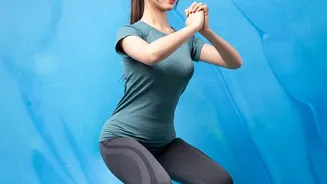
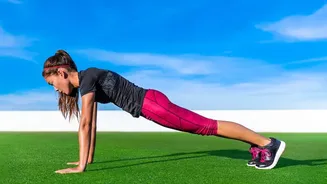
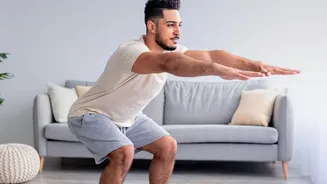
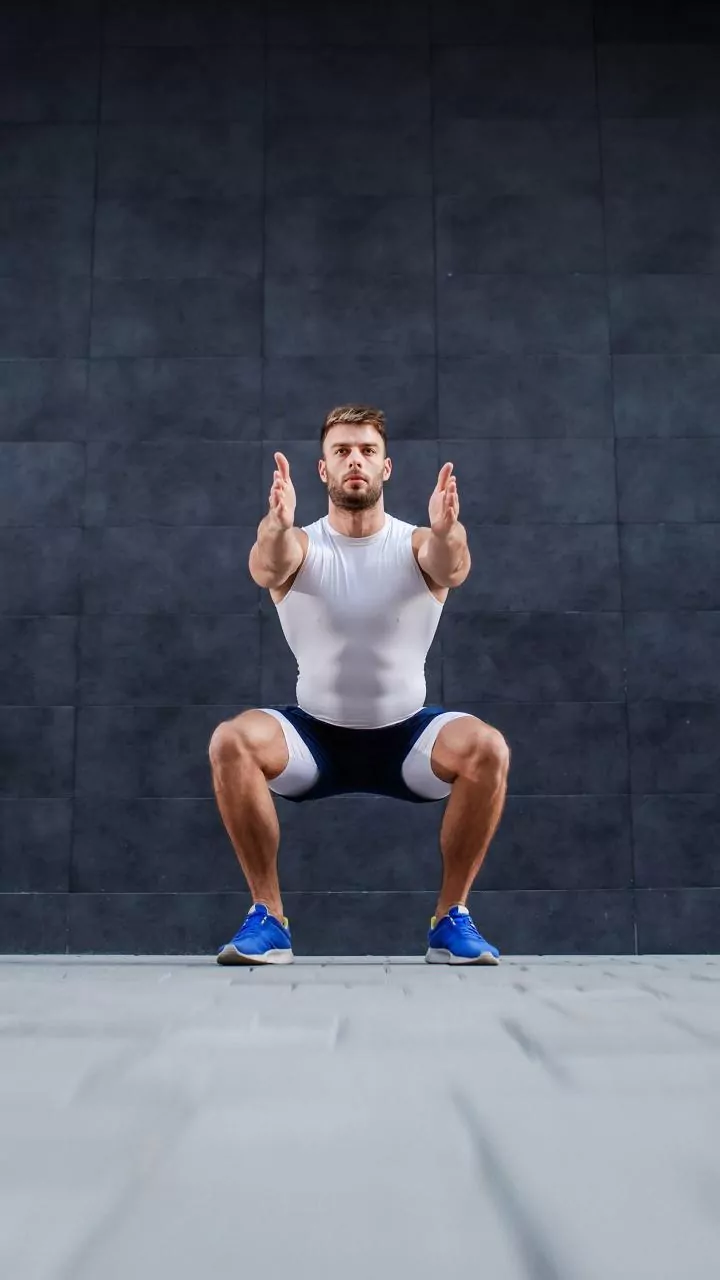
A balanced routine targets all your major muscle groups. Start by mastering these five fundamental movements. 1. Squats: This powerhouse move strengthens your legs, glutes, and core. Stand with feet shoulder-width apart, keep your chest up, and lower your hips as if sitting in a chair, ensuring your knees track over your toes but not past them. 2. Push-Ups: The ultimate upper-body exercise, working the chest, shoulders, and triceps. If a standard push-up is too difficult, start by doing them on your knees or against a wall. 3. Plank: Essential for building core strength. Hold your body in a straight line from head to heels, engaging your abs to prevent your hips from sagging or rising too high. 4. Lunges: These improve leg strength, balance, and hip flexibility. Step one foot forward and lower your hips until both knees are bent at roughly a 90-degree angle. 5. Glute Bridges: An excellent exercise for activating your glutes and strengthening your lower back. Lie on your back with knees bent, feet flat on the floor, and lift your hips toward the ceiling.
Creating Your First Weekly Routine
Consistency is more important than intensity when you're just starting. Aim to perform a full-body workout 2-3 times per week on non-consecutive days to give your muscles time to recover. A simple and effective routine would be to select 3 to 4 exercises from the list above. For each exercise, perform 2 to 3 sets of 8 to 12 repetitions. Rest for about 60 to 90 seconds between each set. As you get stronger, you can increase the number of reps or sets. The entire workout shouldn't take more than 20-30 minutes, making it easy to fit into a busy schedule.
Focus on Form Over Speed
One of the most common mistakes beginners make is rushing through exercises with improper form. This not only reduces the effectiveness of the workout but also significantly increases the risk of injury. Focus on performing each repetition with slow, controlled movements. It's better to do five perfect squats than 20 sloppy ones. Pay attention to what you feel. You should feel the target muscles working. If you feel pain in your joints, especially your knees or lower back, stop and check your form. Using a mirror can be a great tool to watch yourself and ensure your body is aligned correctly. Remember, you are building a habit and a foundation, so quality is paramount.
How to Progress and Stay Motivated
Once the basic routine starts to feel easy, it's time to progress. To continue building strength, you need to continually challenge your muscles. You can make exercises harder in several ways without adding weights. Try increasing the number of repetitions or sets, slowing down the movement to increase time under tension, or reducing your rest periods. You can also switch to more challenging variations, such as progressing from knee push-ups to full push-ups. The key is to listen to your body and make gradual changes. Tracking your workouts in a simple notebook can also be a powerful motivator, allowing you to see how far you've come.