



The Science of a Microwave Oven
A microwave oven doesn't create heat in the traditional sense. Instead, it generates invisible energy waves—microwaves—that primarily target water molecules in your food. These waves cause the water molecules to vibrate rapidly, and this friction creates
heat. However, these waves don't just flood the oven cavity uniformly. They bounce off the metal walls, creating a complex interference pattern of high and low energy zones, much like ripples in a pond. These patterns result in what are known as "standing waves," which have fixed peaks (hot spots) and troughs (cold spots).
Why the Turntable Isn't a Perfect Fix
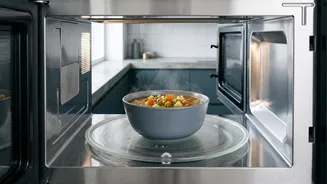
You might think the rotating turntable solves this problem entirely. While it certainly helps, it's not a complete solution. The turntable's job is to move the food through the various hot and cold spots, aiming to average out the heating. However, if your food is large, oddly shaped, or placed directly in the center, parts of it may still spend too much time in a low-energy trough or a high-energy peak, leading to uneven temperatures. For example, the very center of the turntable often moves very little, making it a common cold spot.
Arrange Food in a Ring
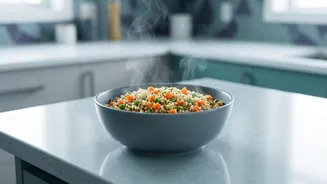
One of the most effective and easiest changes you can make is how you arrange food on the plate. Instead of piling it in the middle, spread your food out in a ring or doughnut shape, leaving the center of the plate empty. Since microwaves tend to heat from the outside in, this arrangement exposes more of the food to the initial waves and avoids the common cold spot in the center. This allows for much more even energy absorption across the entire portion.
Choose the Right Container
The shape of your container also plays a significant role. Square or rectangular dishes can cause energy to concentrate in the corners, leading to overcooked edges and a cool center. Round or oval dishes are preferable as they promote more even heating. Also, ensure you are always using microwave-safe containers. Some materials, like certain plastics or ceramics, can heat up themselves, stealing energy from your food and potentially leaching chemicals or cracking. If a dish becomes very hot to the touch while the food inside remains cool, it's not a good choice for microwaving.
The Power of Stirring and Resting
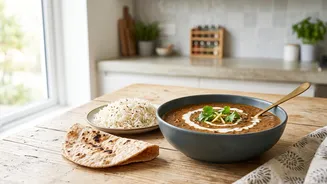
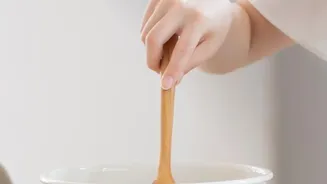
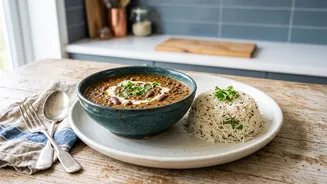
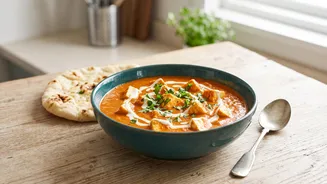
It might seem obvious, but the simple act of stirring is crucial. Pausing the microwave halfway through to stir your soup, dal, or sabzi manually redistributes the food, moving the colder parts into the hot zones and vice versa. Just as important is "standing time." After the microwave dings, let your food rest for a minute or two before eating. During this time, the heat continues to spread via conduction from the hotter areas to the cooler ones, allowing the overall temperature to equalize throughout the dish.
Use a Lower Power Setting
Blasting your food at 100% power isn't always the best approach, especially for denser foods or delicate items like eggs. Using a lower power setting (around 50-70%) and increasing the cooking time allows the heat to penetrate more gently and evenly. On lower settings, the microwave cycles the power on and off, giving the heat more time to conduct throughout the food between energy bursts, preventing the outside from becoming scorched while the inside remains frozen.