




An Orchestra for the Senses
The Indian monsoon is more than a weather event; it’s a multi-sensory experience that signals a shift in the rhythm of daily life. The sudden drop in temperature brings a welcome respite from the scorching summer heat. The landscape transforms into a lush
green, and the sound of rain becomes the season's soundtrack. This dramatic change in the environment cues an inward turn. Life slows down, people spend more time indoors, and the atmosphere becomes one of cosy contemplation. It is in this setting that food becomes not just sustenance, but an essential part of the atmosphere itself. The craving isn't just for any food; it's for a specific kind of comfort that speaks to the cool, damp air.
The Science of the Craving
There's a reason why a crisp, hot snack feels so right when it's pouring outside. Psychologically, the gloomy weather and lack of sunlight can lead to a dip in serotonin, our natural mood-booster. Our bodies instinctively seek out carbohydrates to lift our spirits, and fried foods provide a quick, rewarding hit of energy and pleasure. Physiologically, the drop in ambient temperature makes us crave warm, calorie-dense foods to help maintain our core body temperature. The crunchy texture of a freshly fried snack provides a satisfying contrast to the damp, humid surroundings, making it feel deeply comforting. This craving is less a sign of indulgence and more a complex biological and emotional response to the environment.
The Humble, Heroic Pakora
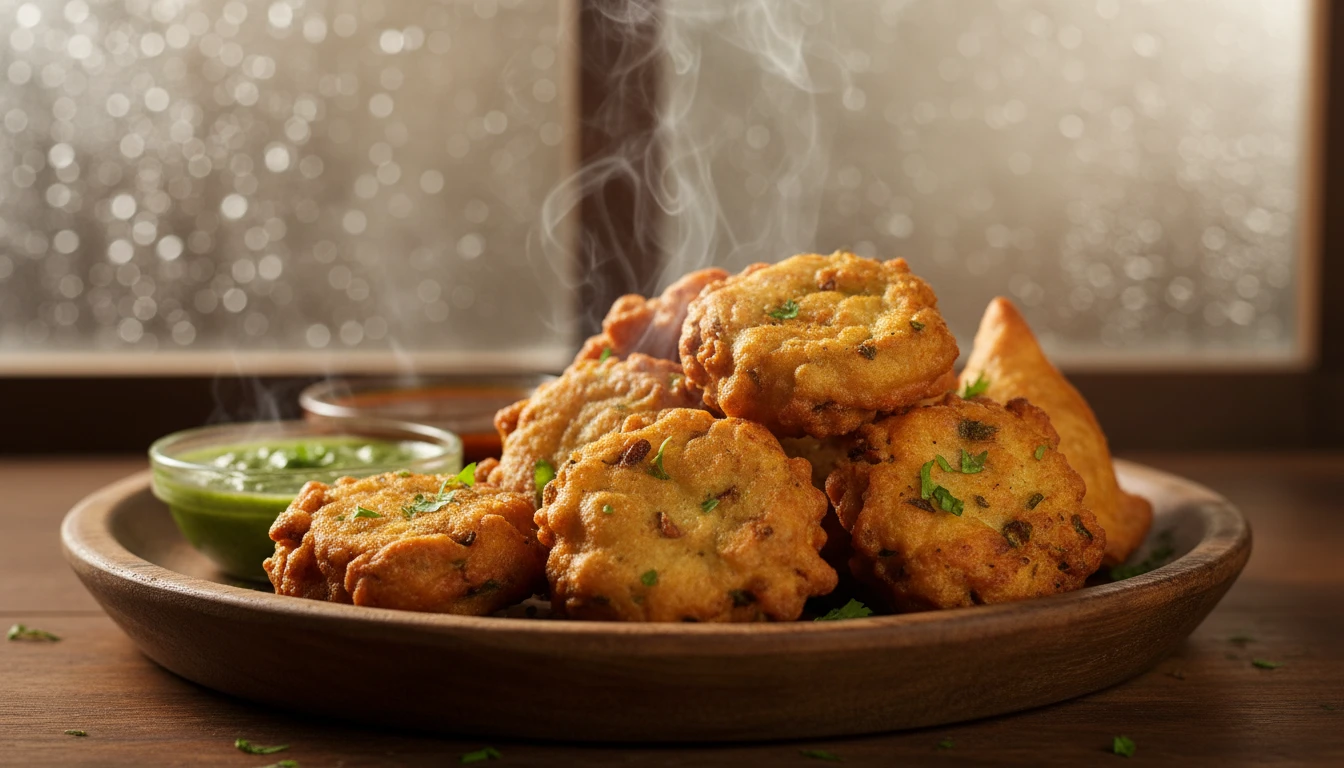
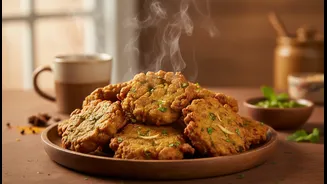
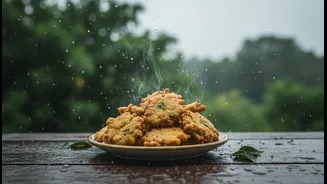
While many snacks are enjoyed during the monsoon, the undisputed star is the pakora. Known by various names across the country—bhajji, bonda, telebhaja—this humble fritter is the quintessential rainy-day food. Made by dipping vegetables like onion, potato, spinach, or chilli in a spiced gram flour batter and deep-frying them to golden perfection, the pakora is endlessly versatile. From the fiery Mirchi Vada of Rajasthan to the delicate Beguni (eggplant fritters) of Bengal and Mumbai's iconic Kanda Bhaji (onion pakora), each region has its beloved version. This simple snack, often sold by street vendors huddled under makeshift shelters, unites people from all walks of life in a shared moment of savoury joy.
A Ritual of Togetherness
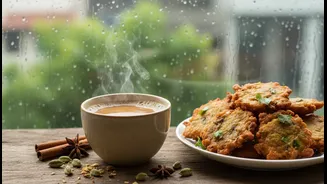
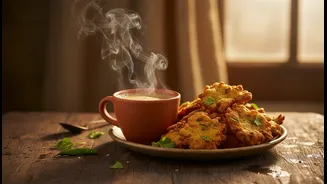
More than just a snack, the act of making and sharing pakoras is a cherished ritual. The question, "It's raining, should I make some chai?" is an invitation that often leads to the sizzle of batter hitting hot oil. This combination of pakoras and a steaming cup of masala chai is a cultural institution, a pairing that has become synonymous with the monsoon. The ritual is rooted in nostalgia, evoking memories of childhood, family gatherings, and the simple comfort of being cared for. It’s a moment to pause, gather with loved ones, and watch the rain fall, transforming a simple snack into a powerful emotional experience. This communal act of sharing food strengthens bonds and creates lasting memories, making it a cornerstone of monsoon culture.
A Platter of Monsoon Delights
While the pakora often takes centre stage, India’s monsoon platter is rich and diverse. The smoky, charred flavour of Bhutta, or roasted corn on the cob, rubbed with lemon and spices, is another street-side favourite. In Mumbai, the Vada Pav—a spicy potato fritter in a soft bread bun—reigns supreme. Kolkata finds comfort in Khichuri, a soulful mix of rice and lentils, often accompanied by fried snacks. In the South, a plate of crispy Medu Vada with hot sambar or sweet Pazham Pori (banana fritters) offers similar comfort. Even sweets like hot, syrup-soaked Jalebi become a popular indulgence, providing a sweet counterpoint to the savoury cravings. Each dish reflects the local ingredients and culinary wisdom of its region, celebrating the season in its own unique way.