


Why Venus is So Compelling
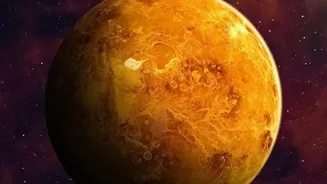
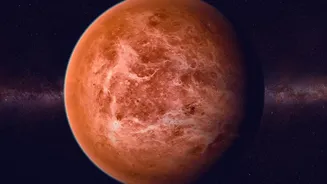
Venus is often called Earth's twin due to its similar size and mass, but it couldn't be more different. It's a terrestrial planet that suffered a runaway greenhouse effect, resulting in a thick, toxic atmosphere and surface temperatures hot enough to melt
lead. The planet is perpetually shrouded in dense clouds of sulfuric acid, making its surface impossible to see with conventional telescopes. For scientists, Venus serves as a crucial natural laboratory. Understanding how and why it transformed from a potentially habitable world into a scorching inferno could provide invaluable insights into planetary evolution and climate change, offering a cautionary tale for Earth's own future. This makes it one of the most compelling and mysterious destinations in our solar system.
The Mission's Scientific Toolkit
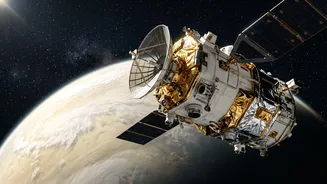
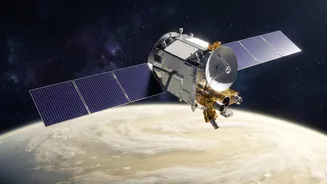
To peer through this veil, Shukrayaan-1 will carry about 100 kg of scientific instruments. At the forefront is a high-resolution Synthetic Aperture Radar (SAR), which uses radar waves to map the planet's surface geology, searching for signs of active volcanoes and lava flows regardless of the thick cloud cover. The mission will also be the first to deploy a ground-penetrating radar on Venus, designed to study the planet's subsurface structure. But the headline attraction is its suite of atmospheric sensors, designed for a thorough chemical analysis of the toxic air. These instruments will investigate the structure, composition, and dynamics of the planet's atmosphere in unprecedented detail.
Decoding the Atmosphere
The atmospheric payload is a mix of Indian and international technology. A key instrument is the Venus InfraRed Atmospheric Gases Linker (VIRAL), a collaborative effort with Russia and France. VIRAL will use a technique called solar occultation spectroscopy to measure the concentration of various gases like carbon dioxide and sulphur dioxide at different altitudes. Another instrument, a mass spectrometer, will directly sample the upper atmosphere to identify its constituent elements. Additionally, infrared and ultraviolet cameras will monitor cloud movements, a lightning sensor will hunt for electrical discharges, and plasma analysers will study the interaction between Venus's ionosphere and the solar wind.
Searching for Answers to Big Questions
These advanced sensors are geared towards answering some of the biggest questions about Venus. One major objective is to understand the mysterious 'super-rotation' of its atmosphere, which circles the planet sixty times faster than the planet itself rotates. Scientists also want to investigate the chemistry of the sulphuric acid clouds and understand their role in the planet's extreme climate. Following the tentative discovery of phosphine gas in the Venusian clouds a few years ago—a potential, though highly debated, sign of life—instruments like VIRAL will be on the lookout for trace gases that could hint at geological or even biological activity. The mission aims to create a global dataset that will help scientists build a comprehensive model of Venus.
India's Next Interplanetary Leap
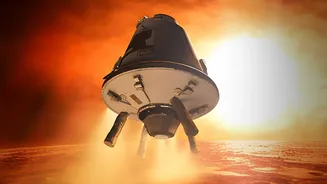
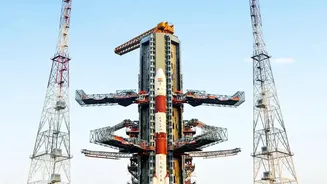
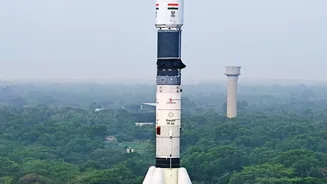
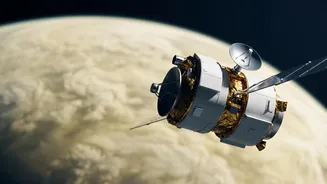
Shukrayaan-1 builds on the legacy of ISRO's highly successful Chandrayaan (Moon) and Mangalyaan (Mars) missions. Formally approved by the Union Cabinet in September 2024, the mission is currently scheduled for a March 29, 2028 launch aboard the powerful LVM-3 rocket. After a 112-day journey, the orbiter will enter a large elliptical orbit around Venus. Over the following year, it will use a fuel-saving technique called aerobraking—dipping into the upper atmosphere to use drag for slowing down—to circularise its orbit for scientific operations. This mission not only signifies India's growing capabilities in deep space exploration but also places it among a fleet of international missions heading to Venus in the late 2020s and early 2030s, including those from NASA and the European Space Agency.