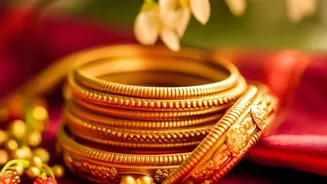









A Sacred Symbol of Blessings
Gold's significance is deeply rooted in religious and spiritual traditions. The metal is considered auspicious and pure, associated with Goddess Lakshmi, the deity of wealth and prosperity. This belief makes buying gold on festivals like Dhanteras and Akshaya
Tritiya a widespread ritual to invite good fortune. From a newborn's first naming ceremony to major festivals and weddings, gold is present as a symbol of divine blessings and a prayer for a prosperous future. Its incorruptible nature—it doesn't rust or tarnish—mirrors concepts of eternity and divinity, making it the preferred metal for sacred occasions.
The Bedrock of a Woman's Security
Historically, one of gold's most critical roles has been providing financial security for women. The concept of 'Streedhan', which translates to 'woman's wealth', refers to the assets, primarily gold jewellery, that a woman receives from her parents, in-laws, and husband during her marriage. Legally, this is her absolute property, over which she has complete control. This tradition originated in a time when property inheritance laws favoured men, making gold a daughter's share of the family wealth. It functions as a portable, liquid asset that offers a woman financial independence and a safety net in times of crisis, a practice upheld by Indian law.
Marking Life's Most Important Milestones
No Indian wedding is complete without gold. It forms the centerpiece of bridal adornment, from the mangalsutra—a sacred necklace tied by the groom—to elaborate sets gifted by both families. These pieces are not just decorative; they are symbols of the family's status, their blessings for the couple, and the bride's new marital status. Beyond weddings, gold marks nearly every significant life event. A pair of earrings for a first birthday or a chain from a grandparent becomes a cherished memento, tying a physical object to a precious memory. This practice transforms jewellery from a simple gift into a priceless piece of personal history.
A Liquid, Intergenerational Asset
Unlike other heirlooms, gold carries a unique combination of sentimental and financial value. It is passed down through generations, not just as a memory, but as a tangible store of wealth. Indian households are estimated to hold around 25,000 tonnes of gold, making it one of the largest private gold reserves in the world. This immense holding functions as a reliable family savings system. Gold is a highly liquid asset, easily sold or pledged for a loan in emergencies, providing a crucial buffer against financial instability without relying on formal banking systems. This reliability ensures that even as designs evolve, its role as the ultimate family safety net remains.