

Beyond the Goldilocks Zone
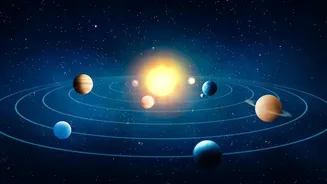
For decades, the concept of the habitable zone has been our primary filter in the search for life elsewhere. It defines the orbital ring around a star where a planet's surface could theoretically support liquid water, a key ingredient for life as we know
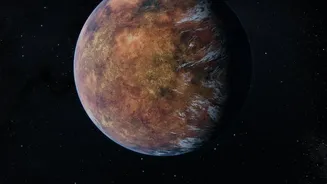
it. If a planet is too close to its star, its oceans boil away; too far, and they freeze solid. This concept has successfully helped astronomers narrow down which of the more than 6,000 confirmed exoplanets are worth a closer look. However, science now tells us that this location-based check is just the beginning of a much more complex investigation. Simply being in the right neighbourhood doesn’t guarantee a planet is a suitable home for life.
The Host Star's Temperament
A planet's habitability is deeply tied to the nature of its host star. The star's size, age, and stability are critical. Stars much larger than our Sun burn hot and die young, often before complex life has a chance to evolve. Conversely, smaller, dimmer stars like red dwarfs require planets to orbit extremely close to stay warm. This proximity puts them in danger of violent stellar flares, which can blast a planet with radiation and strip away its atmosphere over time. The ideal candidate is a stable, middle-aged star, much like our own Sun, that provides a steady, reliable source of energy without frequent, life-sterilising tantrums.
An Atmosphere and a Shield
Even with a perfect star, a planet needs its own protection. A robust atmosphere is essential. It works like a blanket, trapping heat to regulate temperature and providing the necessary pressure to keep water in a liquid state. But an atmosphere is vulnerable. This is where a magnetic field becomes non-negotiable. Generated by a planet's rotating, molten core, a magnetic field acts as a planetary shield, deflecting harmful stellar winds and cosmic rays that would otherwise erode the atmosphere. Without this invisible force field, a planet, even in the habitable zone, could be rendered a barren, airless rock, much like Mars, which is believed to have lost its once-thicker atmosphere after its magnetic field died.
The Right Size and Composition
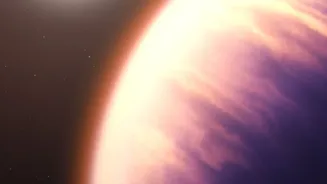
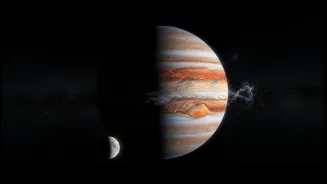
The physical characteristics of the planet itself play a massive role. A planet must have the right mass and size. If it's too small, its gravity won't be strong enough to hold onto a life-sustaining atmosphere. If it's too large, it may accumulate a thick, crushing gas envelope, becoming a gas giant like Jupiter rather than a rocky, terrestrial world. Furthermore, the planet needs the right chemical ingredients. Beyond water, life requires a mix of bio-essential elements like carbon, nitrogen, and phosphorus. The presence of geological activity, like plate tectonics and volcanism, is also considered crucial for recycling these nutrients and regulating the planet's long-term climate.
The Big Picture
Ultimately, finding a habitable planet is a game of immense cosmic odds. It’s a complex interplay between the star, the planet, its orbit, its internal structure, and its chemical makeup. An orbit that's too eccentric can lead to wild temperature swings, making stable conditions impossible. The presence of other planets in the system can also affect a world's stability. While the habitable zone is an excellent tool for starting the search, it's clear that true habitability is a far more delicate and multi-faceted quality. The work of advanced instruments like the James Webb Space Telescope, which can analyse the atmospheres of distant worlds, is helping scientists move beyond the first check and begin to piece together this more complete picture.