






The Modern Traveller's Dilemma
For young corporate workers in India, the desire for frequent, meaningful breaks from the urban grind is stronger than ever. Yet, the options are often a compromise. Spontaneous weekend trips are usually foiled by exorbitant flight prices, while traditional
overnight trains and buses can mean arriving at your destination tired and in need of recovery. This travel fatigue eats into precious vacation time. The trend towards 'slow travel'—immersive, mindful, and less rushed—is growing, but it clashes with the reality of a five-day work week and limited, inconvenient travel options. Young Indians are seeking more than just a destination; they want experiences, but the journey itself has remained a significant hurdle.
Enter: The Vande Bharat Sleeper
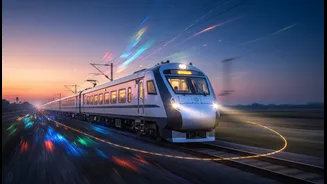
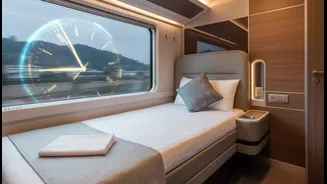
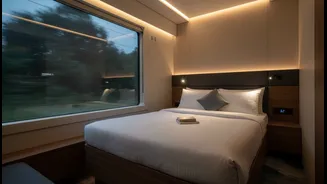
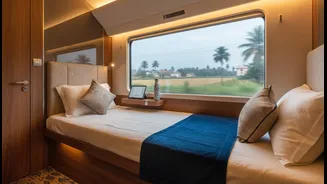
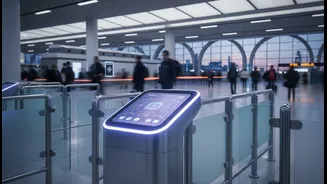
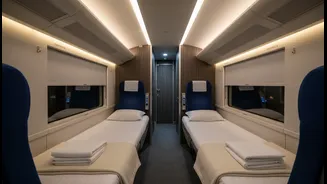
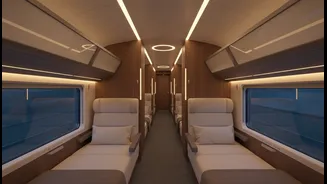
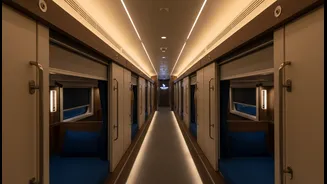
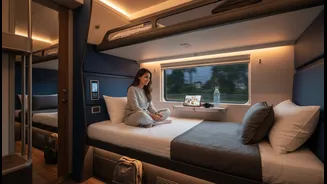
Indian Railways' answer to this challenge is the Vande Bharat Sleeper Express. Launched in early 2026, these trains are designed specifically for overnight journeys on high-demand routes like Delhi-Mumbai and Kolkata-Chennai. Unlike their chair-car siblings, these are fully air-conditioned sleeper trains built to offer a premium, hotel-like experience on wheels. With a total of 823 berths across AC First, Two-Tier, and Three-Tier coaches, the train is equipped with modern amenities designed for comfort and convenience. Features include automatic doors, bio-vacuum toilets, sensor-based taps, and individual reading lights and charging points at every berth, addressing many of the pain points of older trains.
How Speed Enables 'Slow' Travel
Here lies the central paradox: a high-speed train that enables a slow-travel lifestyle. Vande Bharat Sleepers are self-propelled, allowing for quicker acceleration and a top speed of 180 km/h, cutting journey times by two to four hours compared to their predecessors like the Rajdhani Express. This efficiency doesn't rush the traveller; it gives them back time. By turning travel time into comfortable rest time, passengers arrive at their destination early in the morning, refreshed and ready to explore. The journey ceases to be a tiresome obstacle and becomes an efficient, comfortable part of the vacation itself. This allows for a full day or two of quality time at the destination, even on a short weekend trip, embodying the slow travel ethos of maximising the experience rather than rushing through it.
The Value Proposition
While fares for the Vande Bharat Sleeper are higher than conventional trains, they present a compelling value proposition when compared to air travel. A ticket might be more expensive than a regular 3AC berth, but it is often significantly cheaper than a flight, especially when booked closer to the travel date. More importantly, the cost includes a night of comfortable rest, effectively saving the expense of a hotel room for one night. For a young professional, the ability to leave a city centre office on a Friday evening and arrive in the heart of a tourist destination on Saturday morning, without the added cost and hassle of airport transfers and baggage fees, is a game-changer.
A New Map for Weekend Getaways
The introduction and expansion of Vande Bharat sleeper routes are redrawing the map of accessible weekend destinations. Places that were previously considered too far for a two-day trip are now within reach. The initial routes, such as Kamakhya-Howrah and Varanasi-Chheharta, connect major cultural and business hubs, with more long-distance corridors being added. This improved connectivity not only benefits popular tourist spots but also encourages the discovery of lesser-known locations. For a generation that values unique and authentic experiences, the ability to easily access a wider range of destinations supports a more diverse and sustainable form of domestic tourism. As the network grows, it will fundamentally alter how young Indians plan their leisure time.