





Martin Crowe's Spinner-Led Revolution
In the 1992 World Cup, New Zealand's Martin Crowe rewrote the one-day playbook. Facing co-hosts Australia, convention dictated opening with your fastest bowlers. Crowe, however, tossed the new ball to off-spinner Dipak Patel. The move, born of genius
insight into the tournament rules and local conditions, was stunningly effective. The first 15 overs had fielding restrictions designed to encourage attacking batting against pace. Patel’s lack of pace forced batsmen to generate all their own power, choking the run rate and creating pressure. Crowe also packed his side with medium-pacers who took speed off the ball, making scoring difficult on slower New Zealand pitches. This 'tactical madness' saw the unfancied Kiwis dominate the league stage and provided a blueprint for modern limited-overs cricket that is still referenced today.
Sourav Ganguly's Headingley Gamble
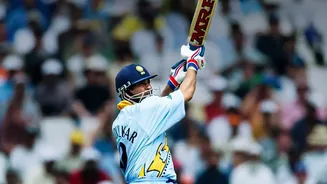
August 22, 2002. Leeds, Headingley. The sky was overcast, the pitch was green, and conditions screamed 'bowl first'. So when Sourav Ganguly won the toss for India against England, his decision to bat was met with disbelief. It seemed like a suicidal move on a ground notorious for aiding seam bowlers. But Ganguly's decision was a calculated masterstroke. He reasoned it was better to face the toughest conditions on day one and avoid batting last on a wearing pitch. His team selection was equally bold, picking two spinners—Anil Kumble and Harbhajan Singh—for a seamer's paradise. The gamble paid off spectacularly. Rahul Dravid, Sachin Tendulkar, and Ganguly himself scored magnificent centuries as India amassed a colossal 628. As predicted, the pitch deteriorated, and India's spinners ran through England, securing a famous victory by an innings and 46 runs.
Misbah-ul-Haq's Quiet Control
Misbah-ul-Haq's captaincy is often remembered for its stoicism rather than its flair, but his leadership was a masterclass in making the most of available resources. He took over the Pakistan captaincy in 2010 after the spot-fixing scandal had shattered the team's morale and reputation. With no home games due to security concerns, Misbah had to forge a winning unit in the UAE. His masterstroke was not a single, flashy on-field decision, but a long-term strategy. He identified that on the slow, turning pitches of their adopted home, a disciplined, defensive-first approach would win matches. He built his attack around the brilliance of spinner Saeed Ajmal and backed his batsmen to grind out totals. This seemingly unattractive brand of cricket was incredibly effective. Under Misbah, Pakistan became statistically their most successful Test side, achieving a famous whitewash over England and rising to the number one Test ranking, a testament to his calm, intelligent, and criminally underrated leadership.