

Tirthan Valley, Himachal: The Eco-Tourism Haven
A gateway to the Great Himalayan National Park, Tirthan Valley is a serene escape that has actively resisted rampant commercialisation. Its status as an eco-sensitive zone means you will not find large, jarring resorts here. Instead, charming riverside
cottages and local homestays offer an authentic experience. The valley, carved by the pristine Tirthan River, is a paradise for trout fishing, birdwatching, and gentle hikes to hidden waterfalls. Unlike the main tourist circuits, the focus here is on low-impact travel. The reward is a quiet environment where the sound of the river and the rustle of pine forests dominate, with stunning views of the lower Himalayan ranges. Getting here requires a detour from the main Delhi-Manali highway at Aut, a journey that keeps the casual tourist crowds at bay.
Munsiyari, Uttarakhand: The 'Little Kashmir'
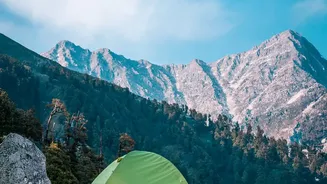
Often called the ‘precious gem’ of the Kumaon Hills, Munsiyari is a remote frontier town that offers jaw-dropping, up-close views of the magnificent Panchachuli peaks. Situated at an altitude of 2,298 metres in the Pithoragarh district, its relative inaccessibility is its greatest asset for those seeking solitude. The long drive from major hubs like Nainital or Kathgodam deters many, leaving its pristine landscapes for serious mountain lovers. Munsiyari serves as the base camp for several challenging treks, including the famous Milam Glacier and Nanda Devi East Base Camp treks. For those seeking less strenuous activity, a day trek to Khaliya Top offers a stunning 360-degree panorama of the high Himalayas, including Nanda Devi and Trishul.
Kalpa, Himachal: A Front-Row Seat to Kinner Kailash
While many travellers rush through Kalpa on their way to Spiti Valley, this village in the Kinnaur district deserves a dedicated stop. Perched high above the Sutlej River at an altitude of 9,711 feet, Kalpa offers one of the most majestic and direct views of the sacred Kinner Kailash range. The daily spectacle of the rising sun striking the snow-laden peaks is an unforgettable experience. The village itself is a tranquil haven of apple orchards, ancient wooden temples, and traditional Kinnauri architecture. Its remoteness and the challenging but scenic Hindustan-Tibet Highway that leads here ensure that it remains a peaceful retreat, far from the tourist frenzy of lower Himachal.
Chaukori, Uttarakhand: A Himalayan Panorama from a Tea Garden
Chaukori is a tiny, serene hamlet perched on a ridge in Kumaon, known for its sprawling tea gardens established by the British. Its primary allure is an almost uninterrupted 180-degree panorama of the mighty Himalayan range. On a clear day, you can see a spectacular lineup of peaks including Trishul, Nanda Devi, Nanda Kot, and the five-pronged Panchachuli range. Unlike bustling hubs, Chaukori has a sleepy, unhurried vibe, making it an ideal destination for slow travel. The attractions here are not about ticking off a list but about soaking in the views, taking long walks through pine forests, and watching the sunrise paint the peaks in golden hues. Its quiet charm is preserved by its location, deep within Kumaon and away from major transit routes.
Sangla Valley, Himachal: The Hidden Gem of Kinnaur
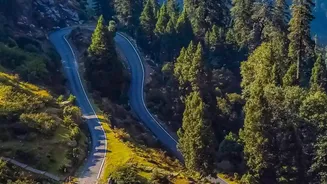
Tucked away in the Baspa Valley of Kinnaur, Sangla is a picturesque destination that often gets overshadowed by its more famous neighbours. The valley is defined by the gushing Baspa River and is surrounded by forested slopes and towering snow-capped mountains. The journey itself, along a treacherous road that bifurcates from the main highway at Karcham, is an adventure that filters out casual visitors. The valley is home to charming villages like Rakcham and Chitkul, the latter often called the last inhabited village on the old Indo-Tibet trade route. Here, you can experience a unique blend of Hindu and Buddhist cultures and enjoy the simple, unhurried pace of Kinnauri life, all while surrounded by some of the most dramatic landscapes in Himachal Pradesh.