




The Power of Breath and Movement
Before you begin, understand that the magic of Surya Namaskar lies in synchronising your breath with each movement. The general rule is simple: inhale as you expand or lengthen your body (like in a backward bend) and exhale as you contract or fold (like in a forward
bend). This mindful breathing transforms the sequence from mere exercise into a moving meditation, calming your nervous system and improving focus. Don't worry about getting it perfect at first; just try to keep your breath smooth and steady.
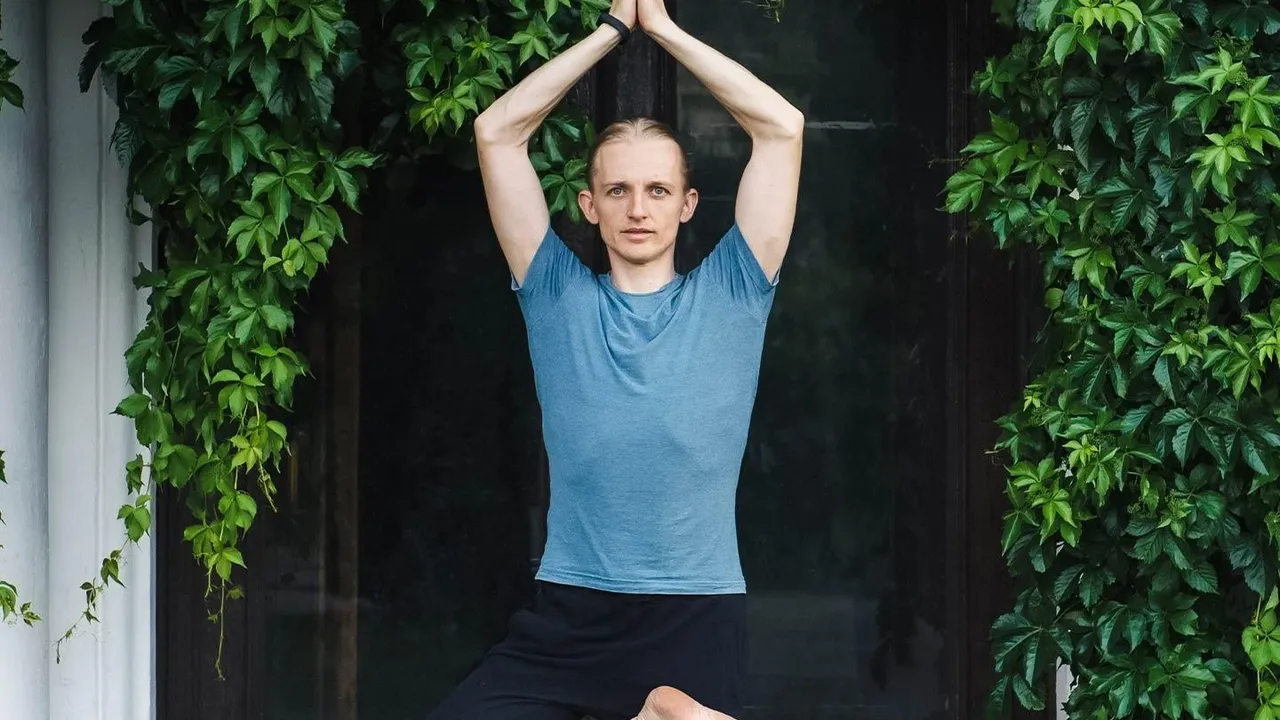
Step 1: Pranamasana (Prayer Pose)
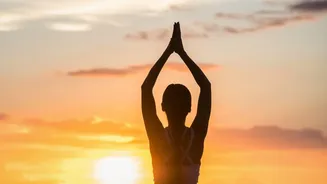
Begin by standing tall at the top of your mat with your feet together. Balance your weight evenly on both feet. As you breathe in and out, bring your palms together in front of your chest in a prayer position. This starting pose helps to centre your mind and prepare your body for the practice ahead.
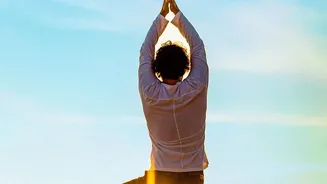
Step 2: Hastauttanasana (Raised Arms Pose)
Inhaling, lift your arms up and back, keeping them close to your ears. In this pose, the idea is to stretch your whole body from your heels up to the tips of your fingers. Arch your back and push your hips slightly forward, feeling a gentle stretch in your chest and abdomen.
Step 3: Hastapadasana (Hand to Foot Pose)
Exhaling, bend forward from your waist, keeping your spine straight. As you fold, bring your hands down to the floor beside your feet. If you're a beginner, it's okay to bend your knees to allow your palms to touch the mat. Try to press your nose towards your knees without straining.
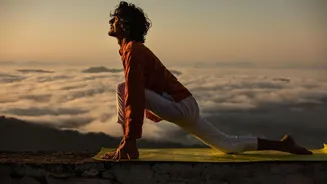
Step 4: Ashwa Sanchalanasana (Equestrian Pose)
Inhaling, push your right leg back as far as you can. Bring your right knee to the floor and look up. Your left foot should be exactly between your palms with the knee bent at a 90-degree angle. This pose gives a good stretch to your hip flexors and quadriceps.
Step 5: Dandasana (Stick Pose)
As you hold your breath or take a gentle exhale, take your left leg back and bring your whole body into a straight line, like a plank. Your arms should be perpendicular to the floor, and your core should be engaged to prevent your hips from sagging. This pose is excellent for building core and arm strength.
Step 6: Ashtanga Namaskara (Eight-Limbed Salutation)
Gently bring your knees down to the floor and exhale. Slide your body forward slightly and rest your chest and chin on the floor. Your hips should remain slightly elevated. In this pose, eight parts of your body touch the floor: two feet, two knees, two hands, your chest, and your chin.
Step 7: Bhujangasana (Cobra Pose)
Inhaling, slide forward and raise your chest up into the Cobra Pose. Keep your elbows bent and close to your body, with your shoulders away from your ears. Look upwards, feeling a stretch in your spine. This backbend helps improve posture and strengthens spinal muscles.
Step 8: Adho Mukha Svanasana (Downward-Facing Dog)
Exhaling, lift your hips and tailbone up to form an inverted 'V' shape. Your feet should be flat on the ground, and your head should be between your arms. This pose stretches the hamstrings, calves, and spine while building strength in the shoulders and arms.
Step 9: Ashwa Sanchalanasana (Equestrian Pose)
Now we begin the sequence in reverse. Inhaling, bring your right foot forward between your hands. Let your left knee come down to the floor. Push your hips down and forward and look up, returning to the Equestrian Pose.
Step 10: Hastapadasana (Hand to Foot Pose)
Exhaling, bring your left foot forward next to your right foot. Straighten your knees and return to the Hand to Foot Pose. Try to keep your palms on the floor, but don't force it.
Step 11: Hastauttanasana (Raised Arms Pose)
Inhaling, lift your torso up, roll your spine, and raise your hands all the way up. Bend backward from the hips, returning to the Raised Arms Pose. Stretch your spine fully as you reach back.
Step 12: Pranamasana (Prayer Pose)
Finally, exhale and first straighten your body, then bring your arms down. Place your palms together in front of your chest, returning to the starting Prayer Pose. This completes one full round of Surya Namaskar.