








The Genome's 'Dark Matter'
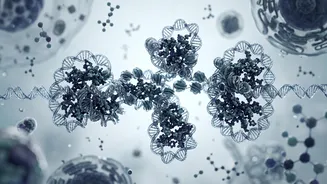
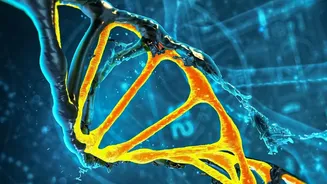
Think of the human genome as a vast instruction manual containing 3 billion letters. For decades, scientists have focused on the 2% of this manual that contains the direct recipes for building proteins—the workhorses of our cells. The other 98%, often
called 'dark matter', doesn't build proteins but plays a crucial role as a massive regulatory system. It tells genes when to turn on or off, how active to be, and in which cells. This process, called gene regulation, is what allows a nerve cell and a skin cell to have the same DNA but perform wildly different jobs. When this regulation goes wrong, it can lead to diseases like cancer, autoimmune disorders, and heart conditions. Understanding these regulatory switches has been a monumental challenge, until now.
Enter AlphaGenome 2
Following the success of AlphaFold, which solved the 50-year-old problem of protein structure prediction, DeepMind has turned its attention to the genome's regulatory code. The newly launched AlphaGenome 2 is an AI model designed specifically to predict how the non-coding parts of DNA control gene activity. While its predecessor, AlphaGenome 1, could predict regulatory effects across broad tissues, AlphaGenome 2 goes a step further by making predictions for specific cell types and even cells in a particular state, such as those activated by disease. It does this by analyzing vast stretches of DNA—up to one million letters at a time—and predicting the functional consequences of even single-letter mutations on thousands of biological processes simultaneously.
How It Works and Why It's a Game-Changer
The model was trained on enormous public databases of human and mouse genetics, allowing it to learn the complex 'vocabulary' of gene regulation. AlphaGenome 2's key innovation is its ability to process long DNA sequences with high resolution, overcoming a major limitation of previous models. This allows it to see how distant regulatory elements, known as enhancers, can influence a gene from far away. For scientists, this is like upgrading from a magnifying glass that can only see one word at a time to a tool that can read and comprehend entire chapters. It can help pinpoint which of the many genetic variants linked to a disease is the true culprit, which gene it affects, and in which cell type the problem occurs.
From Prediction to Breakthrough
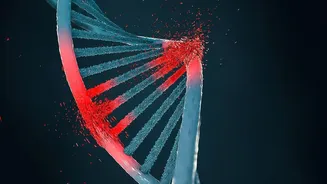
The practical implications are immense. By providing a clearer map of how non-coding DNA drives disease, AlphaGenome 2 promises to dramatically accelerate drug discovery and the development of precision medicine. For example, researchers could use the model to understand the precise mechanism behind a type of leukemia or a rare genetic disorder, allowing them to develop targeted therapies much faster. In one test, an earlier version of the model correctly predicted how non-coding mutations activated a cancer-driving gene. The tool can also help guide synthetic biology, enabling scientists to design new DNA sequences that activate a gene only in specific cells, opening doors for advanced gene therapies.
The Road Ahead
Despite the excitement, AlphaGenome 2 is a research tool, not a clinical diagnostic. Its predictions are incredibly powerful hypotheses, but they must still be validated through laboratory experiments. The model represents a correlational view, meaning it identifies patterns but doesn't fully explain the dynamic, cause-and-effect biological processes within a changing cell. Furthermore, like any AI, its accuracy is dependent on the data it was trained on. However, by making the model and its predictions accessible to the scientific community, DeepMind is aiming to create a feedback loop that will accelerate our fundamental understanding of the code of life itself.