



Why Simple Division Fails
When you halve the volume of batter or stew, you don't halve every other physical property along with it. The relationship between volume and surface area changes, which affects everything. For instance, smaller quantities of liquid evaporate much faster.
A doubled recipe in a crowded pan might end up steaming its ingredients instead of searing them. The core issue is that cooking is chemistry and physics, and these forces don't scale in a neat, linear fashion. Understanding this is the first step to successfully adapting any recipe.
The Pan Size Predicament
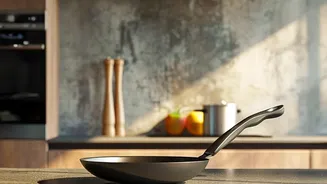
Using the original pan for a scaled-down recipe is a common and critical mistake. If you put half the amount of cake batter in the same 9x13-inch pan, it will be a thin, sad layer that cooks too quickly and likely burns. The batter depth is crucial. The goal is to find a smaller pan that gives you a similar batter depth to the original recipe. To do this, you can calculate the surface area of the original pan and find a new pan with roughly half that area. For example, a 9x13-inch pan (117 square inches) halved is about 58.5 square inches, making an 8-inch or 9-inch round pan a good substitute.
The Chemistry of Baking
Baking is where scaling becomes particularly tricky. Chemical leaveners like baking soda and powder have threshold effects. Simply halving them might not provide enough lift, while not reducing them enough can leave a chemical taste. Then there's the egg problem. How do you halve one large egg? The most accurate way is to whisk the egg in a small bowl until uniform, then measure out half by volume or weight (one large egg is about 50 grams, so you'd use 25 grams). For most recipes, you can simply round, but for delicate custards or cakes, precision is key.
A Light Hand with Seasoning
If you halve every ingredient, you might assume you should halve the salt, herbs, and spices. This often leads to a bland, under-seasoned dish. Flavour compounds and our perception of them don't scale perfectly. A good rule of thumb is to start with about two-thirds to three-quarters of the scaled amount of seasoning. You can always add more, but you can't take it away. Taste your dish frequently as it cooks and adjust the seasoning toward the end. This is especially true for potent spices like cayenne or chilli flakes, which can easily overpower a smaller dish.
Rethinking Your Timing
A smaller volume of food will almost always cook faster. There is no magic formula to determine the exact new cooking time, which could be anywhere from 5% to 50% less. The best strategy is to start checking for doneness much earlier than the original recipe suggests. A good starting point is to check at half the original recommended time and then in short intervals after that. For cakes and breads, look for visual cues like golden-brown tops or sides pulling away from the pan, and use a tester to check the centre. Your eyes and nose are better guides than the clock.