


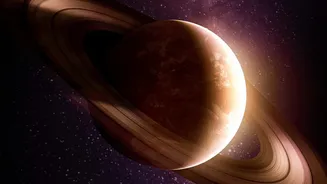
Why August is Prime Time for Planet Gazing
While Saturn's official 'opposition'—the point where Earth passes directly between it and the Sun, making it appear its brightest and largest—is set for early October, August is the grand overture. Throughout the month, Saturn will grow progressively
brighter and rise earlier, making it a fantastic and accessible target for evening observation. During August, the planet will shine with a steady, yellowish glow at a magnitude of around 0.5, making it easily visible to the naked eye. It will be rising in the late evening, climbing high into the sky after midnight where it will be perfectly positioned for viewing. This period provides an excellent window to witness the planet without having to wait until the early morning hours, as you would have earlier in the year.
How to Pinpoint the Ringed Planet
Finding Saturn is simpler than you might think. This month, it resides in the faint constellation of Pisces, the Fish. Because the stars of Pisces are not very bright, Saturn should stand out prominently. Look toward the eastern sky around midnight; the planet will be the bright, star-like object rising above the horizon. As the night progresses, it will track across the southern part of the sky. For an easy win, use the Moon as your guide in early August. On the nights of August 3rd and 4th, the waning gibbous Moon will be positioned near Saturn, acting as a convenient celestial landmark. On August 3rd, Saturn will appear just below and to the right of the Moon. If you have a smartphone, a stargazing app can also point you directly to Saturn's location in real-time.
What You'll See: From Golden Dot to Glorious Rings
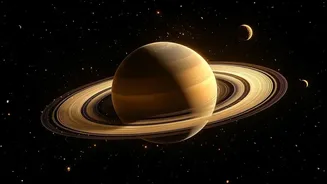
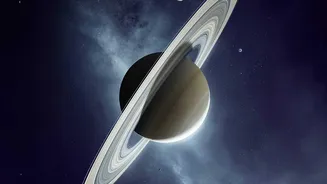
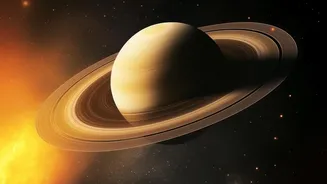
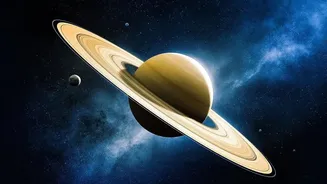
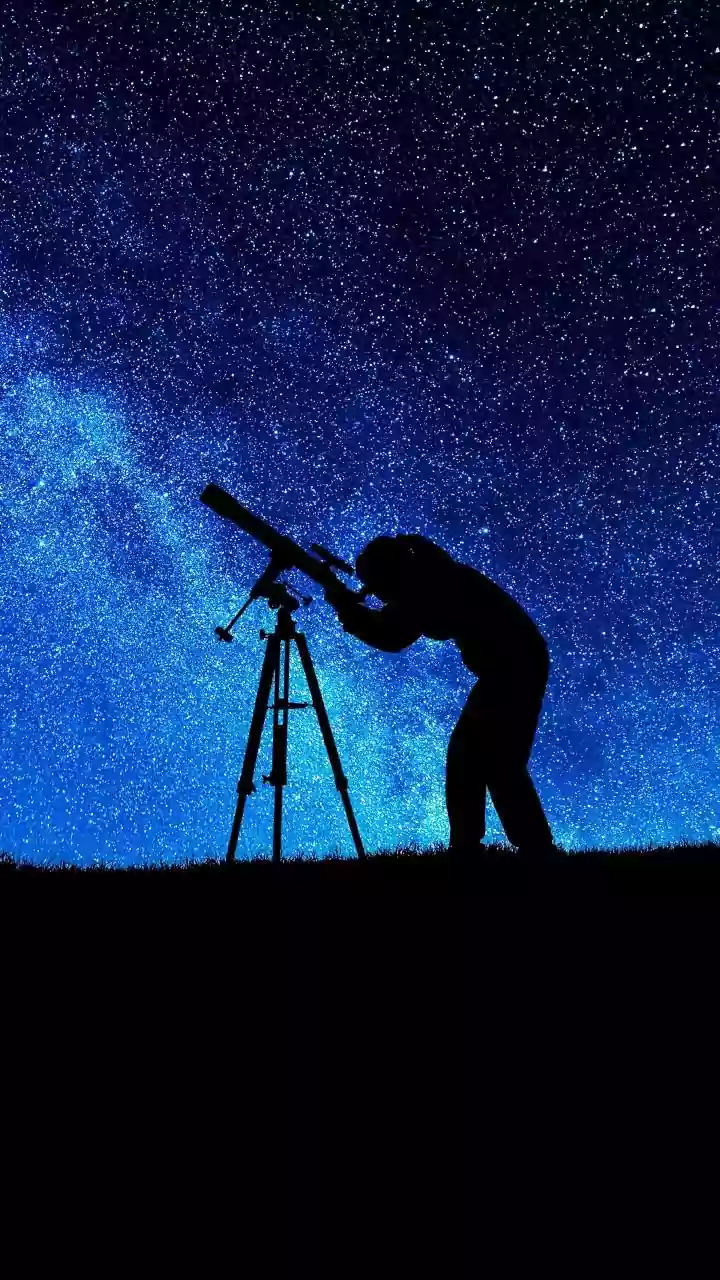
To the unaided eye, Saturn appears as a bright, unwavering golden dot. Its lack of twinkling is a key differentiator from distant stars. But the real magic begins with a little magnification. You don't need a powerful, expensive telescope to be amazed. Even a small telescope with at least 25x magnification will reveal Saturn's most iconic feature: its rings. A basic 3-inch telescope at 50x power can clearly show the rings as a distinct structure, separate from the planet itself, a truly three-dimensional sight. In August 2026, the rings are tilted at a favorable angle of about 7 to 9 degrees toward Earth, making them clearly visible after being nearly edge-on in previous years. With a slightly larger amateur telescope, you might even spot the Cassini Division, a dark gap between the main rings, or Saturn's largest moon, Titan, which looks like a tiny star right next to the planet.
Tips for the Perfect Stargazing Night
To maximize your chances of a great viewing experience, a little preparation goes a long way. First, check the weather forecast for a clear, cloudless night. Find a location away from bright city lights, as light pollution can wash out fainter objects and obscure the view. Give your eyes about 15 to 20 minutes to fully adapt to the darkness; this will dramatically increase what you can see. If you need a light to see your equipment, use a red-light flashlight, as red light is less disruptive to your night vision. Finally, get comfortable. Stargazing can involve a lot of looking up, so bring a blanket to lie on or a comfortable chair. Patience is key, as the clearest views often come in moments of steady air. These simple steps can turn a quick look into a memorable night under the stars.