
A Vision on Water
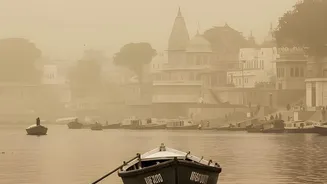
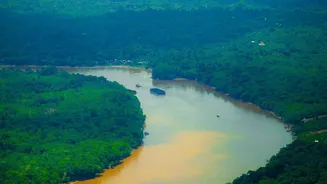
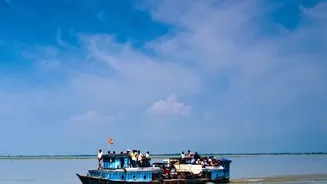
The foundation of this shift is the National Waterways Act of 2016, which designated 111 inland waterways as routes of national importance, adding to five pre-existing ones. This ambitious policy aims to develop India's vast network of rivers, canals,
and backwaters—spanning over 14,500 kilometres—into a viable third pillar of national transport. The goal is to create an alternative to the country's congested road and rail networks, which bear the brunt of freight movement. A key component of this initiative is the Jal Marg Vikas Project (JMVP), focusing on augmenting the capacity of National Waterway-1 on the Ganga River, from Varanasi to Haldia, to allow for the navigation of large vessels.
Decoding Door-to-Door Time
When discussing transport efficiency, it's easy to focus on the speed of a truck or train. However, the true measure is 'door-to-door' journey time. This logistics term refers to the total time taken to move goods from the point of origin, like a factory, to the final destination, such as a retail warehouse. It’s a comprehensive metric that includes not just the main transit but also the critical 'first-mile' and 'last-mile' connections—the journey from the factory to the port and from the destination port to the warehouse. A single provider often manages this entire process, ensuring a seamless flow. Therefore, the success of waterways doesn't just depend on how fast a barge moves, but on the entire integrated system.
The Cost vs. Speed Trade-Off
Inland waterway transport is inherently slower than road or rail. However, its primary advantage lies in its economic and environmental efficiency. For bulk, non-perishable goods like coal, cement, fertilisers, and food grains, speed is often less critical than cost. Studies have shown that one litre of fuel can move significantly more cargo by water than by road or rail. According to a World Bank study, the operating cost per tonne-kilometre is substantially lower for waterways compared to road transport. This cost-effectiveness makes waterways a compelling option for businesses looking to reduce their logistics expenditure, which currently accounts for a high percentage of India's GDP. A single large vessel can replace over a hundred trucks, drastically reducing road congestion and emissions.
The Multi-Modal Challenge
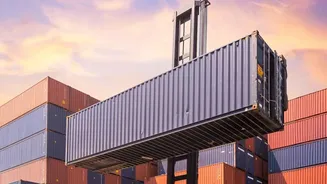
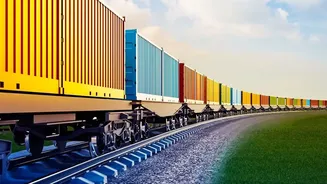
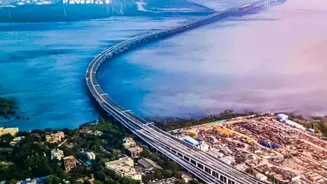
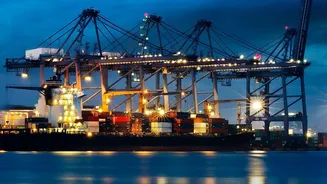
The true test for the waterways plan lies in its integration with other transport modes. The time saved from lower congestion on rivers can be easily lost if last-mile connectivity is poor. A shipment might spend more time waiting at a port or in transit on a truck to or from the river than on the water itself. To address this, the government is focusing on developing Multi-Modal Logistics Parks (MMLPs). These parks are sophisticated hubs designed to facilitate the seamless transfer of goods between road, rail, and water. By integrating facilities like warehousing, customs clearance, and container handling at strategic riverine locations, MMLPs aim to create a truly interconnected logistics network and minimise delays.
Navigating the Hurdles
The path to a fully functional national waterways network is not without its challenges. Many Indian rivers are seasonal, with significant variations in water depth, making year-round navigation difficult without extensive dredging. Other obstacles include inadequate air draft under existing bridges, a lack of night navigation infrastructure, and the high initial cost of developing terminals and related facilities. Furthermore, ensuring the return journey of a vessel is loaded with cargo is crucial for economic viability, which can be difficult in regions with low industrialisation along the riverbanks. Attracting private sector investment and addressing environmental concerns related to dredging and river ecology are also critical for the long-term success of the initiative.