


What Exactly Is Cat-Cow Pose?
Cat-Cow, or Marjaryasana-Bitilasana in Sanskrit, isn't just one pose but a dynamic sequence of two. It involves moving the spine from a rounded position (like a cat) to an arched one (like a cow). This gentle flow is a cornerstone of many yoga practices,
often used as a warm-up to awaken the spine and connect movement with breath. Its power lies in its simplicity. By moving between these two positions, you gently mobilize the entire spine, preparing the body for more activity or simply shaking off the stiffness from a long day of sitting.
The Key Benefits for Your Body and Mind
Don't let the simplicity fool you; the rewards are immense. Regularly practicing Cat-Cow can improve spinal flexibility and posture by creating space between the vertebrae. This gentle movement is fantastic for relieving tension and pain in the back, neck, and shoulders — a common complaint for desk workers. The motion also massages the abdominal organs, like the kidneys and adrenal glands, which can aid digestion and improve circulation. On a mental level, syncing your breath with the movement calms the mind, reduces stress, and improves focus and coordination, making it a meditative practice in itself.
Your Step-by-Step Guide to Perfect Form
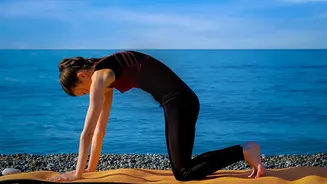
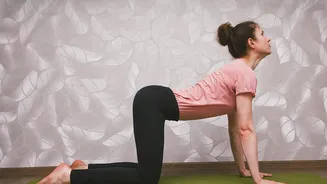
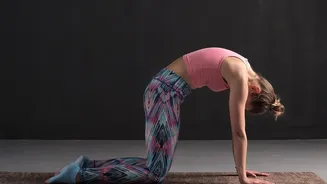
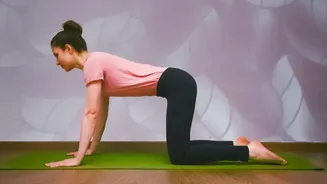
Ready to try? Find a comfortable spot on a mat or soft carpet.1. Start on all fours in a 'tabletop' position. Your hands should be directly under your shoulders, and your knees directly under your hips. Your wrists and knees should be hip-width apart. Keep your spine in a neutral, straight line.2. Begin the 'Cow' Pose: As you inhale, drop your belly towards the floor. Lift your chin and chest, and gaze upward. Broaden your shoulder blades and draw them away from your ears.3. Transition to 'Cat' Pose: As you exhale, round your spine upward towards the ceiling. Tuck your chin into your chest and let your head drop. Feel the stretch in your upper back as you press your hands firmly into the mat.4. Continue the Flow: Move fluidly between Cow on the inhale and Cat on the exhale. Repeat for 5-10 breath cycles, focusing on the movement of your spine.
Breathing: The Heart of the Movement
The secret to Cat-Cow is the breath. It's not just a physical exercise; it's a breath-synchronized meditation. The traditional breathing pattern is to inhale as you move into Cow Pose, which naturally opens the chest and lungs. You then exhale as you round into Cat Pose, which helps to contract the abdomen and expel air. This deliberate rhythm helps deepen the stretch and enhances the mind-body connection. Try to make your inhales and exhales last for the entire duration of the movement, creating a smooth, uninterrupted flow. Rushing the movement is a common mistake and reduces the pose's benefits.
Common Mistakes and How to Fix Them
To get the most out of the pose and avoid strain, watch out for a few common errors. First, avoid shrugging your shoulders up towards your ears; instead, keep them drawn back and down. Another common mistake is collapsing into the lower back during Cow Pose. To prevent this, keep your core lightly engaged to support your spine. Also, ensure your wrists are directly below your shoulders and knees are below your hips to maintain a stable 'tabletop' structure. Finally, don't crane your neck. The movement should originate from your spine, with your head following naturally.
Modifications for Every Body
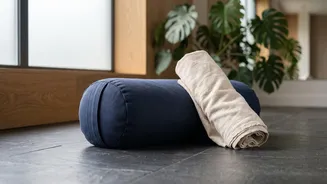
Cat-Cow is wonderfully adaptable. If you have sensitive knees, place a folded blanket or towel underneath them for extra cushioning. For those with wrist pain, you can perform the pose on your fists or forearms instead of your flat palms. The entire sequence can also be done while seated in a chair, making it perfect for a quick stretch at the office. Simply sit with your feet flat on the floor, place your hands on your knees, and perform the same spinal movements with your breath.