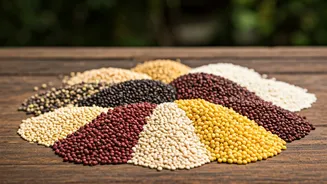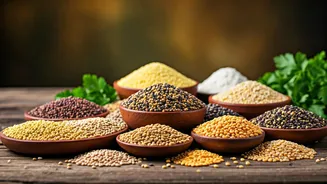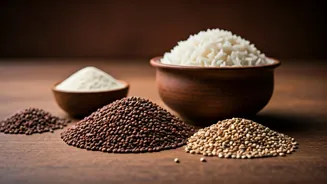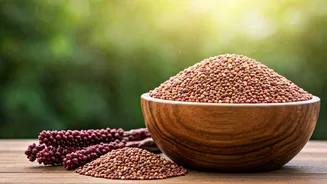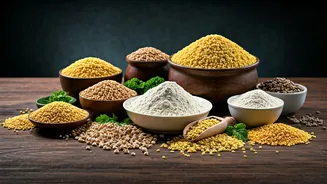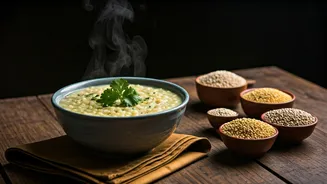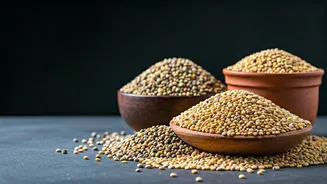




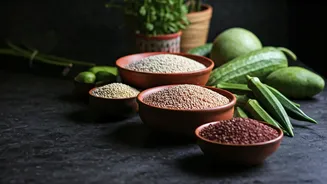
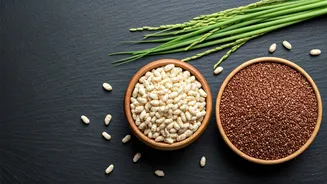


Why Millets Are a Monsoon Must-Have
During the rainy season, our digestive system can become sluggish. Millets are a fantastic choice because they are light, easy to digest, and packed with nutrients. Their high fibre content aids digestion and can help prevent the bloated feeling that
sometimes follows a heavy meal. Many millets are also gluten-free and rich in essential minerals like iron, calcium, and magnesium, which are crucial for building immunity when seasonal illnesses are common. They help your body detoxify, provide sustained energy, and some can even help absorb excess moisture in the gut, making you feel light and energised. Swapping white rice for these ancient grains is a simple step towards a healthier monsoon.
1. Foxtail Millet (Kangni/Thinai)
Foxtail millet is a versatile grain with a mild, nutty flavour that makes it an excellent substitute for rice. It's rich in protein, dietary fibre, and antioxidants that help boost immunity and stamina. With a low glycemic index, it releases energy slowly, helping to manage blood sugar levels and keeping you full for longer. Its high iron and magnesium content supports bone and muscle health. During the monsoon, its immunity-boosting properties are particularly valuable. Use it to make a fluffy upma, a comforting lemon 'rice', or a simple pulao. Its texture holds up well, providing a satisfying alternative to polished white rice.
2. Barnyard Millet (Samak/Kuthiraivali)
Often associated with fasting foods, barnyard millet is incredibly light on the stomach and quick to cook. It's a low-calorie grain that is high in both soluble and insoluble dietary fibre, promoting satiety and aiding in weight management. This makes it perfect for comforting monsoon dishes like khichdi, where it tastes much like rice but provides significantly more nutrients. Barnyard millet is a good source of iron, which can help prevent anaemia, and its gluten-free nature makes it suitable for everyone. You can use it to make porridge, upma, and even idli and dosa batter for a nutritious breakfast.
3. Finger Millet (Ragi/Nachni)
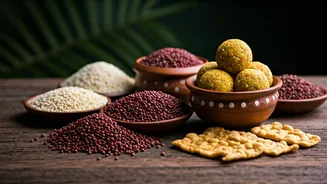
Ragi is a nutritional powerhouse, best known for being one of the richest plant-based sources of calcium, which is vital for bone health. While some consider it a cooling grain, Ayurvedic principles also note its warming properties, making it suitable for providing energy and strength during the colder, damp days of monsoon. Its high fibre content aids digestion and prevents constipation. You can start your day with a warm ragi porridge or make soft, pliable rotis to eat with your favourite sabzi. Ragi flour can also be used to make dosas, idlis, and even healthy versions of cakes and cookies.
4. Pearl Millet (Bajra)
Bajra is considered a warming grain in Ayurveda, making it an ideal choice for the monsoon and winter months to help maintain body temperature. It is packed with iron, protein, and magnesium, which supports heart health and provides sustained energy, preventing the lethargy that can set in during gloomy weather. The high fibre content in bajra aids digestion and promotes a feeling of fullness. While it's most famously used to make rotis, especially in Rajasthan and Gujarat, bajra can also be used to prepare a hearty and nutritious khichdi, perfect for a rainy day.
5. Kodo Millet (Kodra/Varagu)
Kodo millet is another excellent gluten-free substitute for rice that is easy to digest. It is particularly rich in fibre, B vitamins, and essential minerals like calcium, iron, and magnesium. This millet is highly regarded for its ability to help detoxify the body and is rich in antioxidants that boost immunity, which is crucial during seasonal changes. With a low glycemic index, it’s a great option for managing blood sugar levels. Kodo millet can be cooked just like rice and served with dal or sambar. It also works wonderfully in dishes like pulao, biryani, and porridge.