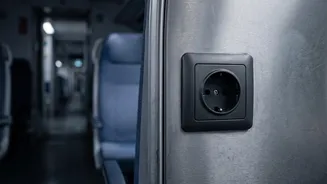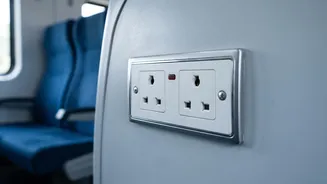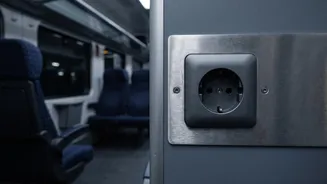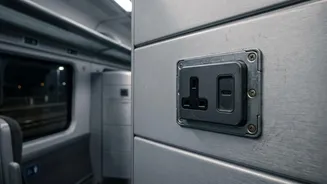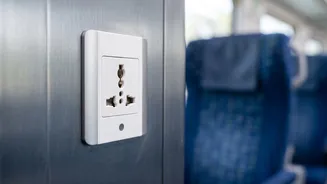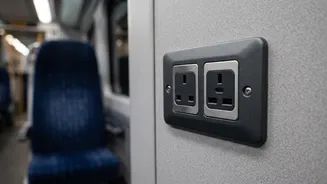






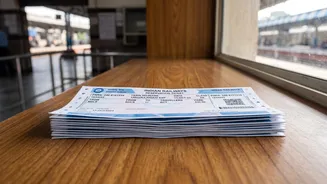
Planning an overnight train journey in India now requires a little extra thought for your electronic devices. Indian Railways has reinforced a rule to switch off all charging points from 11 PM to 5 AM. Here’s why this isn't a new rule, but a critical
one.
The Primary Reason: Fire Prevention
The core reason for the six-hour overnight charging ban is fire safety. The Railway Board's directive is a precautionary measure to prevent fires that could be caused by overheating electronic devices like phones, laptops, and especially power banks. Electrical circuits on a moving train are subject to vibrations and fluctuations, and when combined with potentially faulty chargers or devices left unattended overnight, the risk of a short circuit or a device malfunction increases significantly. With passengers asleep, a small fire could go unnoticed until it becomes a major hazard, making the overnight hours the most vulnerable period. The decision to switch off the main power supply to these sockets centrally is seen as the most effective way to mitigate this danger.
A Rule Rooted in Past Incidents
This is not a new regulation but a strict reinforcement of a policy that has existed for years. The original directive was issued back in June 2014. It came after a recommendation from the Commissioner of Railway Safety following a tragic fire incident in an AC coach of the Bengaluru-Hazur Sahib Nanded Express in 2013. Over the years, several other fire-related incidents on trains, some attributed to short circuits and others to passenger negligence like smoking in toilets, have kept safety at the forefront of railway operations. A more recent incident on the South Eastern Railway, where a passenger's power bank reportedly exploded while charging, prompted the Railway Board to issue a fresh, strict directive on October 26, 2026, demanding unwavering compliance from all zones.
How Big is the Risk, Really?
While it might seem like a small risk, the danger of an electrical fire in a confined, moving space like a train coach is substantial. Many minor fires on long-distance trains have been linked to the overcharging of electronic devices. The proliferation of cheap, non-certified chargers and power banks adds another layer of risk. These devices often lack the safety mechanisms that prevent overcharging and overheating. When a passenger leaves such a device plugged in overnight, it can continue to draw power long after its battery is full, leading to a thermal event—in other words, it can overheat and potentially explode or catch fire. The recent power bank explosion that filled a coach with smoke, though it caused no injuries, served as a potent reminder of this risk and highlighted instances where railway staff had failed to switch off the power as required.
What This Means for Passengers
For the millions of people who rely on Indian Railways, this rule means adjusting their charging habits. The directive applies to all coaches, including AC and sleeper classes, where charging points are available. Passengers are advised to fully charge their phones, laptops, and power banks before their journey or ensure they are charged before the 11 PM cut-off. Carrying a fully charged power bank is the best backup for overnight power needs. It's important to note that the rule only restricts charging; passengers are free to use their devices throughout the night. The Railway Board has also instructed zonal railways to conduct surprise inspections to ensure staff are complying with the shutdown, signalling a new level of seriousness in enforcing this safety protocol.