
The Moon's Frozen Treasure
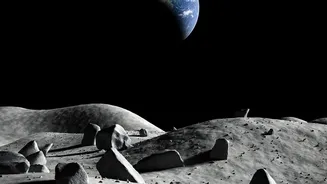
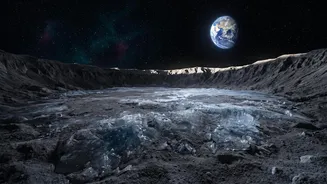
The game-changing resource isn't liquid water, but vast deposits of water ice. This ice has been found in permanently shadowed regions (PSRs) near the lunar poles, particularly within deep craters where sunlight has never reached. In these frigid traps,
temperatures plummet low enough to preserve ice that may have been delivered by comets and asteroids over billions of years. For scientists, this ice is a pristine record of our solar system's history. For engineers and economists, however, it's something far more practical: the raw material for a self-sustaining presence in space. Water is often called 'the oil of space' because it's not only essential for life support but can also be processed into rocket propellant.
From Ice to Thrust: The Science Explained
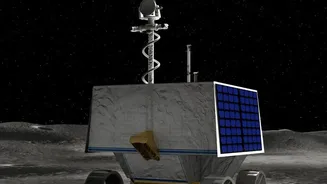
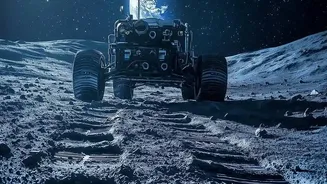
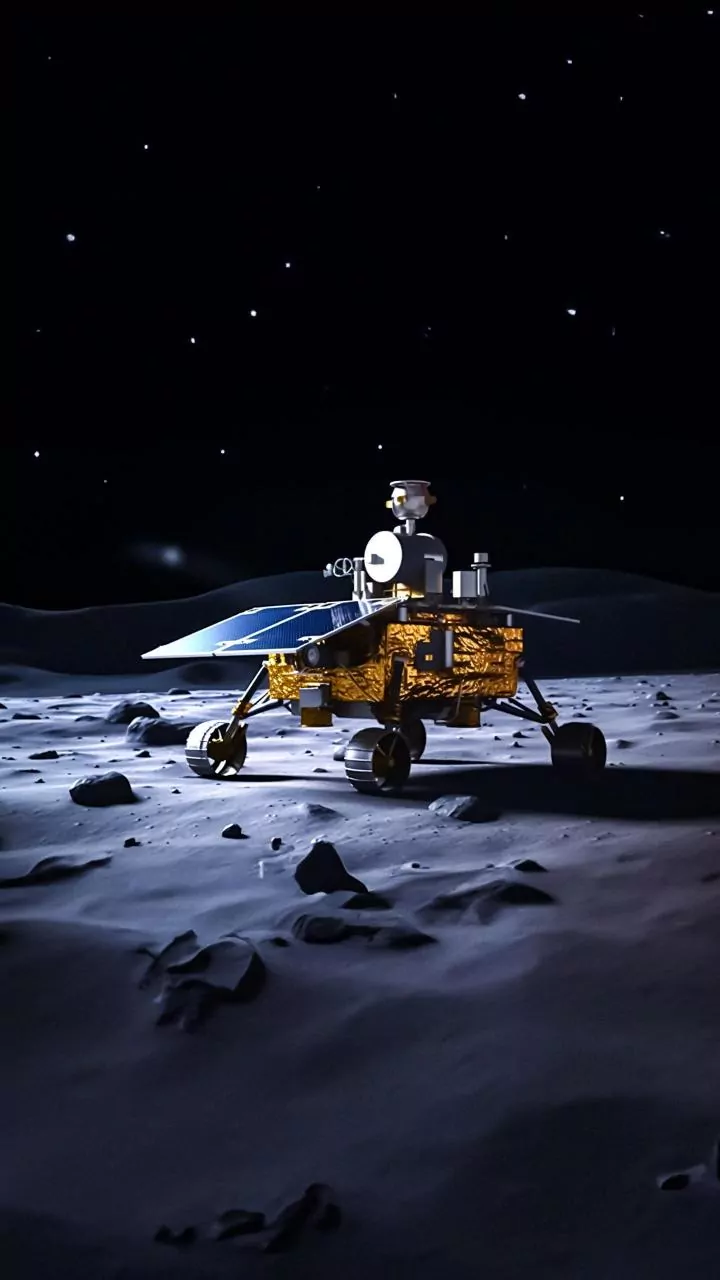
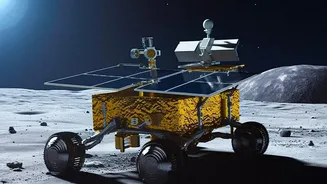
The process of turning lunar ice into rocket fuel is a concept known as In-Situ Resource Utilization (ISRU), which essentially means living off the land. The first step is to mine the ice, which is mixed with lunar soil, or regolith. This involves robotic excavators digging into the frozen ground in some of the coldest places in the solar system. Once excavated, the icy regolith is heated in a contained environment to sublimate the ice directly into water vapor, which is then captured and purified. The real magic happens next through a process called electrolysis. An electric current is passed through the purified water (H2O), splitting the molecules into their constituent parts: hydrogen and oxygen. When chilled to cryogenic temperatures, these become liquid oxygen and liquid hydrogen—a potent and efficient rocket propellant combination.
The Economic Game-Changer
The primary barrier to ambitious space exploration has always been cost, a huge portion of which is tied to the sheer weight of propellant. Every kilogram of payload, including fuel for the return trip, must be launched out of Earth's powerful gravity well, costing thousands of dollars. This is where lunar fuel production becomes revolutionary. The Moon's gravity is only about one-sixth of Earth's, meaning it takes far less energy and propellant to launch from the lunar surface. By manufacturing fuel on the Moon, future missions departing for Mars or the outer solar system could launch from Earth with less fuel, stop at a lunar or orbital depot to top up their tanks, and then proceed to their final destination. This dramatically cuts launch mass and cost, making previously infeasible missions economically viable. A recent Deloitte report projects the lunar economy could generate hundreds of billions in value by 2050, with transportation and infrastructure being major drivers.
Enabling the Leap to Mars
A sustainable human presence on the Moon, supported by programs like NASA's Artemis, is seen as a critical stepping stone to Mars. Producing fuel on the Moon is a cornerstone of this strategy. A crewed mission to Mars would require an enormous amount of propellant for the round trip. Launching all that fuel from Earth is a monumental logistical challenge. However, if the Mars-bound spacecraft can be refueled with lunar-derived propellant, the entire architecture of the mission changes. It allows for larger spacecraft, more supplies, and greater safety margins. The technology and processes developed for mining and fuel production on the Moon—from robotic operations to life support and power generation—will serve as a crucial dress rehearsal for establishing an eventual outpost on the Red Planet.
The Hurdles to a Lunar Gas Station
Despite the immense potential, the road to a functioning lunar fuel depot is paved with challenges. Mining in permanently shadowed craters means operating robotic equipment in complete darkness and at incredibly low temperatures, which is tough on hardware. Powering the energy-intensive extraction and electrolysis process is another significant hurdle. Since the best ice is in permanent shadow, solar power is difficult to harness without innovative solutions like tall solar arrays on crater rims or the eventual use of small nuclear fission reactors. Furthermore, before any large-scale investment, more detailed prospecting missions are needed to confirm the exact location, quantity, and purity of the water ice deposits. Companies and space agencies like NASA are actively developing and testing the necessary technologies, but turning theory into a reliable, industrial-scale process a quarter of a million miles away remains a formidable task.