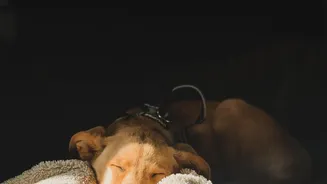




Recognising the Signs of Distress
Before you can help, you need to know what to look for. Thunderstorm phobia, or astraphobia, manifests in various ways, and some signs are less obvious than others. Obvious signs of panic include trembling, hiding, and persistent whining or barking. However,
stress can also appear as excessive panting, drooling, pacing restlessly around the house, or becoming unusually clingy. Some dogs might refuse food, yawn repeatedly, or even become destructive, chewing on furniture or scratching at doors in an attempt to escape the noise. In severe cases, dogs may urinate or defecate indoors due to overwhelming fear. It's important to recognise these behaviours not as disobedience, but as a genuine cry for help.
The Danger of Trigger Stacking
The monsoon isn't a single event; it's a season of repeated stressors. This is where the concept of 'trigger stacking' becomes critical. A trigger is any event that causes your dog stress, from the sound of thunder to the flash of lightning. When these triggers happen in quick succession without enough time for the dog to recover, the stress accumulates. The stress hormone cortisol can remain elevated for 24 to 72 hours after a single frightening event. During the monsoon, a morning thunderstorm, followed by heavy rain in the afternoon, and more thunder at night means your dog never gets a chance to decompress. This stack of triggers can lower their coping threshold, making their reactions progressively worse. Early and consistent intervention helps prevent this dangerous accumulation of stress.
Start Training Before the Storms
The most effective way to manage fear is to work on it during the calm before the storm—literally. A technique called desensitisation and counter-conditioning can be highly effective, but it requires time and patience. This involves playing recordings of storm sounds at a very low, barely audible volume while your dog is relaxed. As you play the sounds, you 'counter-condition' their response by offering high-value treats, praise, or engaging in a fun game. This helps your dog build a new, positive association with the noise. Over many sessions, you can gradually increase the volume, always staying below the level that causes them fear. Starting this process weeks or months before the monsoon hits its peak gives you the best chance of success.
Create a Safe Indoor Haven
When the storm does arrive, your dog needs a predictable, secure place to retreat. This 'safe space' should be established well in advance. It could be a crate covered with a heavy blanket, a walk-in closet, or an interior bathroom—anywhere that muffles the sound and blocks the sight of lightning. Fill this space with their favourite blankets, familiar toys, and an item of your clothing to provide a comforting scent. Encourage them to use this space during calm times so they already associate it with security. Crucially, this should be a place they can access voluntarily; never lock a phobic dog in a crate, as this can intensify their panic and make them feel trapped.
Tools and Calming Aids to Consider
Several tools can supplement your preparation. Anxiety wraps or shirts, like the popular ThunderShirt, apply gentle, constant pressure that can have a calming effect on many dogs. Pheromone diffusers (such as Adaptil) release synthetic versions of the calming pheromones mother dogs produce, which can help lower anxiety. Masking the storm with background noise is also effective; classical music, white noise machines, or even turning on the television can help drown out the rumbles of thunder. Some owners find success with natural supplements containing ingredients like L-theanine or melatonin, but it's essential to discuss these options with your vet first.
When to Consult a Professional
While these strategies can significantly improve mild to moderate anxiety, severe phobias often require professional help. If your dog's anxiety leads to self-injury, destructive behaviour, or uncontrollable panic despite your best efforts, it is time to consult your veterinarian or a certified animal behaviourist. A vet can rule out underlying medical issues that might be contributing to the fear and discuss prescription anti-anxiety medications. Medications can be a crucial tool to lower your dog's panic to a level where behaviour modification techniques can actually be effective, ensuring their safety and well-being.