



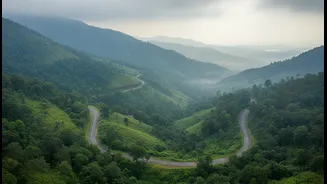


Your Car's Health is Paramount
Before you even think about playlists, perform a thorough vehicle check. The demanding terrain of the Ghats is unforgiving on an ill-prepared car. First, inspect all five tyres—including the spare—for adequate tread depth and correct pressure. Worn tyres lose
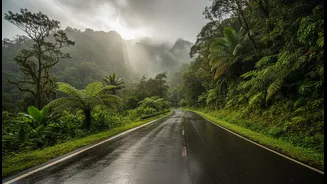
grip on wet, slippery roads, a common condition this season. Next, check your brakes; if they feel spongy or make noise, get them serviced. Ensure your headlights, brake lights, and indicators are all working perfectly, as mist and heavy rain can drastically reduce visibility. Finally, top up all essential fluids: engine oil, coolant, and brake fluid. An engine working hard on steep climbs can overheat easily without proper coolant levels.
Embrace the 'Ghat Driving' Mindset
Driving in the mountains is not the same as driving in the city. The first rule is to be patient and unhurried. Rushing on narrow, winding roads is a recipe for disaster. Always keep to your left, especially on blind curves where you can't see oncoming traffic. A crucial rule of the hills is to give way to vehicles climbing uphill. They require more momentum, so if you're descending and face an oncoming car on a narrow stretch, pull over and let them pass. Finally, forget about mileage for a while and turn off the air conditioning on steep ascents to give your engine maximum power.
Mastering Slopes and Hairpin Bends
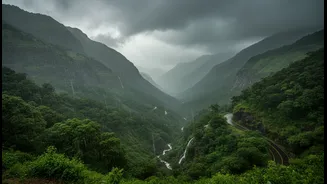
Ghat roads are defined by their steep inclines and sharp hairpin bends. When climbing, use lower gears (1st or 2nd) to keep the engine in its power band and avoid stalling. When descending, the single most important technique is engine braking. Shift into a low gear (the same one you'd use to climb that slope) and let the engine control your speed, rather than riding the brakes. Constant braking on long descents can heat up the brake pads and fluid, leading to brake failure. Honk liberally before every blind turn or hairpin bend to alert unseen drivers. When taking tight bends, especially left-handers, stick to the outer edge of your lane to maximize visibility and avoid straying into the path of oncoming traffic.
Be Aware of Monsoon-Specific Hazards
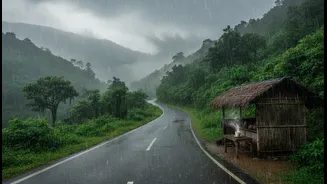
The monsoon brings unique dangers to the Ghats. Intense rainfall can trigger landslides, especially in areas with recent construction or road-widening. Studies show that a significant portion of the Western Ghats in states like Karnataka is landslide-prone. Always check local news and traffic updates before you start and during your journey. Be wary of driving through puddles of water at speed, as this can cause the car to lose balance, a phenomenon known as hydroplaning. If you encounter a patch of flowing water across the road, do not attempt to cross unless you can be sure of its depth; even a seemingly harmless stream can have a strong current.
Pack a Smarter Emergency Kit
While a standard first-aid kit is essential, a Ghats road trip requires a few extra items. Mobile connectivity is often poor or non-existent in remote stretches, so download your maps for offline use. Inform your family of your exact route and expected timelines. Pack a powerful torch, a fully charged power bank, and some non-perishable snacks and extra water in case of unexpected delays like a road closure. A basic toolkit, a tyre inflator, and a tow rope can be lifesavers in a pinch. Given the wet conditions, a rain jacket and a change of clothes in a waterproof bag are also wise additions.
Respect Local Traffic and Conditions
You will be sharing the road with local drivers, buses, and trucks who are intimately familiar with the terrain. Don't try to keep up with faster local drivers; let them pass and drive at a pace that feels safe for you. Be especially cautious around heavy vehicles like buses and trucks on hairpin bends, as they require a much wider turning radius. During this season, authorities may implement traffic restrictions, such as banning heavy vehicles on certain ghat sections like Agumbe to prevent landslides. While this might make the drive smoother for cars, always remain vigilant, adhere to all signboards, and never get complacent.