


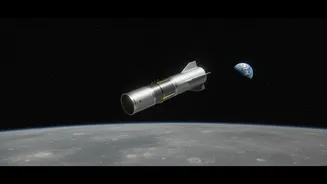
An Accidental Experiment
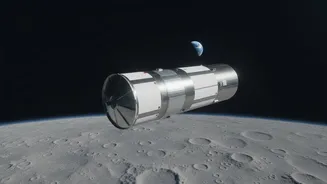
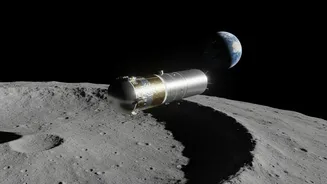
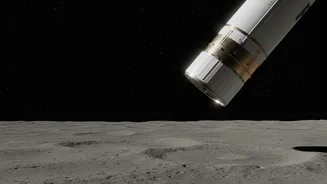
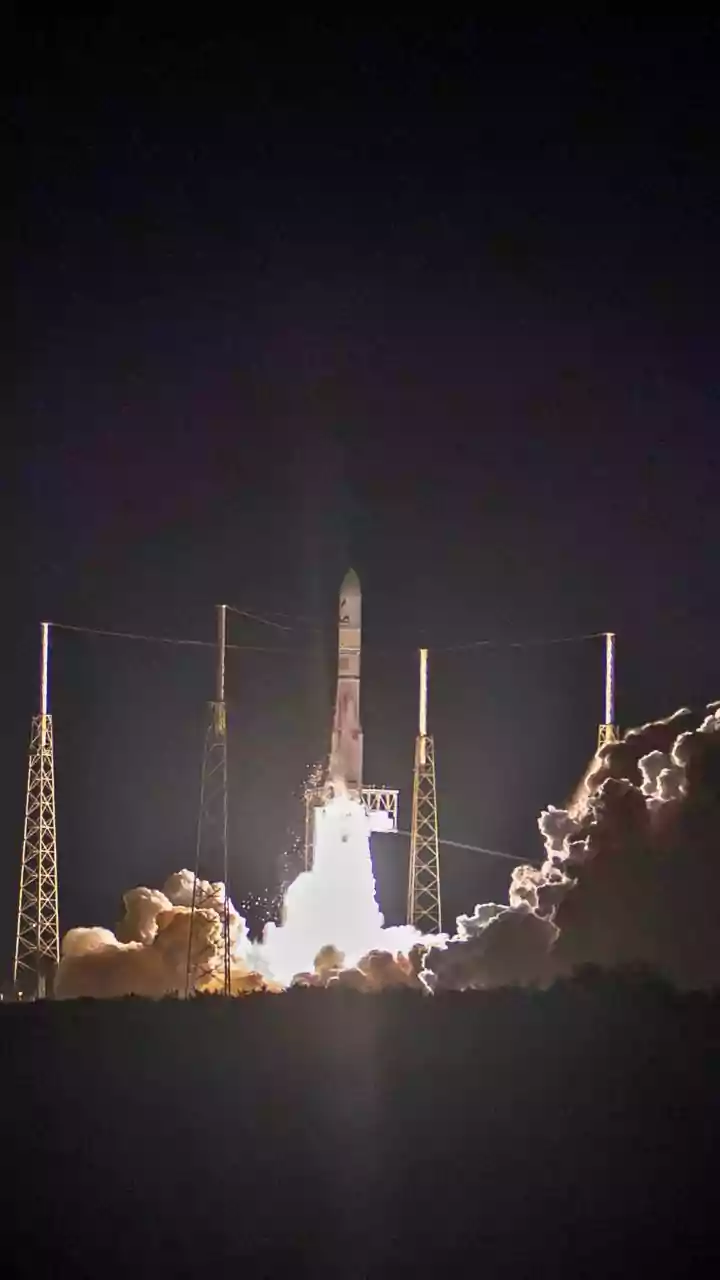
When a SpaceX Falcon 9 upper stage completes its primary mission, like deploying a lunar lander, it is sometimes left in a chaotic orbit. Over time, the gravitational pulls of the Sun, Earth, and Moon can alter its path unpredictably. In some cases, this
results in the rocket stage being sent on a collision course with the Moon. While unintended, these impacts provide a rare opportunity. Scientists know the object's mass, speed, and trajectory with a high degree of accuracy—details they never have with natural meteoroid impacts. This turns the crash from a simple disposal into a controlled experiment, allowing researchers to test and refine their models of how impacts affect planetary bodies. NASA has even deliberately crashed spacecraft into the Moon before, dating back to the Apollo missions, to study the outcomes.
Studying the Ejecta Plume
The key to the science is the ejecta plume—a massive cloud of dust and rock blasted from the surface upon impact. This material, which can be thrown tens of kilometers high, offers a glimpse of what lies just beneath the Moon's surface without having to land a probe and drill. By studying the plume with powerful telescopes, scientists can analyze its chemical composition. They look for 'spectral lines,' which are like chemical fingerprints that can reveal the presence of different elements and minerals. A major goal is to search for signs of water ice, which was successfully confirmed during a planned NASA impact in 2009. Observing the size, shape, and brightness of the plume also helps scientists calibrate their models, which is crucial for understanding all future lunar deliveries and impacts.
A Fresh Look at Crater Formation
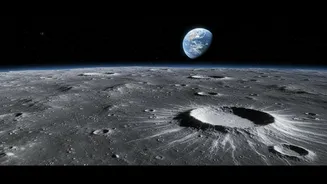
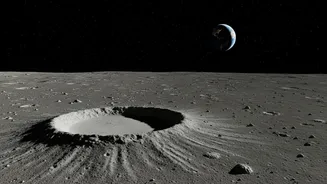
The Moon is covered in billions of years' worth of craters, but scientists rarely get to see a new one form. A man-made impact provides a pristine example. Orbiters like NASA’s Lunar Reconnaissance Orbiter (LRO) can take high-resolution before-and-after images of the crash site. This allows for a detailed analysis of the new crater, which can be dozens of feet wide. Researchers can measure its exact size and depth, study the pattern of ejected material around it, and see how it differs from craters made by natural objects. This information is invaluable for understanding the geology of the Moon's surface layer, known as regolith, and the physics of high-velocity impacts. It helps validate and improve the models used to predict the effects of future impacts, both natural and man-made.
Improving Future Lunar Missions
Beyond pure science, observing these impacts has practical applications for the future of space exploration. As nations and private companies plan for a more sustained human presence on the Moon, understanding the lunar environment is critical. The dust and debris kicked up by rocket plumes during landings and impacts can pose a significant hazard to nearby equipment, habitats, and astronauts. This ejected material can travel long distances, coating solar panels, abrading surfaces, and damaging sensitive instruments. By studying how an impact scatters debris, engineers can design safer landers and better-protected infrastructure for future lunar bases. Furthermore, tracking the rocket stage on its final journey helps refine techniques for monitoring objects in deep space, an increasingly important task as the area between Earth and the Moon gets busier.