

The Full Moon's Lunar Eclipse
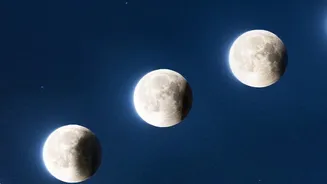
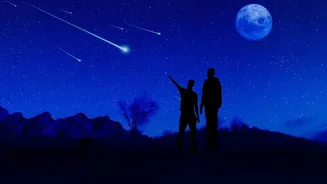
The main event for the latter half of August is undoubtedly the full Sturgeon Moon, which will be accompanied by a spectacular deep partial lunar eclipse. On the night of August 27-28, the full moon will pass into Earth's shadow. At its peak, nearly 96%
of the lunar surface will be covered, giving it a subtle reddish or coppery glow. Unlike a solar eclipse, you don't need any special glasses to view this event. The show will be visible across North and South America. The peak of the full moon occurs on Friday, August 28, 2026. The name 'Sturgeon Moon' comes from the giant fish that were most easily caught in North America's Great Lakes during this time of year.
A Preview of Saturn's Big Show
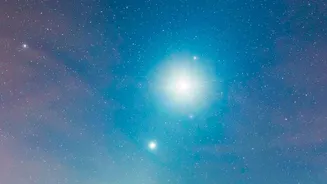
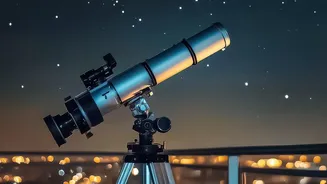
While Saturn's main event—its opposition—isn't until October, late August offers a fantastic viewing window. During this period, the ringed planet will be visible in the evening sky, rising in the east and shining brightly. Opposition is when Earth passes directly between the Sun and an outer planet, making that planet appear at its brightest and largest from our perspective. Even though the official opposition is a few weeks away, Saturn will already be exceptionally bright and well-placed for observation throughout late August. Look for it in the constellation Cetus. If you have a telescope, this is an excellent time to try and spot its famous rings.
A Guide to Summer's Brightest Constellations
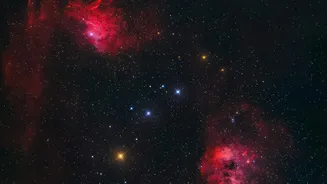
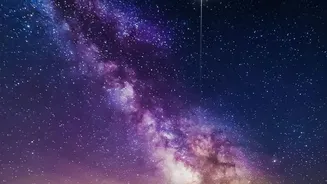
The star-filled canvas of late summer is on full display in August. High in the sky, you can easily spot the Summer Triangle, an asterism formed by three brilliant stars: Vega in the constellation Lyra, Deneb in Cygnus, and Altair in Aquila. For observers in the Northern Hemisphere, Lyra is one of the easiest constellations to find. Looking toward the south, the distinctive 'teapot' shape of Sagittarius is a prominent feature, sitting low on the horizon. This region of the sky is particularly rich because it's where the heart of our Milky Way galaxy lies, making it a great area to scan with binoculars on a clear, dark night.
Early Morning Planet Spotting
If you're an early riser, the pre-dawn sky has its own rewards. Very bright Jupiter will start making an appearance low in the east shortly before sunrise later in the month. Mars can also be spotted in the east before dawn, identifiable by its reddish hue. While a major six-planet alignment occurred earlier in the month around August 12, some of these planets remain visible. Saturn will be high in the sky before dawn, having been up all night. These early morning hours often provide calmer atmospheric conditions, allowing for clearer views of the planets.
Tips for the Best Viewing Experience
To make the most of your skywatching sessions, try to get away from bright city lights. Light pollution washes out fainter stars and subtle details. Find a spot with a clear view of the horizon, especially for spotting rising planets. Give your eyes about 20-30 minutes to fully adapt to the darkness; this will allow you to see much more. While many of these sights are visible to the naked eye, a simple pair of binoculars can dramatically enhance your view, revealing more stars, the faint glow of the Milky Way, and even the moons of Jupiter. And remember to check the weather forecast before you head out for a night under the stars.