







Why Humidity Wreaks Havoc on Skin
High humidity sends confusing signals to your skin. The abundance of moisture in the air can lead to an increase in sweat and sebum (oil) production. When this excess oil mixes with sweat, dead skin cells, and environmental pollutants, it creates a stubborn
mixture that clogs pores, leading to blackheads, whiteheads, and inflamed pimples. This condition, often called 'skin congestion,' can leave the skin looking dull, feeling textured, and prone to persistent breakouts, a common battle during India's monsoon and summer months. The key isn't to strip the skin of all oil, but to manage this overproduction gently and effectively.
Neem: The Ultimate Purifier
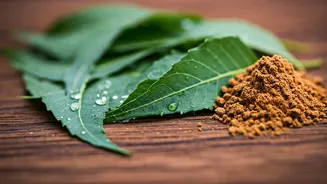
Neem has been a cornerstone of Indian skincare for centuries, and for good reason. It is celebrated for its powerful antibacterial and anti-inflammatory properties. For congested skin, neem works by targeting the bacteria that cause acne, helping to reduce breakouts and prevent new ones from forming. It also acts as a natural astringent, which helps to balance oil production without leaving the skin feeling tight or dry. Using a face wash with neem or applying a paste of crushed neem leaves can provide a soothing, cooling effect, making it an excellent choice for calming red, irritated pimples during humid weather.
Tulsi (Holy Basil): The Great Balancer
Tulsi, or Holy Basil, is another revered herb in Ayurveda known for its purifying and healing capabilities. It is particularly effective for oily and acne-prone skin because it helps regulate oil production and has potent antibacterial properties. When used in skincare, tulsi provides a deep-cleansing effect, removing dirt and impurities from pores to prevent congestion. Its anti-inflammatory nature helps soothe existing breakouts and reduces redness. A simple way to incorporate it is through a facial steam with tulsi leaves, which opens up pores for a thorough cleanse, or by using a face mask made from tulsi powder.
Sandalwood (Chandan): The Cooling Soother
Known for its distinctive fragrance and cooling properties, sandalwood (chandan) is an excellent ingredient for calming skin inflamed by humidity. Ayurveda regards it as a 'sheetala dravya,' or a cooling agent. Its anti-inflammatory and antiseptic qualities help to soothe rashes, reduce redness from acne, and calm general irritation. Sandalwood also possesses astringent properties that help tighten pores and control excess sebum, making it ideal for oily skin types. A simple paste of sandalwood powder mixed with rose water can be applied as a face pack to cool the skin, reduce tan, and promote a clearer complexion.
Multani Mitti (Fuller's Earth): The Deep-Cleaning Clay
Multani Mitti is a mineral-rich clay that acts like a magnet for oil and impurities. It is highly absorbent, making it one of the most effective natural treatments for extremely oily and congested skin. This clay works by drawing out excess sebum, unclogging pores, and removing dead skin cells, which helps in treating and preventing blackheads, whiteheads, and acne. Its cooling effect provides immediate relief to irritated skin. When used as a face pack, typically mixed with water or rose water, Multani Mitti leaves the skin feeling clean, refreshed, and visibly matte.
Turmeric (Haldi): The Anti-Inflammatory Glow-Giver
A staple in Indian households, turmeric is a powerhouse of anti-inflammatory and antibacterial benefits, thanks to its active compound, curcumin. For congested skin, turmeric helps calm inflammation, reduce the redness and swelling of pimples, and fight acne-causing bacteria. It also helps prevent skin cells from clumping together and clogging pores. Regular use can help fade the appearance of acne scars and hyperpigmentation, leading to a more even and radiant skin tone. It can be mixed into face packs, often with sandalwood or Multani Mitti, for a combined healing and purifying effect.