




The Billion-Tonne Problem
India's agricultural prowess yields hundreds of millions of tonnes of produce annually, but it also leaves behind a massive trail of waste. An estimated 350 million tonnes of agricultural residue, primarily from crops like rice, wheat, and sugarcane,
are generated each year. For many farmers, the quickest and cheapest way to clear fields for the next planting season is to burn this leftover straw and stubble. This practice, however, releases immense plumes of smoke, contributing significantly to the air pollution that plagues many Indian cities, causing public health crises and environmental damage. The challenge has long been to find a scalable and economically viable alternative that can turn this waste from a liability into a valuable resource.
Enter Mycelium: Nature's Master Binder
The solution, it turns out, has been growing beneath our feet all along. Mycelium is the intricate, root-like network of fungi. Think of it as the invisible underground engine of the forest, breaking down organic matter. Scientists and innovators discovered that this fibrous web has incredible binding properties. When introduced to a substrate—like agricultural waste—mycelium grows throughout the material, digesting it and binding it together into a solid composite. Once the desired shape is formed, the material is simply heat-treated to stop the growth, resulting in a product that is lightweight, strong, and completely natural. It's a process of growing, not manufacturing, that requires minimal energy and produces zero waste.
The Pioneers of India's Mycelium Revolution
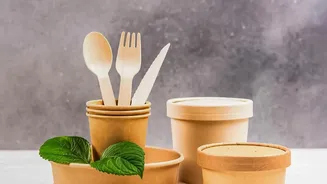
Across India, a cluster of forward-thinking startups is harnessing this natural process. Pune-based Roha Biotech, for example, uses mushroom mycelium to upcycle agricultural residues like sugarcane bagasse and paddy straw into high-performance packaging materials that can replace Styrofoam. Similarly, Dharaksha Ecosolutions focuses on converting paddy straw into biodegradable packaging. Other innovators like Mycocycle in Bangalore and Kinoko Biotech are exploring uses for everything from banana stems to temple flower waste, creating insulation and thermocol alternatives. These companies aren't just creating products; they're building a new, circular economy by providing farmers with an additional income stream for their crop waste, directly addressing the root cause of stubble burning.
Building a Greener Future, One Panel at a Time
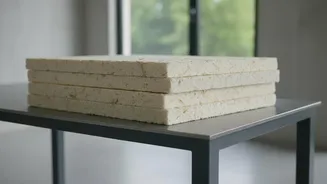
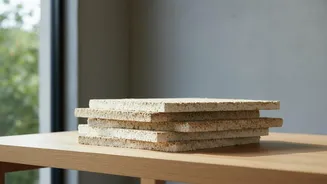
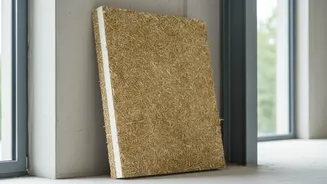
The applications for these mycelium bio-composites are vast, but one of the most promising is in construction and interior design. The finished material can be formed into panels, blocks, and custom shapes. These mycelium panels are not only eco-friendly but also possess impressive technical properties: they are naturally fire-resistant, provide excellent thermal and acoustic insulation, and are lightweight. This makes them a compelling alternative to synthetic materials like MDF, particleboard, and foam insulation, which often contain toxic chemicals. From partition walls and acoustic panels to furniture and decorative items, mycelium offers a sustainable, carbon-negative material for building healthier indoor environments.
The Road Ahead: Challenges and Opportunities
Despite the immense potential, the path to widespread adoption is not without its hurdles. One of the main challenges for Indian startups is scaling up production to compete on cost with conventional, mass-produced materials. Building trust and awareness in conservative sectors like construction requires demonstrating consistent quality, durability, and performance. Furthermore, creating efficient supply chains to collect agricultural waste from scattered rural areas and transport it to production facilities is a significant logistical undertaking. However, with growing consumer demand for sustainable products and increasing government focus on circular economy models and curbing pollution, the tailwinds are strong. These bio-material pioneers are not just selling a product; they are offering a powerful vision for a cleaner, more resilient India.