





A Postcard from Shiv Shakti Point
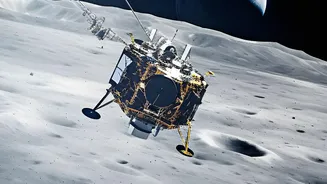
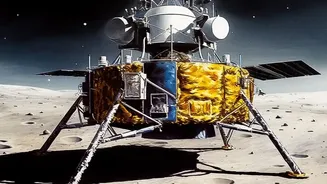
India's Chandrayaan-3 mission made history in August 2023 with the successful landing of the Vikram lander at the lunar south pole, a site now known as Shiv Shakti Point. While the primary mission gathered a wealth of data during its operational life,
scientists have been diligently working to decode every bit of information sent back to Earth. A new study published on November 17, 2026, in a Nature Portfolio journal highlights that Vikram's contributions are far from over. This fresh analysis focuses on data from one of its key instruments, providing an unprecedented look into the ground beneath its feet.
The Instrument Reading the Moon's Temperature
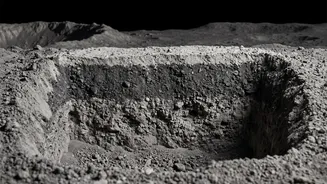
The discovery comes from the Chandra’s Surface Thermophysical Experiment, or ChaSTE. This instrument was designed to understand the thermal behaviour of the Moon by measuring the temperature profile of the topsoil. ChaSTE used a probe equipped with ten sensors that could penetrate up to 10 centimetres into the lunar regolith—the correct term for the loose layer of dust, broken rock, and other materials covering the Moon's surface. Its initial findings had already surprised scientists by revealing a massive temperature difference between the surface and just a few centimetres below. Now, a deeper analysis of its data from the original, undisturbed landing site has revealed something even more fundamental about the Moon's structure.
Not One, But Three Distinct Layers
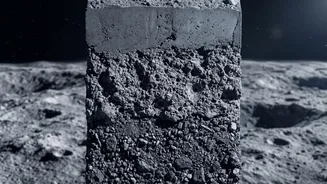
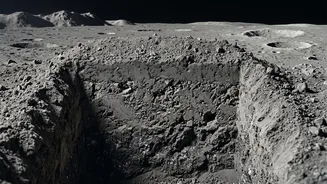
The new study reveals that the top 10 centimetres of lunar soil is not a uniform blanket of dust, but a layered structure, almost like a cake. Researchers have identified three distinct layers with different physical properties. The top layer, extending down about 3 cm, is an extremely porous and 'fluffy' material with a very low density. Below that, from 3 to 6 cm, lies a middle layer with higher thermal conductivity. The third layer, between 6 and 10 cm deep, is much denser and more compact, with its density more than doubling compared to the surface fluff. This kind of fine-scale layering in such a shallow profile was not expected by scientists and had never been observed directly before.
Why This Layered Structure Matters
This discovery is more than just a geological curiosity; it has profound implications for the future of lunar exploration. Understanding the composition and properties of the regolith is critical for designing habitats, landing pads, and other infrastructure for future moon bases. For instance, the highly porous top layer acts as a powerful thermal insulator, which could affect how buildings and equipment manage the extreme temperature swings on the Moon. The increasing density and cohesiveness of the deeper layers will influence how future missions anchor structures or excavate the surface for resources like water ice. This data provides the first direct thermophysical profile of the lunar south pole region, offering crucial ground truth for engineers and scientists planning humanity’s return to the Moon.
A Story Written by Asteroid Impacts
So, how did these layers form? Researchers suggest that the fine-scale layering is the result of successive asteroid and micrometeorite impacts over billions of years. The theory is that different impact events from nearby craters deposited material with varying characteristics, creating this complex stratification over time. This new finding builds on previous analyses, including one that studied the site after Vikram performed a short 'hop' maneuver. That hop blew away the top layer of dust, revealing a two-layer structure. This latest study of the pristine landing site completes the picture, confirming the three-layer profile and adding another fascinating chapter to the story of the Moon's evolution, all thanks to the data meticulously gathered by India's Vikram lander.