



The Sun's Unpredictable Temper
The sun is the source of all life on Earth, but it also has a volatile side. It periodically releases enormous bursts of energy and matter in two primary forms: solar flares and coronal mass ejections (CMEs). A solar flare is an intense explosion of radiation
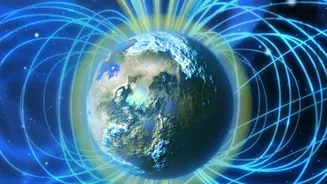
that travels at the speed of light, reaching Earth in just over eight minutes. A CME, on the other hand, is a massive cloud of magnetised plasma and charged particles hurled into space, taking anywhere from one to several days to cross the 93 million miles to our planet. When Earth is in the path of these events, it can trigger geomagnetic storms that interact with our planet's magnetic field and upper atmosphere, posing a significant risk to modern technology.
Satellites in the Firing Line
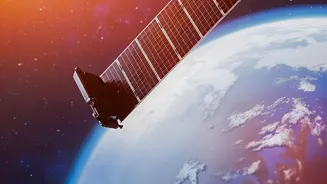
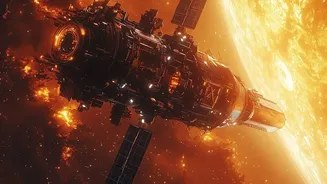
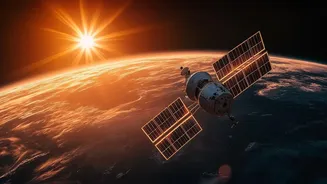
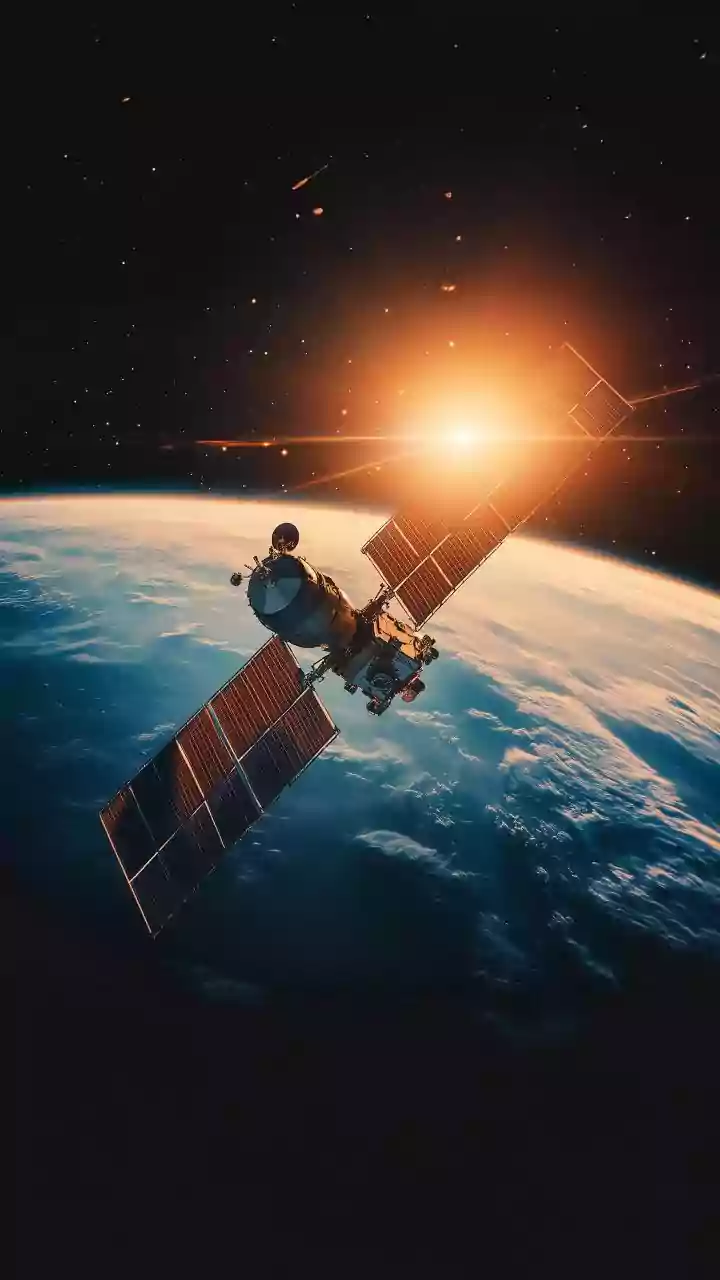
Satellites orbiting outside Earth's protective atmosphere are especially vulnerable to space weather. Energetic particles from a solar event can bombard a satellite's sensitive electronics, causing malfunctions, phantom commands, or permanent damage. These particles can also degrade solar panels, shortening a satellite's operational lifespan. Furthermore, a major geomagnetic storm can heat and expand Earth's upper atmosphere. This increases atmospheric drag on satellites in low-Earth orbit, causing them to lose altitude and potentially requiring them to burn precious fuel to stay on track. The consequences range from temporary disruptions in GPS accuracy and communication blackouts to the complete loss of a satellite. The economic cost of a severe event could be astronomical, with studies suggesting daily losses in the tens of billions of dollars due to impacts on the power grid and supply chains alone.
A Race Against Solar Storms
For decades, predicting space weather has been a major scientific challenge. Forecasters at agencies like the U.S. National Oceanic and Atmospheric Administration (NOAA) have relied on a handful of satellites positioned between the Earth and the sun. Observatories like the Solar and Heliospheric Observatory (SOHO) and the Deep Space Climate Observatory (DSCOVR) watch for CMEs leaving the sun, providing a critical but often short warning—sometimes less than an hour—before the storm arrives. While this gives some time to prepare, the limited viewpoints and aging technology mean that forecasters are often reacting to events already underway rather than predicting them with high confidence. This is where the next generation of forecasting technology comes in.
The Next Generation of Solar Sentinels
A new era in space weather forecasting is dawning, driven by advanced satellites and artificial intelligence. In mid-2026, NOAA's SOLAR-1 satellite (previously known as SWFO-L1) officially became operational. Positioned a million miles from Earth, it provides a continuous, 24/7 stream of high-quality data on the solar wind and captures images of CMEs as they erupt. These new observations are a cornerstone for improving forecast models. Looking ahead, missions like the European Space Agency's Vigil, planned for the early 2030s, will offer a revolutionary side-on view of the sun, allowing scientists to see potentially hazardous active regions days before they rotate to face Earth. Simultaneously, AI and machine learning models are being developed to process vast amounts of satellite data, identifying complex patterns and improving the speed and accuracy of storm predictions.
From Advanced Warning to Action
So, what can be done with a better, faster forecast? For satellite operators, an early warning is invaluable. With hours or even days of notice, they can take protective measures. This includes temporarily powering down non-essential, sensitive electronics to prevent them from being fried by charged particles. They can also reorient a satellite to present a smaller, more protected profile to the incoming solar storm. For satellites in low-Earth orbit, operators can prepare for potential changes in atmospheric drag and plan course corrections. On the ground, power grid operators can prepare for geomagnetically induced currents that can overload transformers, and airlines can reroute flights away from polar regions where radio communication is most likely to be disrupted. Ultimately, better forecasting turns a potential catastrophe into a manageable operational challenge.