






AI pioneer Anthropic officially filed for its highly anticipated IPO on October 26, 2026. The move peels back the curtain on its finances, revealing a core challenge not just for the company, but for the entire AI sector: the astronomical cost of computing.
The IPO Filing At A Glance
Anthropic, the research company behind the popular Claude family of AI models, filed its S-1 registration with the U.S. Securities and Exchange Commission, signaling its intent to go public on the Nasdaq under the ticker 'ANT'. While the exact share price and valuation are still pending, the document provides the first official look into the company's explosive growth and the equally massive expenses required to achieve it. For the first half of 2026, the company reported revenue of $16.3 billion, a massive jump from the previous year. However, this growth comes at a price, with the filing highlighting the immense financial commitments the company has made to secure its future.
The Billion-Dollar Line Item
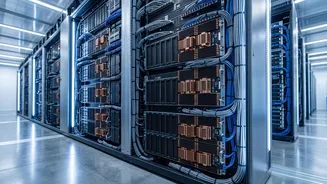
The most stunning revelation in the S-1 filing is the sheer scale of Anthropic's spending on computing infrastructure. In an amended filing, the company disclosed it has future commitments of approximately $895.4 billion, with the vast majority earmarked for compute power and AI infrastructure from partners like Google, Amazon, and Broadcom. In the first nine months of 2026 alone, computing expenses reached $18.8 billion, accounting for over 56% of its revenue. This spending is essential for training and running large language models, which require immense fleets of specialized processors, known as GPUs, housed in massive data centers. These costs are not a one-time expense; they are the continuously running meter that powers the AI revolution.
A High-Stakes Financial Balancing Act
While revenue is soaring, profitability is a more complex picture. For the third quarter of 2026, Anthropic reported revenue of nearly $17 billion, but also an operating loss of $567 million. This was driven by a surge in operating expenses, including a $5 billion charge for purchasing computing hardware at a premium due to higher than expected demand. The dynamic illustrates a core tension in the AI industry: companies must spend aggressively on long-term infrastructure contracts to secure capacity, often years in advance. However, they must also constantly innovate and reduce costs for customers to stay competitive, as Anthropic did by launching more efficient models that lowered user costs but also impacted revenue growth. This creates a high stakes balancing act between investing for the future and managing present day financials.
The Competitive AI Arms Race
Anthropic isn't alone in this capital intensive race. Competitors like OpenAI, backed by the financial might of Microsoft, and Google's own deep pocketed AI divisions face the same fundamental challenge. The IPO filing underscores that the AI industry is currently defined by an arms race for computing power. The ability to secure massive, long term contracts for GPUs and data center capacity is a primary competitive advantage. Anthropic's strategy has been to partner with multiple major cloud providers, including Amazon and Google, spreading its bets to ensure it has the necessary resources to continue developing more advanced AI models. This strategy, however, locks the company into colossal spending commitments regardless of future demand.
What It Means for Investors
For potential investors, Anthropic's IPO is a bet on a company at the forefront of a transformative technology. But it is also a bet on its ability to navigate unprecedented financial pressures. The 'Risk Factors' section of the S-1 filing is extensive, covering everything from competition and regulation to the potential for AI models to be misused. The central risk, however, is woven throughout the financial disclosures: can the company's revenue growth continue to outpace its gargantuan infrastructure costs? The success of Anthropic, and indeed the entire frontier AI industry, will depend on finding a sustainable economic model where the incredible value generated by AI can consistently cover its equally incredible price tag.