



Nature's Ultimate Sunscreen
Melanin is nature’s masterwork of protection. It’s a complex polymer that gives colour to everything from human skin and hair to the ink of a squid. Its primary job is to absorb ultraviolet (UV) radiation, protecting organisms from the sun's harmful rays.
But its talents don't stop there. Melanin is incredibly effective at absorbing energy across the entire light spectrum. It’s also a stable compound that can withstand high temperatures without breaking down and can bind to metals, all properties that have made scientists take a much closer look at its potential beyond biology.
From Biology to Bio-Synthetic
While naturally occurring, harvesting melanin from natural sources isn't practical for large-scale industrial use. This is where “bio-synthetic” melanin comes in. Scientists have developed methods to produce melanin in the lab, often by mimicking natural processes. This can involve using enzymes to oxidize the amino acid tyrosine or employing genetically engineered microbes, like fungi, to produce the pigment in a controlled and scalable way. This lab-grown melanin possesses the same remarkable properties as its natural counterpart—excellent light absorption, thermal stability, and electrical conductivity—making it a prime candidate for high-tech applications.
A Perfect Match for Solar Technology
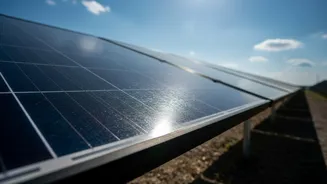
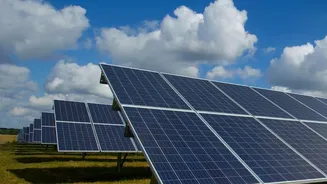
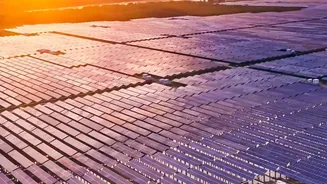
Conventional silicon-based solar cells are powerful but have limitations. They are most efficient within a narrow temperature range and can be degraded by constant exposure to UV radiation and the elements. Melanin addresses these weaknesses directly. Its ability to absorb light across a broad spectrum means it can capture more solar energy than traditional materials. Furthermore, melanin is an organic semiconductor, meaning it can conduct electricity. When integrated into solar cells, it can enhance charge transfer and improve the overall efficiency of light-to-electric conversion. Some studies have even shown that incorporating melanin can increase the capacitance and power of energy storage systems when exposed to solar light, integrating energy conversion and storage into one material.
The All-Weather Advantage
The term "weatherproof" is where melanin truly shines. Its inherent stability makes it highly resistant to the very things that damage solar panels over time. First, its UV-shielding capability prevents the underlying photovoltaic materials from degrading due to radiation exposure. This extends the operational life of the panel. Second, melanin is exceptionally good at managing heat. It can absorb high-energy radiation and dissipate it as harmless heat, helping to regulate the panel's temperature. This is crucial because solar panels become less efficient as they get hotter. By keeping the cells cooler, melanin helps them maintain peak performance even on scorching days. This thermal stability has been shown to be effective across extreme temperature ranges, a vital trait for infrastructure exposed to the elements year-round.
The Road to Commercialization
Despite the immense promise, melanin-based solar technology is still in the research and development phase. One of the biggest hurdles is cost-effective mass production. While bio-synthetic methods are advancing, making the process cheap enough for the commercial solar market remains a challenge. Researchers are actively working to refine production techniques and optimize how melanin is integrated with other materials, like silicon, to maximize performance. The long-term stability of these new hybrid cells is also undergoing rigorous testing to ensure they can last for decades, just like conventional panels. The goal is to create a new generation of solar infrastructure that is not only more efficient but also far more resilient.