

The Monsoon's Fungal Treasure
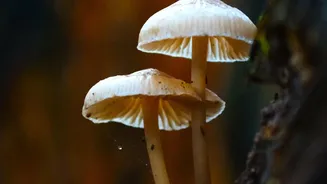
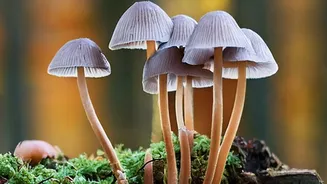
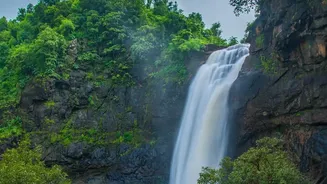
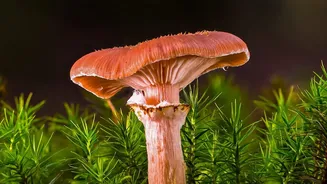
The arrival of the monsoon transforms the Indian landscape, triggering a spectacular, if brief, explosion of wild fungi. From the mighty Himalayas to the dense forests of the Western Ghats and the Chota Nagpur plateau, this is the season of discovery.
For generations, tribal communities and villagers have foraged for seasonal delicacies like the prized Roen Olmi, which grows on termite hills, or Rugra, which resembles small pebbles and is found hidden in the soil. Now, a wider community of nature lovers and food enthusiasts is joining the quest, seeking to reconnect with nature and taste flavours that cannot be found in a supermarket. This growing interest is fuelled by the dual thrill of discovery and the unique, earthy taste of freshly foraged food.
Discovery in a Modern Age
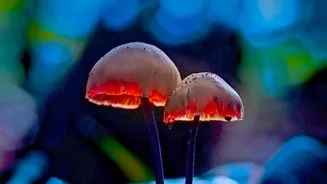
The term 'discovery' isn't just a romantic notion; it's a scientific reality. India's rich biodiversity means new species are still being found. Recently, researchers identified a new species, Hemileccinum indicum, in the oak forests of Uttarakhand during monsoon surveys. In Arunachal Pradesh, another new species, Bridgeoporus kanadii, was so large a person could sit on it. The reappearance of bioluminescent, or glowing, mushrooms in Dudhwa National Park also highlights the region's remarkable biodiversity. These finds remind us that our forests hold countless secrets, and they underscore the ecological importance of fungi, which are vital for a healthy forest by recycling nutrients and breaking down dead wood.
The Golden Rule: When in Doubt, Throw It Out
The allure of wild mushrooms comes with a serious warning: many edible varieties have dangerous look-alikes. Poisonous mushrooms can cause severe illness or even death, and health departments often issue advisories during the monsoon. There is no simple trick to tell a safe mushroom from a toxic one—myths about bright colours or smells are dangerously misleading. The single most important rule of foraging, echoed by every expert, is to never eat a mushroom unless you are 100% certain of its identification. As one forager puts it, the goal is to be a patient observer. All mushrooms are safe to touch and smell; the danger is in eating the unknown.
A Forager's Smart Toolkit
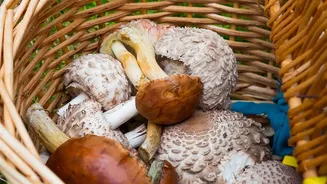
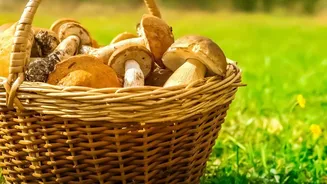
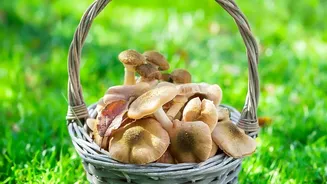
A smart foraging adventure begins with the right gear. Instead of a plastic bag, which can crush delicate fungi and cause them to sweat and deteriorate, use a wicker basket that allows spores to disperse as you walk, helping to ensure future mushroom growth. A small knife is useful for cleanly cutting the mushroom stem, and a soft brush can help you clean off dirt in the field. A reliable field guide specific to your region is invaluable. While smartphone apps can help, they should never be your only source for identification. Use them to narrow down possibilities, but always cross-reference with expert knowledge.
From Forest Floor to Expert Guidance
The safest and most rewarding way to begin your foraging journey is by learning from those who know. Across India, a culture of learning is mushrooming. Guided foraging walks and workshops are becoming popular in places like Kasol, the Western Ghats, and Karnataka, led by mycologists and experienced local foragers. These experiences teach you how to identify local edible species, understand forest ecology, and distinguish safe fungi from their poisonous counterparts. Joining a guided walk shifts the focus from just 'Can I eat this?' to a deeper appreciation for the intricate world of fungi and the generational knowledge required to navigate it safely.