






The Master's Game on an Indian Field
Cricket arrived in India with British sailors and soldiers in the 18th century. Initially, it was a pastime meant to reinforce the cultural separation between the rulers and the ruled. The first recorded match was in 1721, and for decades it remained
a sport played by Europeans, for Europeans. However, its allure was undeniable. The Parsi community in Bombay was the first to adopt the game in the mid-19th century, forming their own clubs and seeing the sport as a way to build bridges with the British. They were soon followed by other communities, and what was once a colonial recreation began to find roots in Indian soil, setting the stage for a complex and often contradictory relationship with the game.
An Arena of Division
Before cricket could truly unite, it first highlighted India's divisions. The most famous tournament of the era, the Bombay Pentangular, was organised along communal lines. It began as a match between the British (Europeans) and the Parsis, later expanding to include teams for Hindus, Muslims, and 'The Rest' (comprising Indian Christians and Anglo-Indians). While immensely popular, this format drew sharp criticism from nationalist leaders, including Mahatma Gandhi. He argued that such communal divisions in sport were a poison that hindered the freedom struggle, believing that if unity could be shown on the pitch, it should be reflected in society at large. The tournament was finally abolished in 1946, on the cusp of independence, as the push for a secular national identity gained momentum.
Breaking Barriers on the Pitch
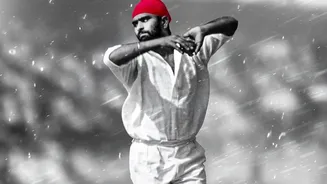
Even within the communally divided teams, cricket became a vehicle for challenging social hierarchies. The most powerful example is Palwankar Baloo. Born into the Dalit community in 1876, Baloo faced immense discrimination. He began his career as a groundsman, sometimes bowling to British officers in the nets. His prodigious talent as a left-arm spinner was impossible to ignore. Though he initially faced resistance, his skill was so exceptional that he was eventually selected for the Hindu Gymkhana team. Despite being the team's best player, he was often subjected to humiliating treatment due to his caste. Yet, his success on the field, including a celebrated tour of England in 1911, made him one of India’s first great cricketing heroes and proved that talent could triumph over birthright.
Victory as a Form of Protest
The most significant way cricket united Indians was by providing a platform to challenge the myth of British superiority. On the cricket field, the power dynamics of colonial rule were temporarily suspended. It was a contest between equals. When an all-Indian team defeated a European team, it was more than just a sporting victory; it was a profound psychological boost for the nationalist cause. These wins, however infrequent in the early days, were celebrated across the country, fostering a shared sense of pride and accomplishment. It demonstrated to both the British and, more importantly, to Indians themselves, that they could beat the masters at their own game. This process of turning a colonial sport into an instrument of national self-confidence was a quiet but powerful form of resistance.