







India's Monsoon-Fed Harvest
Kharif crops, also known as monsoon crops, are the plants sown at the beginning of the southwest monsoon season, typically from June to July, and harvested in autumn between September and October. These crops are fundamentally dependent on the monsoon as they
are grown in warm, wet conditions. Key Kharif crops include staples that form the backbone of India's food supply, such as rice (paddy), maize, jowar, and bajra. It also includes vital commercial crops like cotton, soybean, groundnut, and pulses like moong and urad. Rice is the most significant Kharif crop, and its cultivation is particularly water-intensive, often requiring flooded fields to grow. Unlike the winter (Rabi) crops that often rely on irrigation, a vast portion of India's farmland is rain-fed, making the monsoon the primary source of water.
The Critical Sowing Window
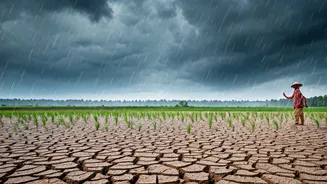
The timing of the first monsoon showers is paramount. Farmers wait for these rains to soften the earth and provide the necessary soil moisture for seeds to germinate. The sowing window, usually between June and early July, is a period of intense activity. If the monsoon is delayed, as it has been in June 2026, the soil remains too dry and hard for planting. This delay forces farmers to postpone sowing, which has a cascading effect on the entire crop cycle. Sowing too late can mean the crop misses the peak rainfall period, which is essential for its growth stages. A delayed start compresses the growing season, which can lead to reduced yields and lower quality produce. The current monsoon deficit in June 2026, one of the driest in over a century, has already slowed Kharif sowing significantly across the country.
Water for Every Growth Stage
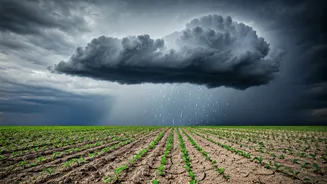
Timely rain isn't just about starting the season; it's about sustaining the crop through its lifecycle. Different crops have specific water requirements at various stages. For rice, consistent water is needed for transplanting and tillering—the phase where the plant produces multiple stems. A dry spell during the reproductive phase, when the plant flowers and begins to form grain, can be devastating and drastically reduce yield. Similarly, crops like groundnut have peak water requirements during the peg penetration and pod development stages. While some Kharif crops like millets (bajra and jowar) are more drought-tolerant, they still depend on adequate rainfall for healthy growth. It is not just the total amount of rain but its even distribution through the season that matters. Too much rain at once can cause flooding and waterlogging, which damages roots, while long dry spells can cause the crop to fail.
The Economic Ripple Effect
The fate of Kharif crops has a direct and profound impact on the broader Indian economy. The agricultural sector is a massive employer, and a good harvest boosts rural incomes, which in turn fuels demand for goods and services, from tractors to motorcycles and everyday consumer products. Conversely, a weak monsoon and poor harvest can lead to rural distress. It also has a direct bearing on food inflation. A shortfall in production, especially of essential staples, leads to supply shortages and higher prices in the market, affecting household budgets across the country. A significant rain deficit, for example, can add a full percentage point to headline inflation. The government may also be forced to impose export curbs on commodities like rice to protect domestic supply, which can disrupt global markets.
When the Rains Falter
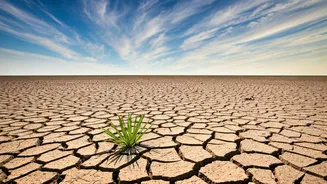
A delayed or deficient monsoon, like the one India is facing in mid-2026 with a 40% rainfall deficit in June, puts immense pressure on the system. While India has expanded its irrigation network over the decades, around 60% of its farmland remains rain-fed and vulnerable. In such situations, the government often rolls out contingency plans, advising farmers on alternative crops and water management techniques. However, this doesn't fully compensate for the lack of widespread, natural rainfall. The current deficit is being linked to strengthening El Niño conditions, which can suppress monsoon rainfall. While structural reforms have made the Indian economy more resilient to a weak monsoon than in the past, its performance remains a critical variable for agricultural output and stability.