
The Universe in Petabytes
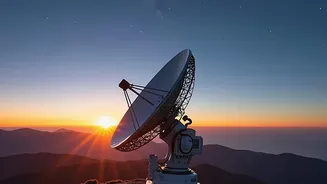
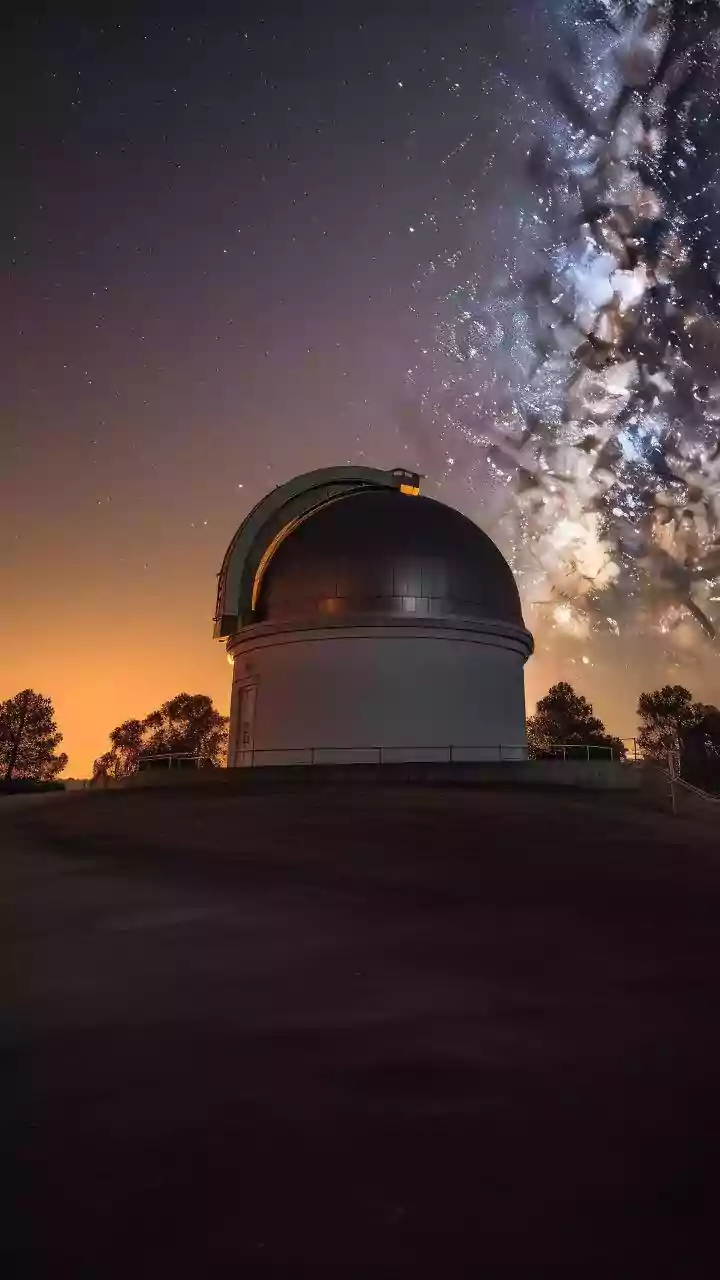
Our view of the cosmos has never been clearer, thanks to groundbreaking instruments like the James Webb Space Telescope and the soon-to-be-completed Vera C. Rubin Observatory in Chile. These technological marvels capture the universe in breathtaking detail,
but they also produce an almost unimaginable amount of data. The Rubin Observatory, for instance, is expected to generate around 20 terabytes every night. Over its ten-year mission, it will accumulate about 50,000 times the information held in the entire Library of Congress. This flood of images, light curves, and radio signals is far too vast for astronomers to sift through manually. For decades, countless discoveries have been hidden within archival data simply because there were not enough hours or people to find them. This is the central challenge of 21st-century astronomy: not a lack of information, but an overwhelming surplus.
Enter Machine Learning
This is where artificial intelligence (AI), specifically machine learning, becomes an essential partner in cosmic discovery. At its core, machine learning involves training computer algorithms to recognise patterns in data. Think of it like a super-powered assistant that can look at millions of images and spot the one that contains a specific feature it has been taught to look for. In astronomy, these algorithms are trained on vast, labelled datasets of known celestial objects. They learn the visual and statistical 'fingerprints' of everything from spiral galaxies and exploding stars to the tell-tale dip in starlight that signifies a passing exoplanet. Once trained, these neural networks—systems modelled loosely on the human brain—can classify new, unseen objects with incredible speed and accuracy.
From Years to Days, Hours to Seconds
The increase in speed is staggering. An AI model developed to process data from the James Webb Space Telescope can complete analysis tasks in days that would have taken humans years. At the Allen Telescope Array, which searches for Fast Radio Bursts (FRBs) and potential signals from extraterrestrial intelligence, a new AI system processes observational data 600 times faster than previous methods. Tasks that used to be slower than real-time are now completed more than 160 times faster than the data comes in. This allows astronomers to automate tedious but crucial processes, such as identifying exoplanet candidates with 96% accuracy or classifying galaxies with 98% accuracy. It frees up valuable human time and expertise to focus on the more creative aspects of science: interpreting results, forming new hypotheses, and deciding what to observe next.
Discovering the Unknown
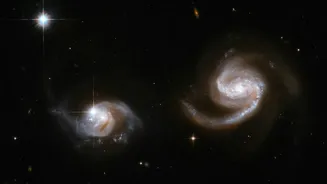
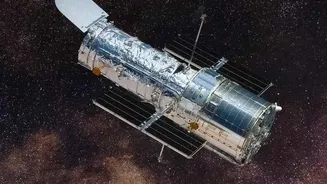
Perhaps the most exciting aspect of AI in astronomy is not just its speed, but its ability to find things humans might miss entirely. AI excels at anomaly detection—spotting objects or events that don't fit neatly into any known category. One project used an AI tool called AnomalyMatch to scan nearly 100 million cutouts from the Hubble Space Telescope's archives. In just two and a half days, it identified over 1,300 unusual objects, including more than 800 that had never been documented. These included interacting galaxies, gravitational lenses, and several dozen objects that defied existing classification schemes altogether. In another case, an 18-year-old student built an AI that analyzed NASA infrared telescope data, uncovering 1.5 million previously unknown cosmic objects like supernovae and supermassive black holes. AI is not just categorising what we know; it is pointing us toward the things we didn't even know to look for.