






Why This Pairing Is Perfect
There’s a unique magic in combining the old with the new, the static with the living. A vintage inkwell, once a vessel for words and ideas, becomes a perfect home for a new beginning. The heavy, often ornate glass catches the light beautifully, transforming
a simple plant cutting into a piece of art. The small size of an inkwell is ideal for a single, delicate clipping, forcing you to focus on the beauty of one small plant. It’s a practice in mindfulness and an aesthetic choice that speaks volumes. This combination tells a story of revival—giving a forgotten object a new purpose and watching new life sprout from a simple vine.
Meet Your Plant: The Money Plant
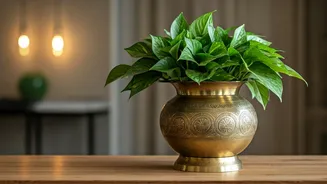
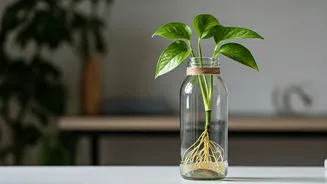
Devil's Ivy (Epipremnum aureum) is known by a far more auspicious name in India: the Money Plant. Considered a bearer of good fortune and prosperity, it’s one of the hardiest and most forgiving houseplants you can find. Its resilience is legendary, earning it the 'Devil's Ivy' moniker because it’s almost impossible to kill. This makes it the ideal candidate for water propagation. The plant isn’t fussy about light and actively thrives when its cuttings are placed in water, readily sprouting new roots. Its heart-shaped leaves and trailing vines add a touch of lush, vibrant green to any space, making it a visual and symbolic delight.
Hunting for the Perfect Inkwell
The hunt is part of the fun. You can find vintage or antique-style inkwells in a variety of places. Scour local flea markets, antique shops, or your grandparents’ old writing desk. Online marketplaces are also a treasure trove, offering everything from simple, square glass wells to ornate silver-capped ones. When choosing, look for a few key things. Ensure it has a stable, heavy base so it won't tip over. Clear or light-coloured glass is wonderful because it allows you to watch the roots grow. Before use, give it a thorough cleaning with warm, soapy water and a small bottle brush to remove any lingering dust or ink residue. If it’s a true antique, be gentle to preserve its patina.
The Simple Art of Propagation
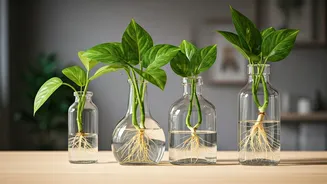
Propagating a money plant is incredibly simple. You don't need a green thumb, just a pair of clean scissors. 1. **Take a Cutting:** Look at your parent money plant vine. You’ll see small brown nubs or bumps along the stem, usually opposite a leaf. These are the nodes, and this is where new roots will grow. Make a clean cut with scissors about one centimetre below a node. Your cutting should ideally have at least two or three leaves. 2. **Prepare the Cutting:** Gently remove the lowest leaf—the one closest to the cut end. This is to prevent the leaf from sitting in the water and rotting. 3. **Place in Water:** Fill your clean inkwell with room-temperature water. Tap water is usually fine, but if your water is heavily chlorinated, let it sit out for 24 hours first. Place the cut end of the vine into the water, ensuring at least one node is submerged. That’s it!
Care and Styling Your Creation
Your new creation requires very little maintenance. Place the inkwell in a spot that receives bright, indirect sunlight. A windowsill that doesn't get harsh afternoon sun or a well-lit desk is perfect. Direct sunlight can scorch the leaves. Every week or so, change the water to keep it fresh and provide oxygen to the developing roots. You should see tiny white roots start to emerge from the node within two to four weeks. Once a healthy root system has developed (a few inches long), you can either leave it in the inkwell as a permanent hydroponic feature or pot it in soil. Style these little vignettes on bookshelves, group them on a tray for a stunning centrepiece, or place one on your work desk as a tiny, living reminder of growth and renewal.